|
Prep Time
50 minutes
|
Cook Time
45 minutes
|
Total Time
1h35
|
Servings
6 portions
|
Pastilla makes the most sense in late autumn, when guests arrive cold and hungry and you want something on the table that has real weight to it. It is a dish for a Friday evening in November — the kind of dinner that takes some planning and almost no last-minute effort. Most of the work is done the day before.
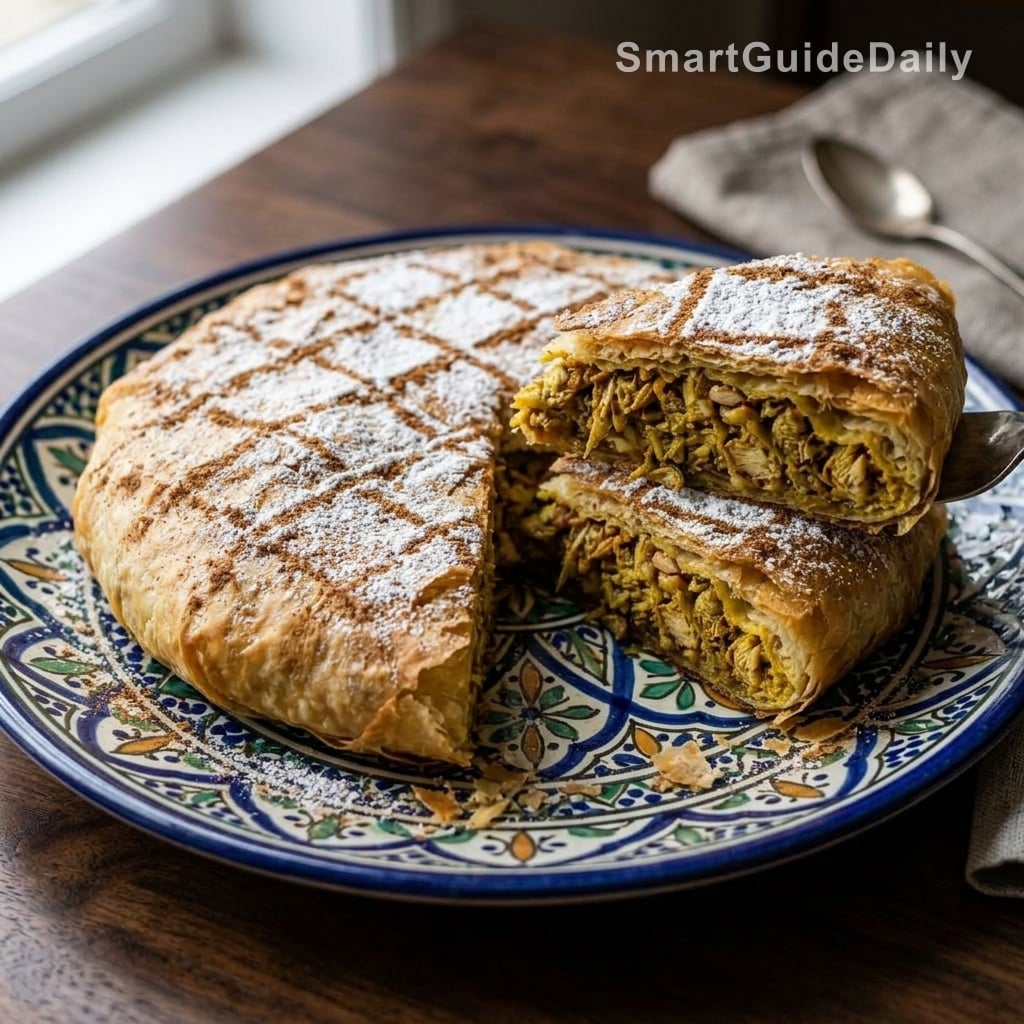
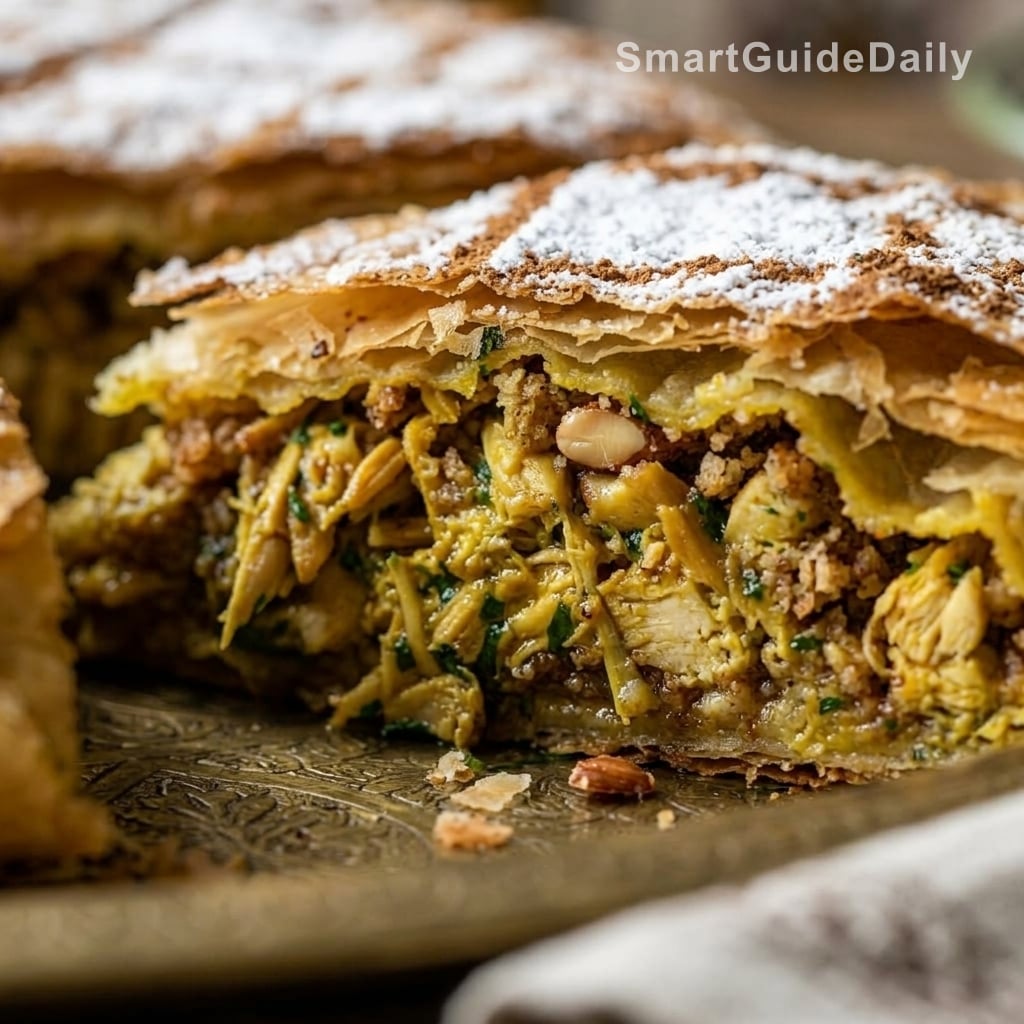
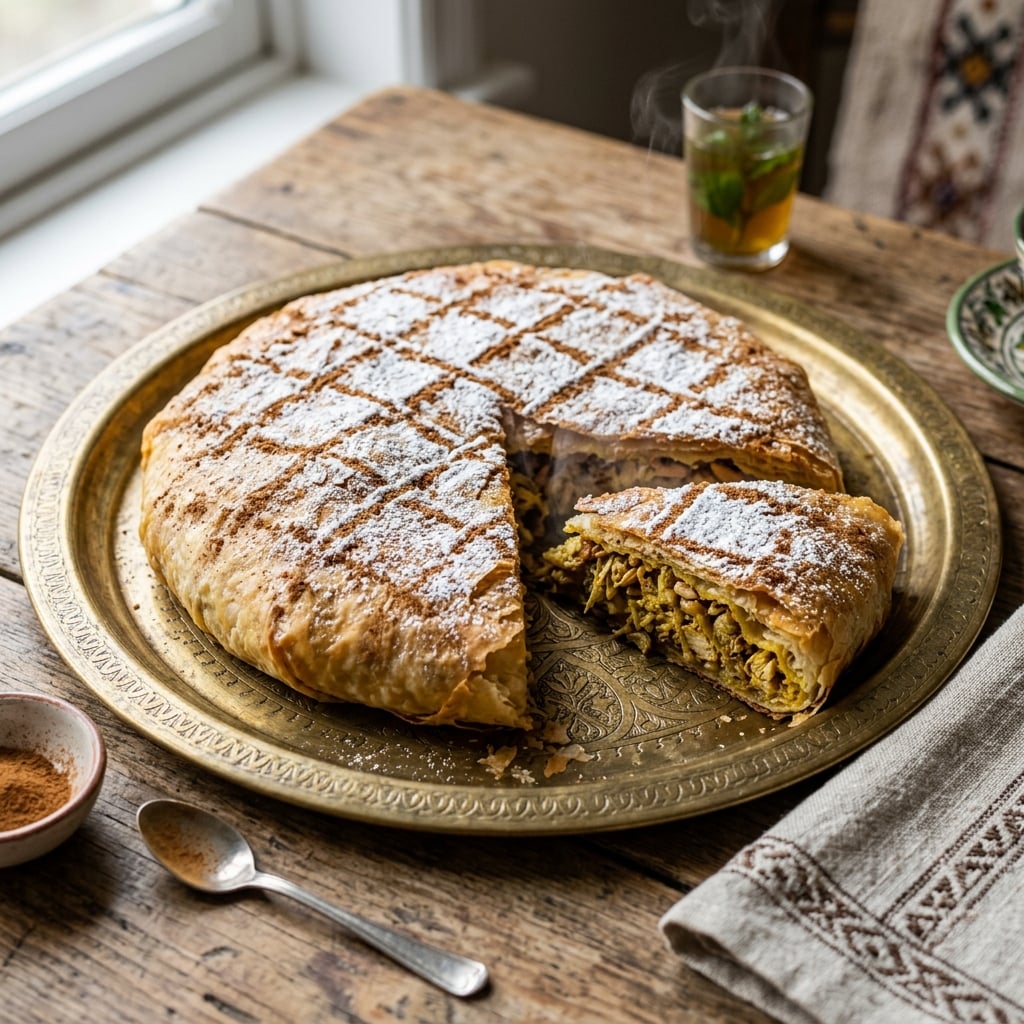
The first cut releases a small cloud of steam and cinnamon. Beneath the shatteringly crisp phyllo — dusted with powdered sugar in a pattern that looks more deliberate than it is — there is a filling of slow-cooked chicken, egg curd, and ground almonds that smells faintly of saffron and dried ginger. The contrast is the point: the sugar on top is not sweetness for its own sake, it is a counterweight to the deep savory base. Once you understand that, the dish stops seeming strange and starts seeming inevitable.
Why you’ll love this recipe
Ingredient Notes
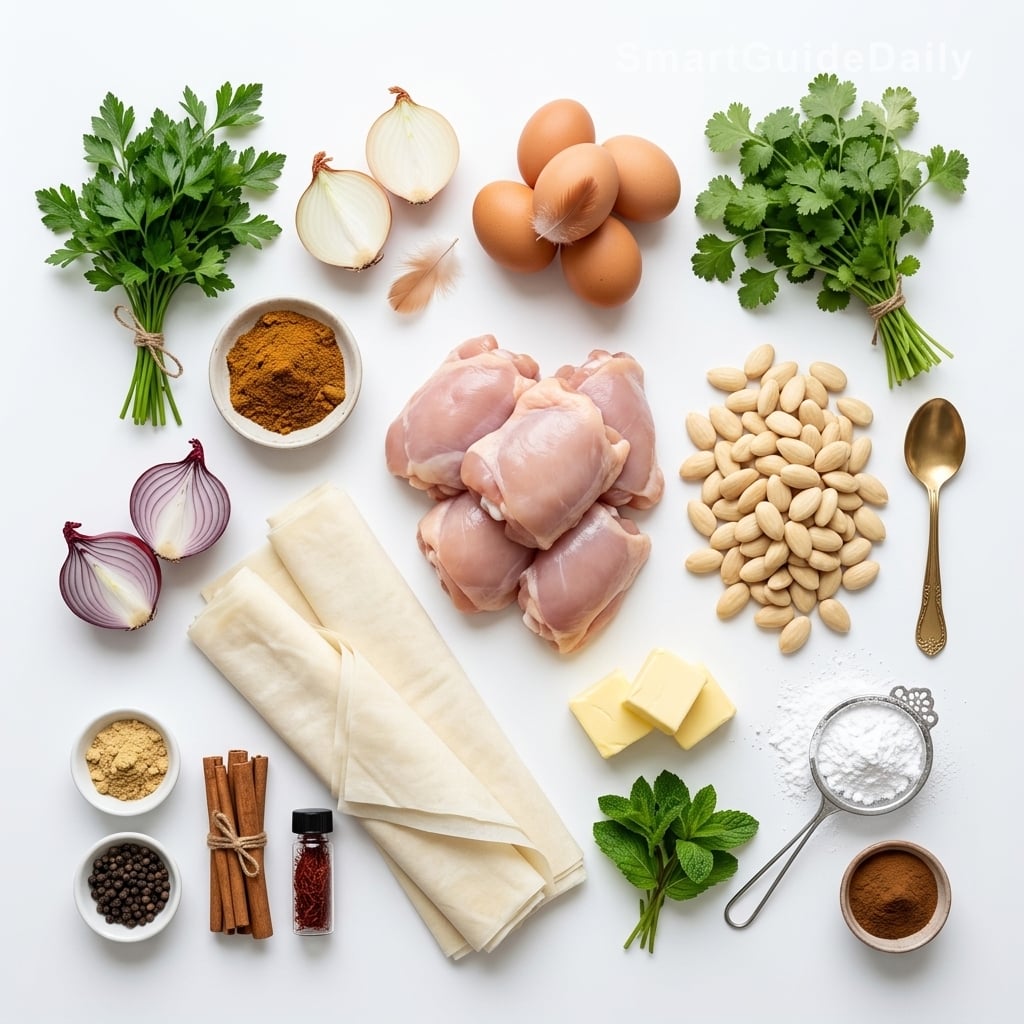
Every component earns its place: the saffron, the almonds, the eggs — none are optional.
- Chicken thighs : Not breasts. Thighs have enough intramuscular fat to stay moist through a long braise and a second bake inside the pastilla. Breast meat turns stringy and dry before the phyllo has finished crisping.
- Saffron : Eight to ten threads dissolved in two tablespoons of warm water, added to the braising liquid. It gives the filling a faint gold tone and an earthiness that is hard to identify but noticeably absent without it. Do not use saffron powder — it is almost always adulterated.
- Ras el hanout : A North African spice blend that typically includes cumin, coriander, cardamom, cinnamon, ginger, and turmeric, among others. The exact composition varies by producer. Buy from a spice shop — the supermarket versions have often been sitting too long and taste like warm air.
- Blanched almonds : Ground coarsely by hand or in short pulses in a food processor. You want texture — not flour, not whole nuts. Toast them lightly before grinding. The flavor deepens significantly and the layer holds its structure better during baking.
- Phyllo sheets : Commercial frozen phyllo works fine. Thaw it overnight in the refrigerator, not at room temperature — sheets that thaw too fast become sticky and tear on contact. Keep the stack covered with a barely damp cloth while you work.
- Eggs : Scrambled directly into the warm reduced braising liquid, not beaten separately and poured in. The technique matters: you want loose, barely-set curds folded through the shredded chicken — not a solid cooked-egg layer that would make the filling dense and rubbery.
The Filling Is Where the Work Happens — and Most of It Is Passive
Brown the chicken thighs in clarified butter until the skin is deep gold and the fat has partially rendered into the pan. Add sliced onions, the ras el hanout, saffron water, a cinnamon stick, ground ginger, a small spoon of honey, and enough water to come halfway up the meat. Cover and simmer on low for forty-five minutes. The liquid should reduce to a thick, aromatic sauce — not broth, not a dry fond, but something in between that coats a spoon. When the chicken is cool enough to handle, pull it off the bone and shred it coarsely with your fingers. Return it to the pan over low heat. Beat the eggs lightly and stir them directly into the warm mixture, moving them slowly through the filling until they set in soft, yielding folds. The smell at this point — cumin, saffron, caramelized onion — is exactly what the finished pastilla will taste like at the table.
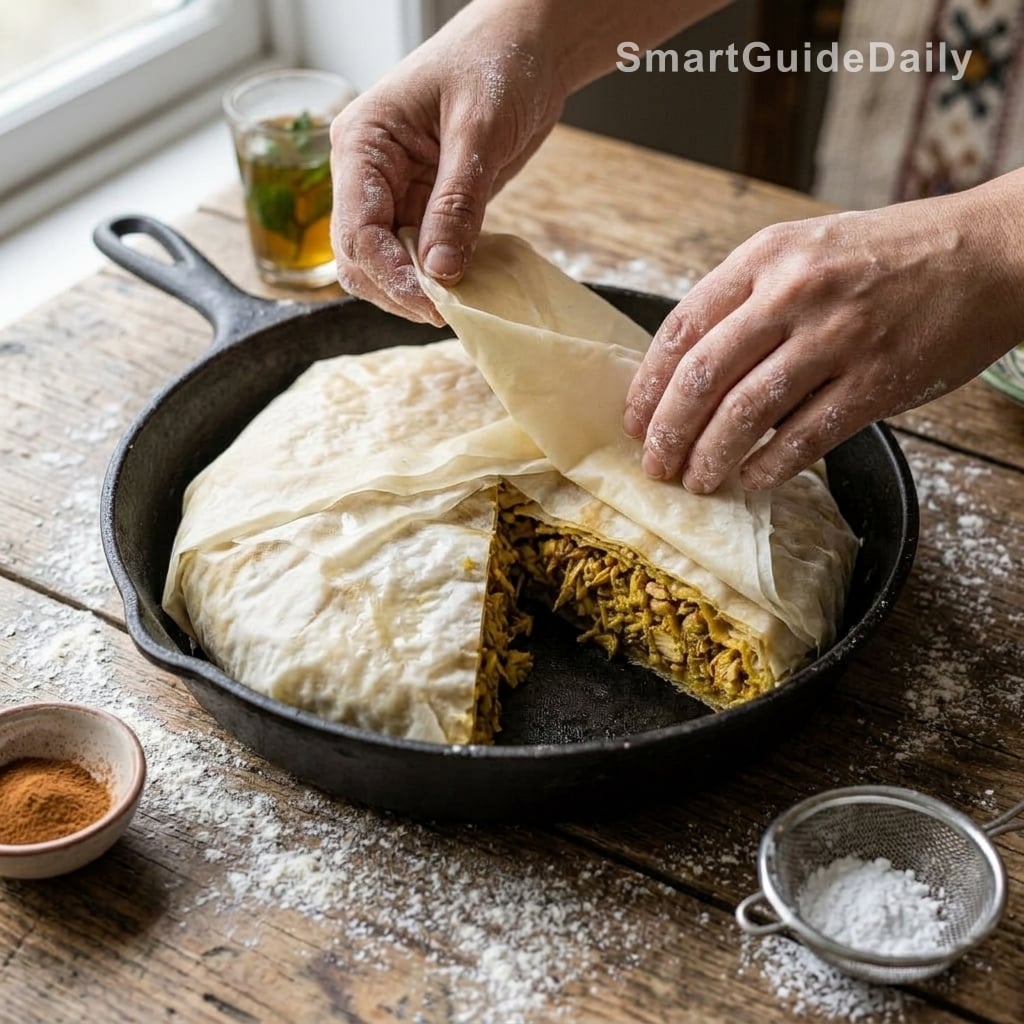
Why the Almond Layer Is Not Optional, and Not Decorative
Between the chicken filling and the top phyllo crust, there is a layer of ground almonds mixed with powdered sugar and cinnamon. English-language recipes frequently describe this as the ‘sweet layer,’ which is technically accurate and functionally misleading. Its real job is structural. The almonds create a moisture barrier between the wet filling and the phyllo above, which would otherwise soften and collapse during baking. They absorb excess liquid from the egg curd while contributing a faint, dry nuttiness that anchors the sweetness of the top dusting. The ratio that works: approximately 80 grams of coarsely ground toasted almonds, 20 grams of powdered sugar, and half a teaspoon of cinnamon. Skip this layer and the pie leaks. Keep it and the textures stay distinct from base to crust.
Where Most Home Cooks Lose Control of the Phyllo
The two most common errors are too little butter and uneven application. Too little and the layers fuse into a single pale sheet instead of separating into the distinct, crackling flakes that define pastilla. The goal is to coat each sheet — not saturate it, not dot it. Use a pastry brush and clarified butter, which has less water than whole butter and crisps faster at high heat. One clean pass per sheet, working quickly, because phyllo dries and tears if it sits uncovered. For a 28 cm round pan, plan on eight to ten sheets for the base and four for the lid. The base sheets should extend well past the rim — you will fold them up and over the filling before placing the lid on top. That fold is what seals the edge and keeps the filling in place during baking.
Assemble It Cold, Bake It Hot
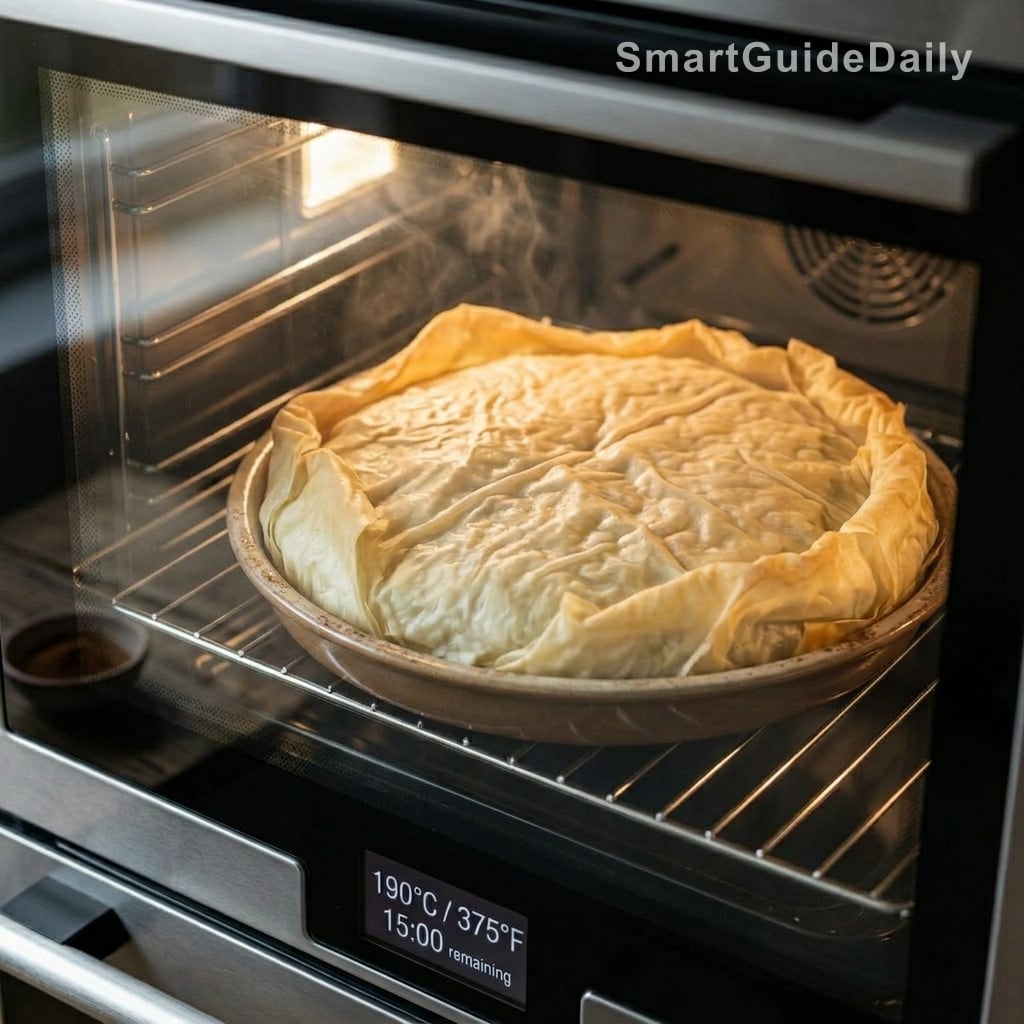
Once the filling is inside the phyllo shell and the lid sheets are buttered and folded under, the whole pie goes into the refrigerator for at least thirty minutes before it goes into the oven. Cold butter on cold dough hitting a hot oven creates steam that separates the layers as it evaporates. Room-temperature pastilla arrives in the oven with the butter already soft, the layers already gently fused. The difference is audible: a well-chilled pastilla crackles when you cut into it. Bake at 200°C (400°F) for 20 to 25 minutes until the surface is an even, deep amber — not pale gold, not the color of burnt caramel. When it comes out of the oven, invert it onto a wire rack for two minutes, then back onto the serving tray. This brief inversion dries the base slightly and prevents the bottom crust from steaming on the plate.
Tips & Tricks
- Dust the powdered sugar and cinnamon only after the pastilla has cooled for five minutes out of the oven. Applied to a hot surface, the sugar dissolves into the phyllo and vanishes. You want a visible white dusting against the amber crust — that visual contrast is part of the dish, and it disappears if you rush it.
- Use a serrated bread knife to cut. A straight blade compresses the phyllo layers on the way through; a serrated edge catches the flakes and cuts cleanly. One firm downward stroke per cut, no sawing.
- The filling must be completely cool before assembly. Warm filling softens the butter in the phyllo sheets before they reach the oven, collapsing the layers. Prepare the filling the evening before if you can — it is better at 24 hours than at two.
- If individual phyllo sheets keep tearing, brush two together as a single layer. The result is slightly thicker but crisps adequately and handles without frustration. This is not a shortcut — it is what professional kitchens do with older stock.
Can I make pastilla the day before serving?
Yes, and it is arguably better that way. Cook and cool the filling completely, then refrigerate it overnight. Assemble the pastilla the following day, chill it for 30 minutes, and bake just before guests arrive. The filling firms up overnight and holds its structure more cleanly during assembly.
My phyllo keeps tearing. What am I doing wrong?
Almost always, the issue is drying — phyllo exposed to air for more than a few minutes becomes brittle. Keep the stack covered with a barely damp kitchen towel and work one sheet at a time. If tearing persists, brush two sheets together as a single layer before placing them; it handles more reliably and still crisps in the oven.
Can I use something other than chicken?
Turkey thigh meat works well with the same method — a longer braise, roughly 60 minutes, but the result is close. Traditionally, pastilla was made with pigeon or squab, which is richer and more gamey; if you can source it, it is worth trying. Avoid any white, lean poultry — the filling needs fat to stay moist through two rounds of heat.
Is the powdered sugar on top actually traditional, or is it a tourist-facing adaptation?
The sweet-savory combination in pastilla is genuinely traditional, not a simplification for outside audiences. The dish has roots in Andalusian-Moroccan culinary history, where sweet and savory existed in the same plate without the strict separation that became standard in European cooking. The exact sugar-to-cinnamon ratio and the lattice presentation vary by household and region — that part is more decorative convention than fixed rule.
How do I reheat leftovers without destroying the crust?
Place slices on a wire rack set over a baking tray and heat at 200°C (400°F) for eight minutes. The rack keeps the base off the hot surface so air circulates underneath, which is the only way to bring back any real crispness. A microwave will make the phyllo limp in under a minute — do not use it.
Do I need to find ras el hanout, or can I substitute something?
Ras el hanout is worth sourcing properly — a decent blend from a spice shop costs very little and carries the characteristic profile of the dish. In a pinch, combine equal parts ground cumin, coriander, cinnamon, and ginger with a small pinch of cardamom and turmeric. It will not be identical, but it will be functional.
Moroccan Pastilla: The Sweet-Savory Pie English Readers Never Get Right
Moroccan
Mains
|
Prep Time
50 minutes
|
Cook Time
45 minutes
|
Total Time
1h35
|
Servings
6 portions
|
A layered Moroccan pie of spiced chicken, soft egg curd, and toasted almonds enclosed in crisp buttered phyllo, finished with powdered sugar and cinnamon. Make the filling the day before. The assembly is faster than it looks.
Ingredients
- 6 bone-in chicken thighs (approx. 900g total)
- 2 medium yellow onions, thinly sliced
- 2 tsp ras el hanout
- 1 tsp ground ginger
- 1 cinnamon stick
- 10 saffron threads, dissolved in 2 tbsp warm water
- 1 tbsp honey
- 250 ml water
- 4 eggs, lightly beaten
- 1 small bunch fresh cilantro, chopped
- 1 small bunch fresh flat-leaf parsley, chopped
- 100g blanched almonds
- 30g powdered sugar, plus extra for dusting
- 1.5 tsp ground cinnamon, plus extra for dusting
- 12-14 sheets commercial phyllo pastry, thawed overnight in fridge
- 120g clarified butter, melted
- salt and black pepper to taste
Instructions
- 1Heat 1 tbsp clarified butter in a deep, wide pan over medium-high. Brown the chicken thighs on all sides until deep gold, about 4 minutes per side. Remove and set aside.
- 2In the same pan, cook the onions over medium heat for 8 minutes until soft and translucent. Add the ras el hanout, ground ginger, and cinnamon stick. Stir for 1 minute.
- 3Return the chicken to the pan. Add the saffron water, honey, and plain water. Cover and simmer on low heat for 45 minutes. The liquid should reduce to a thick, coating sauce.
- 4Remove the chicken. When cool enough to handle, pull the meat off the bone and shred coarsely. Discard the cinnamon stick.
- 5Return shredded chicken to the pan over low heat. Stir in the beaten eggs and move them gently through the warm mixture until they just set in soft curds. Add the chopped cilantro and parsley. Season with salt and pepper. Remove from heat and cool completely.
- 6Toast the almonds in a dry skillet over medium heat for 4 minutes, stirring regularly. Cool, then grind coarsely (not to a powder). Mix with the powdered sugar and ground cinnamon. Set aside.
- 7Preheat the oven to 200°C (400°F). Brush a 28 cm round oven-safe pan or skillet with clarified butter.
- 8Layer 7 phyllo sheets into the pan one at a time, brushing each generously with clarified butter. Let the sheets overhang the rim by at least 8 cm all around.
- 9Spread the chicken-egg filling evenly over the phyllo base. Spread the almond mixture evenly on top.
- 10Layer 4 more phyllo sheets on top, brushing each with butter. Fold the overhanging base sheets up and over the top layers, pressing gently to seal the edge. Brush the entire top surface with butter.
- 11Refrigerate the assembled pastilla for at least 30 minutes.
- 12Bake for 20-25 minutes until the surface is a deep, even amber. Invert onto a wire rack for 2 minutes, then transfer back onto a serving tray.
- 13Dust with powdered sugar and ground cinnamon in a crosshatch or lattice pattern. Cut with a serrated knife using a single firm downward stroke. Serve immediately.
Notes
• The filling can be made up to 24 hours ahead and stored in the fridge. It must be fully cold before assembly — warm filling softens the phyllo before it reaches the oven.
• Apply the powdered sugar and cinnamon dusting only after the pastilla has rested 5 minutes out of the oven. On a hot surface it dissolves into the phyllo and becomes invisible.
• Clarified butter is not optional here. Its lower water content is what allows the phyllo to crisp rapidly at high heat. Whole butter produces a softer, paler crust.
• Leftovers reheat on a wire rack at 200°C (400°F) for 8 minutes. Do not use a microwave.
Nutrition Facts (per serving, estimated)
| 600 kcalCalories | 27gProtein | 30gCarbs | 38gFat |