|
Prep Time
5 minutes
|
Cook Time
15 minutes
|
Total Time
20 minutes
|
Servings
2 portions
|
Does a bowl of pho actually require eight hours and a stockpot the size of a small child? No. But it does require understanding what makes the broth taste like itself — and that has nothing to do with time. It has to do with heat, applied to the right things, at the right moment.
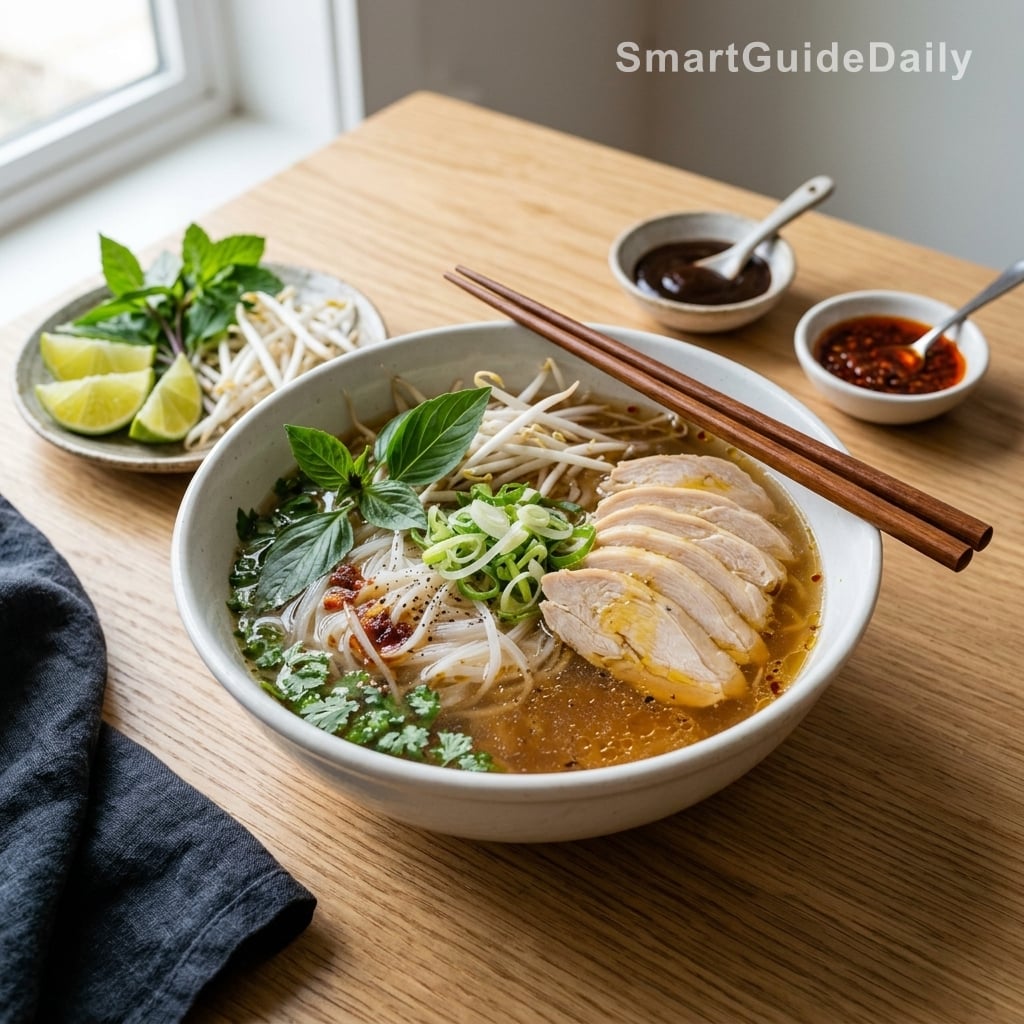
The smell hits before you even get to the table: that specific combination of charred ginger and toasted star anise, warm and slightly medicinal, sharp at the edges. Good pho broth has a clarity to it — visually and in flavor — that comes from doing a few things correctly, not from doing many things for a long time. Thin-sliced chicken goes in pale and comes out just cooked through, the hot broth finishing it in the bowl. The noodles underneath are soft but not collapsed. This is a recipe you can have ready on a Tuesday, or take your time with on a Saturday morning. Either way, the broth is the thing.
Why you’ll love this recipe
Ingredient Notes
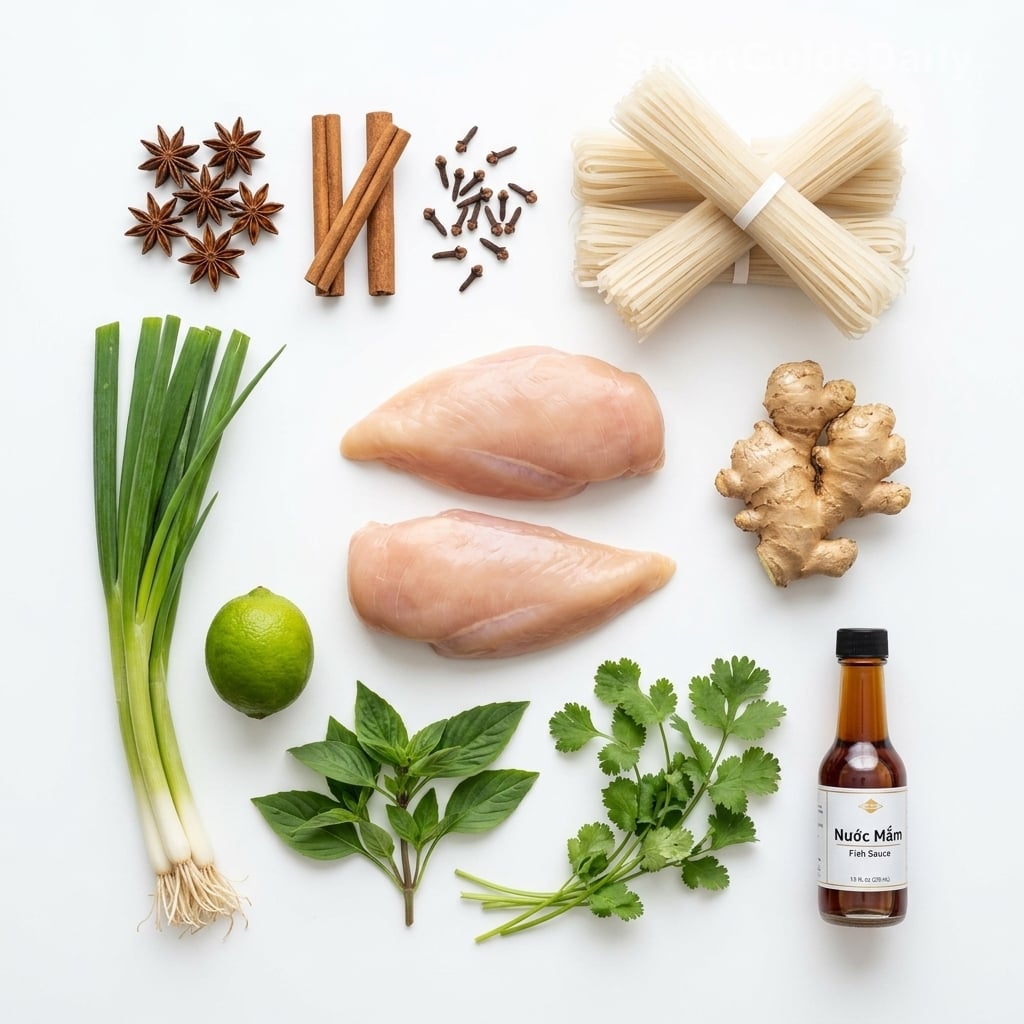
Everything the broth needs: the spices are non-negotiable, the rest is fast.
- Ginger : The single most important aromatics decision. It goes in the dry pan, cut-side down, over high heat until the flesh is deeply charred — not browned, charred. That caramelization is what gives the broth its backbone. Don’t skip it, don’t rush it.
- Star anise : Two whole pods. Not more. Star anise is the dominant note in pho and it becomes medicinal fast if you overdo it. Toast them briefly in the dry pan after the ginger comes out — thirty seconds is enough to release the oils.
- Fish sauce : This is what seasons the broth, not salt. Add it gradually toward the end and taste as you go. It should taste savory and slightly funky in the pot — not salty. The noodles and chicken will dilute it in the bowl.
- Chicken stock : Use the best store-bought you have, or homemade if you’ve got it. The charred aromatics and spices will improve mediocre stock considerably, but they can’t fix water.
- Chicken breast : Slice it thin — around 3mm — against the grain. It goes into the bowl raw and the ladled broth cooks it. Pull your stock off the heat for thirty seconds before ladling if you want to be precise about it; the carry-over heat is sufficient.
- Dried rice noodles : Soak them in cold water for at least ten minutes before the broth is ready, then cook them in a separate pot of boiling water for two to three minutes. Drain and rinse. Do not cook them in the broth — they’ll turn to paste and cloud the liquid.
The Step That Makes or Breaks the Whole Bowl
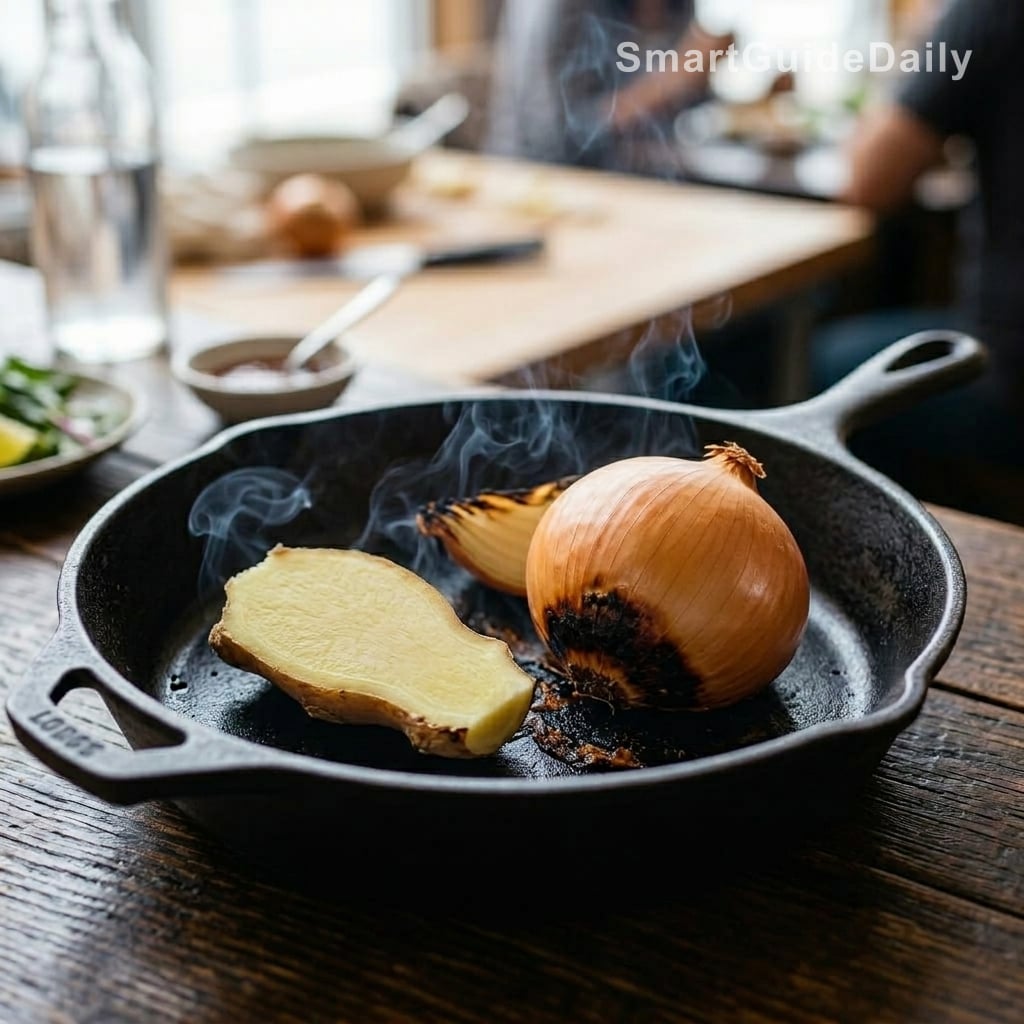
Char the aromatics. This is not optional and it is not metaphorical. Take your ginger — a thumb-sized piece, unpeeled, halved lengthwise — and press it cut-side down into a dry cast iron or stainless pan over high heat. Do the same with half a white onion. Leave them there. Don’t move them. You want the flesh to blacken against the pan, which takes around three to four minutes. The smell will be intense — slightly sweet, slightly acrid, smoke beginning to thread upward from the edges. That’s correct. Those charred surfaces are what give your broth the depth that a short simmer alone cannot produce. Without this step, the broth will be fine. With it, it will taste like it has been cooking since morning.
Why the Spices Don’t Need More Time Than You Think
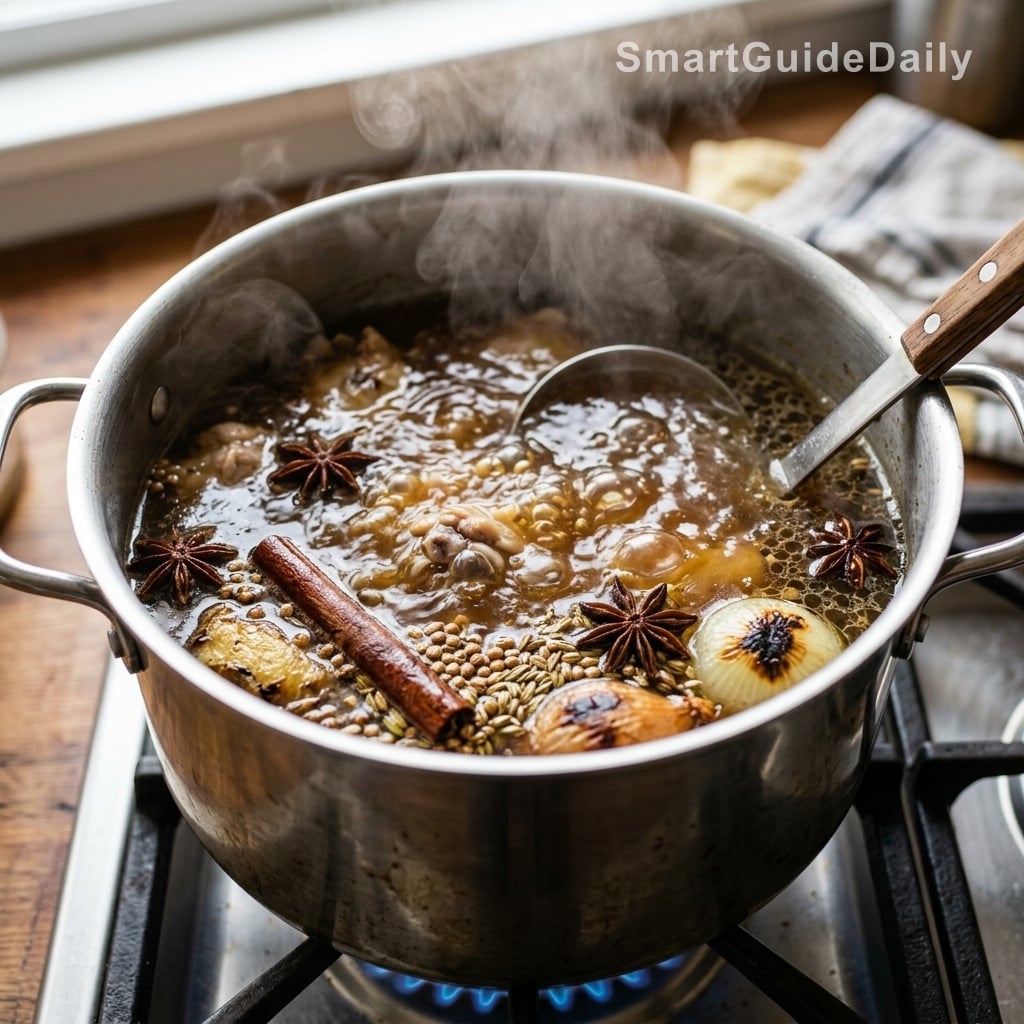
Toast your spices — star anise, a short cinnamon stick, four cloves, a small handful of coriander seeds — in the same dry pan for thirty seconds after the ginger and onion come out. Then add your stock, bring it to a simmer, and let the whole thing go for fifteen minutes over medium heat. Not a rolling boil. A gentle, steady simmer. Boiling clouds the broth and extracts bitterness from the spices faster than flavor. Fifteen minutes at a controlled temperature is enough for the star anise and cinnamon to fully release into the liquid. If you push it to twenty, the anise starts to dominate. Keep it at fifteen. Season with fish sauce at the ten-minute mark and again at the end — the broth should taste slightly more concentrated than you want in the bowl, because it will be diluted by the noodles.
The Noodles: A Problem You Solve Separately
Cook the rice noodles in a separate pot of plain boiling water, not in the broth. This is not a preference — it’s a structural requirement. Rice noodles release starch as they cook, and that starch will turn your clear broth opaque and thick in a way that no amount of skimming will fix. Soak the dried noodles in cold water while the broth simmers, then boil them for two to three minutes, drain, and rinse under cold water to stop the cooking. They’ll be slightly firm when they go into the bowl. The hot broth will handle the rest.
Assembly Is Not an Afterthought
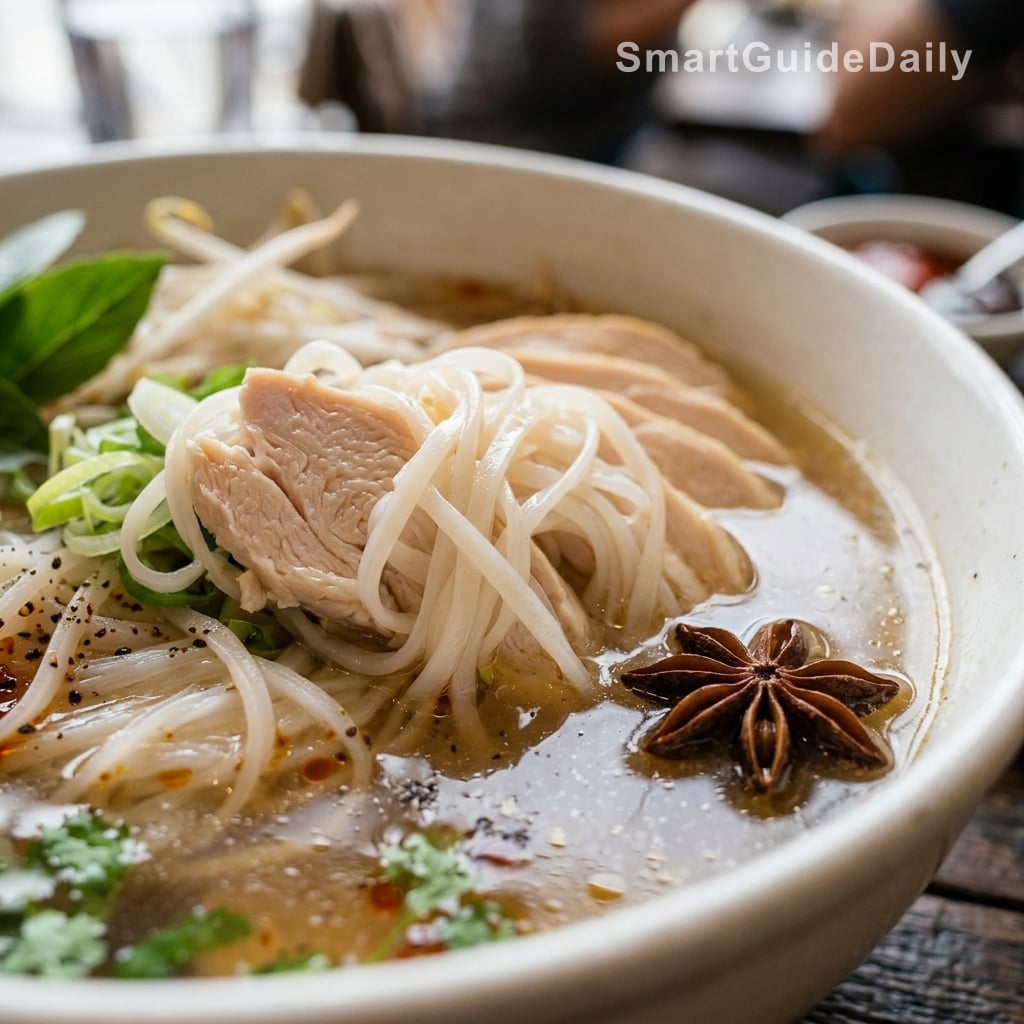
Heat your bowls. This matters more than it sounds — cold ceramic will drop the temperature of your broth by several degrees in the first minute, and pho served lukewarm is a different and lesser dish. Run hot tap water into the bowls for thirty seconds, then drain and dry. Put the noodles in first, then the raw-sliced chicken laid flat across them. Ladle the broth over — hot enough that you can see the steam, hot enough that the chicken changes color within the first ten seconds. Finish with bean sprouts, fresh Thai basil, and thinly sliced scallion. Lime wedges on the side. Hoisin and chili sauce if you want them, though the broth should be good enough to drink plain.
Tips & Tricks
- Strain the broth before serving through a fine-mesh strainer. Whole spices left in the bowl continue to steep and the flavor tips into bitterness within a few minutes. The straining step takes thirty seconds and the difference is noticeable.
- If you want a slightly richer broth, add one chicken thigh to the simmering pot and remove it at the ten-minute mark. Shred the meat over the bowl or save it for something else. The fat and collagen from the thigh will add body that breast alone doesn’t give you.
- Make more broth than you need. It keeps refrigerated for four days and freezes well. The noodles and toppings take three minutes; having the broth ready is the actual shortcut.
- Don’t season with soy sauce. It changes the color and the flavor profile in a way that reads as a different dish. Fish sauce is the right tool here — start with two tablespoons per liter of stock, taste, and adjust.
Can I use chicken thighs instead of breast?
Yes, and there’s an argument for it. Thigh meat has more fat and won’t turn chalky if the broth is slightly hotter than ideal. Slice it the same way — thin, against the grain — and the broth will cook it through in the bowl just as reliably. The flavor of the broth will also pick up a little more body if you simmer a whole thigh in the pot and remove it before serving.
Why does my broth look cloudy?
You boiled it. Agitation breaks the fat and proteins into tiny particles that stay suspended in the liquid. Keep the broth at a steady simmer — small bubbles breaking the surface, not a full rolling boil — and it will stay clear. Also make sure you’re cooking your noodles separately; starch from the noodles is the other common culprit.
Can I make the broth ahead of time?
Yes, and it holds up well. Refrigerate it for up to four days or freeze it for up to three months. Strain it before storing so the whole spices don’t keep steeping in the cold. When you reheat it, bring it back to temperature gradually over medium heat — don’t blast it on high, which clouds it the same way as boiling.
What if I can’t find Thai basil?
Use it if you can find it — the anise note in Thai basil echoes the star anise in the broth in a way that Italian basil doesn’t. That said, the bowl works without it. Mint is a closer substitute than standard basil. Cilantro is also traditional in some regional versions of pho gà and fits well here.
Can I use soy sauce instead of fish sauce?
You can, but it changes the dish noticeably. Fish sauce adds umami and a mild funkiness that anchors the broth; soy sauce adds saltiness and a slightly bitter edge. If you use soy sauce, start with half the amount and adjust from there, or it will overpower everything else. Coconut aminos work better than soy if you’re avoiding fish-based ingredients.
Does the raw chicken actually cook fully in the bowl?
Yes, provided the broth is hot enough when you ladle it — meaning just off a simmer, not lukewarm from sitting. The chicken slices need to be thin: around 3mm. At that thickness, they reach a safe internal temperature within sixty to ninety seconds of contact with near-boiling broth. If you’re uncertain, let the bowl sit untouched for two minutes before eating.
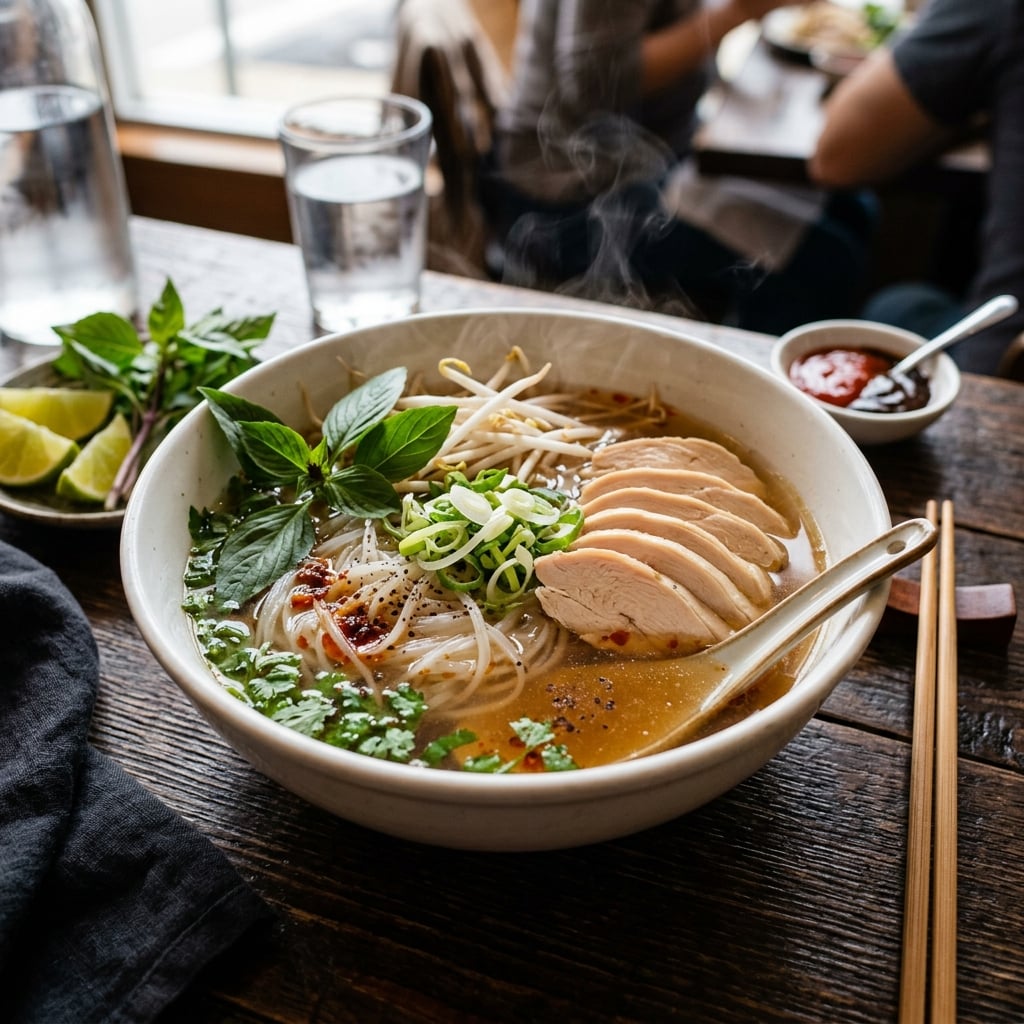
20-Minute Chicken Pho
Vietnamese
Soups & Broths
|
Prep Time
5 minutes
|
Cook Time
15 minutes
|
Total Time
20 minutes
|
Servings
2 portions
|
A quick pho gà that earns its broth through charred aromatics and toasted spices, not a long simmer. Clear, aromatic, and built correctly.
Ingredients
- 1 liter good-quality chicken stock
- 300g chicken breast, thinly sliced against the grain (about 3mm)
- 150g dried flat rice noodles (bánh phở)
- 40g fresh ginger (one thumb-sized piece), halved lengthwise
- 1/2 white onion, halved
- 2 whole star anise
- 1 cinnamon stick (about 5cm)
- 4 whole cloves
- 1 tsp coriander seeds
- 3 tbsp fish sauce, plus more to taste
- 1 tsp sugar
- 100g fresh bean sprouts
- 1 small bunch Thai basil
- 2 scallions, thinly sliced
- 1 lime, cut into wedges
Instructions
- 1Place ginger halves and onion cut-side down in a dry cast iron or stainless pan over high heat. Leave them untouched for 3–4 minutes until the flesh is deeply charred — not just browned. Remove and set aside.
- 2In the same dry pan, toast star anise, cinnamon, cloves, and coriander seeds over medium heat for 30 seconds, stirring once, until fragrant. Do not let them smoke.
- 3Transfer charred aromatics and toasted spices to a medium saucepan. Pour in the chicken stock. Bring to a gentle simmer over medium heat — small bubbles, not a rolling boil.
- 4Add fish sauce and sugar. Simmer for 15 minutes. Taste at the 10-minute mark and adjust fish sauce as needed. The broth should taste slightly more concentrated than you want in the bowl.
- 5While the broth simmers, soak dried rice noodles in cold water for 10 minutes. Then cook in a separate pot of unsalted boiling water for 2–3 minutes until just tender. Drain and rinse under cold water.
- 6Slice the chicken breast thinly against the grain, around 3mm thick. Keep it raw.
- 7Warm your serving bowls with hot tap water for 30 seconds, then drain and dry.
- 8Strain the broth through a fine-mesh strainer into a clean saucepan and bring back to a near-boil.
- 9Divide noodles between the two warmed bowls. Lay the raw chicken slices flat over the noodles.
- 10Immediately ladle the hot broth over the chicken — enough to submerge it. The heat of the broth will cook the chicken through within 60–90 seconds. Let the bowl sit two minutes before eating if uncertain.
- 11Top with bean sprouts, Thai basil leaves, and sliced scallion. Serve with lime wedges on the side.
Notes
• Do not cook the noodles in the broth. The starch they release will turn a clear broth cloudy and starchy within minutes.
• Charring the ginger and onion is the non-negotiable step. Skipping it produces a broth that tastes flat and lacks depth, regardless of how long you simmer the spices.
• The broth keeps refrigerated for 4 days and freezes well for up to 3 months. Store it strained, without the whole spices.
• If you want a slightly richer body, add one chicken thigh to the simmering pot. Remove and shred it at the 10-minute mark — either serve over the bowl or reserve for another use.
Nutrition Facts (per serving, estimated)
| 470 kcalCalories | 38gProtein | 58gCarbs | 4gFat |