|
Prep Time
15 minutes
|
Cook Time
20 minutes
|
Total Time
35 minutes
|
Servings
4 portions
|
How many bowls of mapo tofu have you eaten that were just warm and vaguely red? Most of them, probably. The gap between what this dish can be and what it usually is comes down to one jar — and whether you bought the right one.
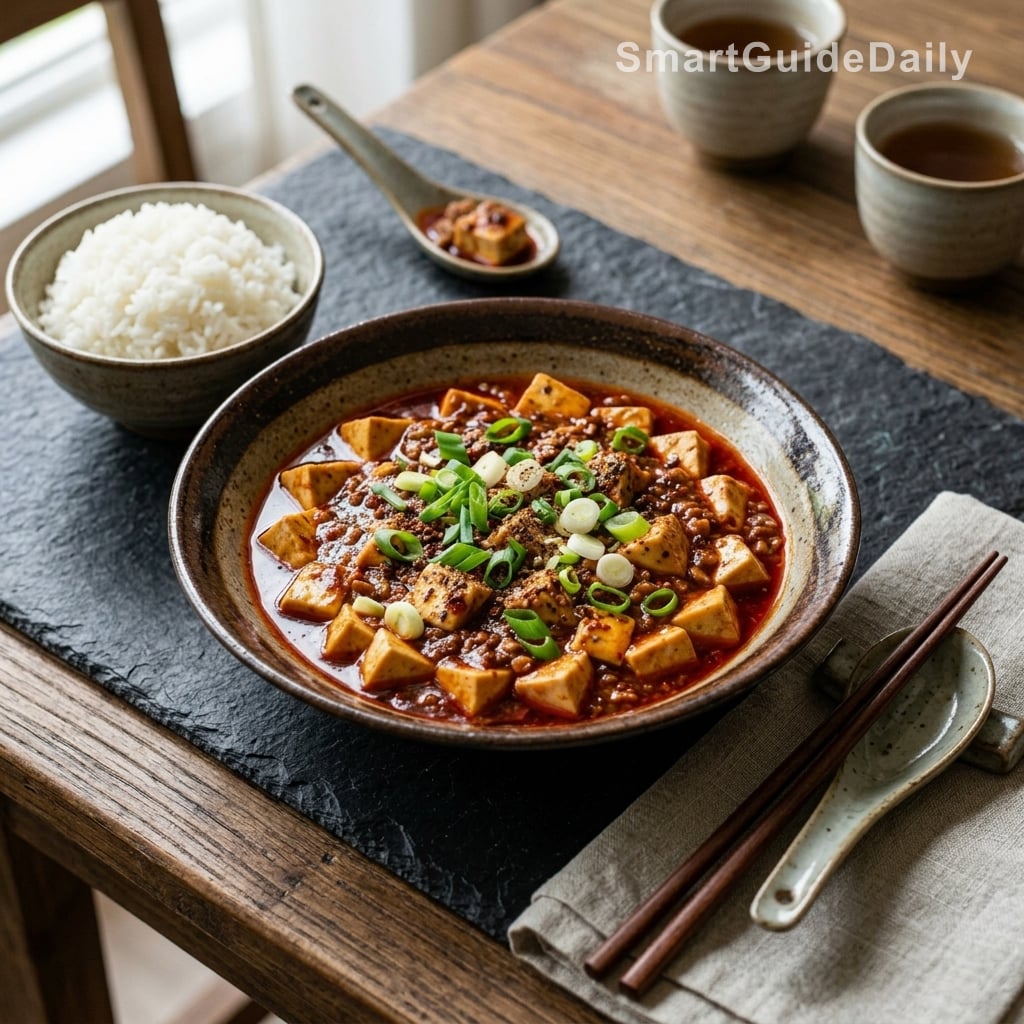
When mapo tofu works, it’s a study in controlled heat. The oil runs a deep brick-red, the tofu holds its shape without turning rubbery, and the numbing buzz of Sichuan pepper builds at the back of your jaw before you’ve finished the first bite. The sauce is glossy, not watery. The beef — we’re using ground beef here, which reads closer to the original than turkey — breaks down into fine pieces that cling to the curd. This is a weekend dish. Not because it’s complicated, but because you should not rush it.
Why you’ll love this recipe
Ingredient Notes
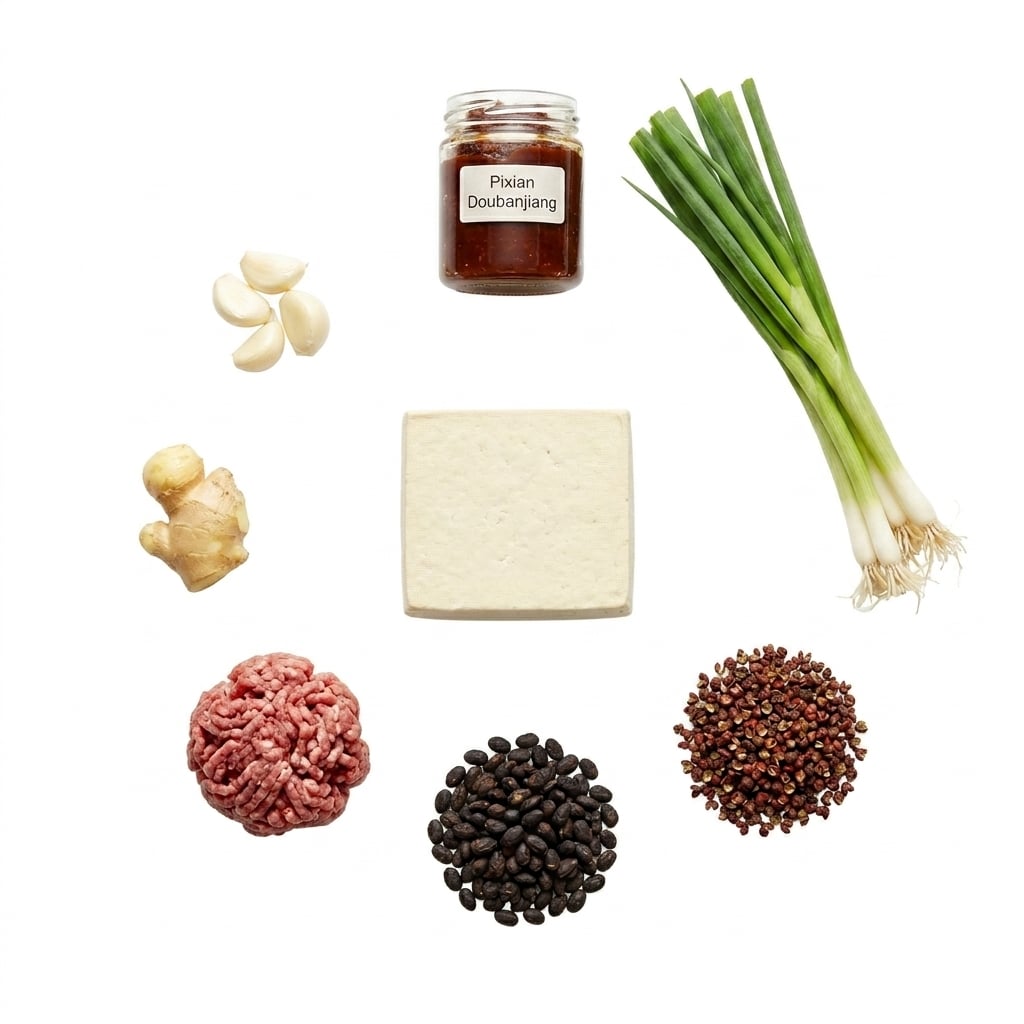
Everything on the counter before it matters: Pixian doubanjiang at the center, where it belongs.
- Pixian doubanjiang : Fermented broad beans and chili, aged in clay urns in Pixian county, Sichuan province. It is not interchangeable with Korean gochujang or generic chili bean sauce. If the jar doesn’t say Pixian (郫县), the flavor profile changes entirely. Find it at any Chinese grocery store. The price difference versus inferior versions is negligible, and the result is not.
- Sichuan peppercorns (hua jiao) : Toast them dry in a pan for ninety seconds, then grind. Pre-ground Sichuan pepper from a standard spice rack has usually lost the volatile compounds responsible for the mouth-numbing effect — which is the entire point of using them. Don’t skip the toasting step.
- Medium-firm tofu : Not silken, not extra-firm. Medium-firm holds its shape through a brief simmer while still yielding to light pressure. Silken collapses; extra-firm doesn’t absorb the sauce. Drain it well, cut into 1.5-inch cubes, and don’t move it more than necessary once it’s in the wok.
- Ground beef (80/20) : The fat content matters here. Lean ground beef seizes up and goes grainy under high heat. 80/20 renders enough fat to emulsify with the doubanjiang and produce the glossy, cohesive sauce the dish needs.
- Douchi (fermented black beans) : About a tablespoon, roughly chopped. They add a layer of salt and fermented depth that sits underneath the doubanjiang without competing with it. If you can’t find them, leave them out — don’t substitute.
- Chicken stock : Around 200ml, to loosen the sauce while the tofu simmers. Use plain, unsalted stock if possible — you’ll have enough salt coming from the doubanjiang and the douchi. Water works in a pinch but flattens the sauce noticeably.
Why the Paste Is the Argument
Most versions of this dish fail in the grocery store aisle. Someone picks up a jar labeled ‘spicy bean sauce’ or ‘chili douban’ without checking the origin, and by the time they’re at the stove, the result is already settled. Pixian doubanjiang has a specific fermented complexity — sour, deep, faintly funky — that comes from months of open-air fermentation in the Sichuan climate. That particular microbial environment is not replicable in a factory outside the region. You taste the difference immediately: the inferior paste delivers heat without body, and the sauce ends up one-dimensional, no different from a basic chili stir-fry. The real paste releases red oil the moment it hits a hot wok. That color is your signal that you bought the right thing.
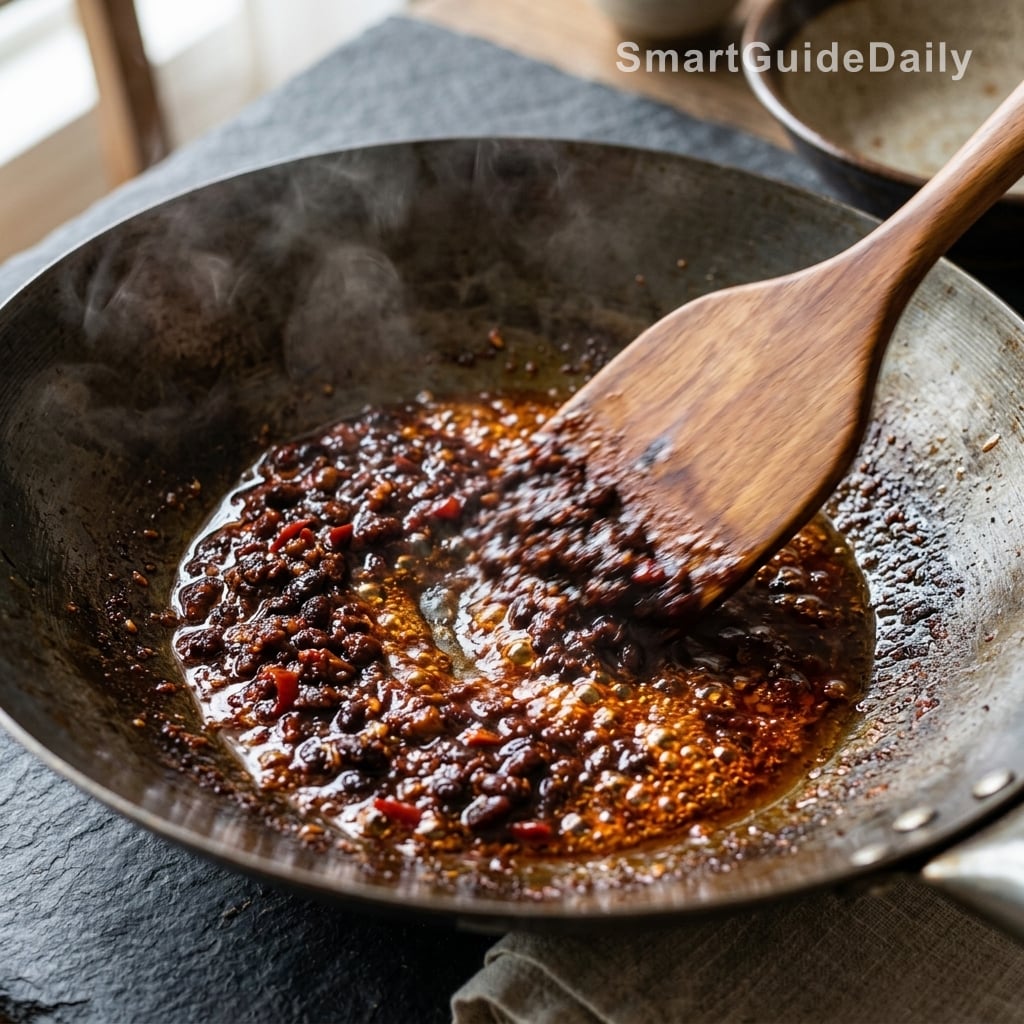
Building the Base
Get your wok hot. Not medium-hot. Hot. Add neutral oil — about three tablespoons — and wait until it shimmers at the edges. Add the doubanjiang first and give it ninety seconds at high heat. You’re frying the paste, not just warming it. It should darken slightly, and the oil will turn a deep, opaque red. The smell is sharp, fermented, slightly acidic. Then add the garlic, ginger, and douchi. Another thirty seconds. This is the only moment in the recipe that requires real attention. Do not walk away from the wok here. The paste scorches faster than you’d expect, and scorched doubanjiang goes bitter in a way nothing can correct. Once the aromatics are in and fragrant, add the ground beef directly into the base and break it apart with a spatula as it cooks.
Getting the Tofu In
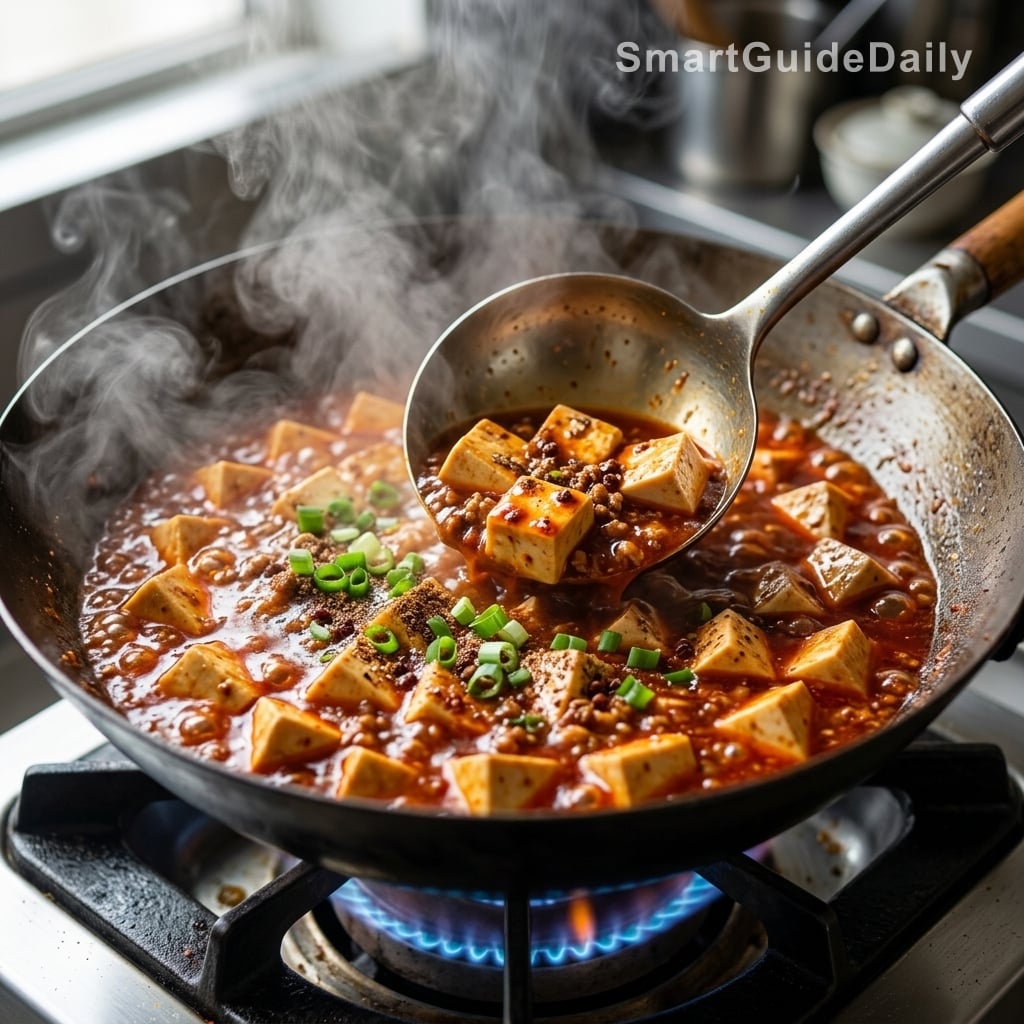
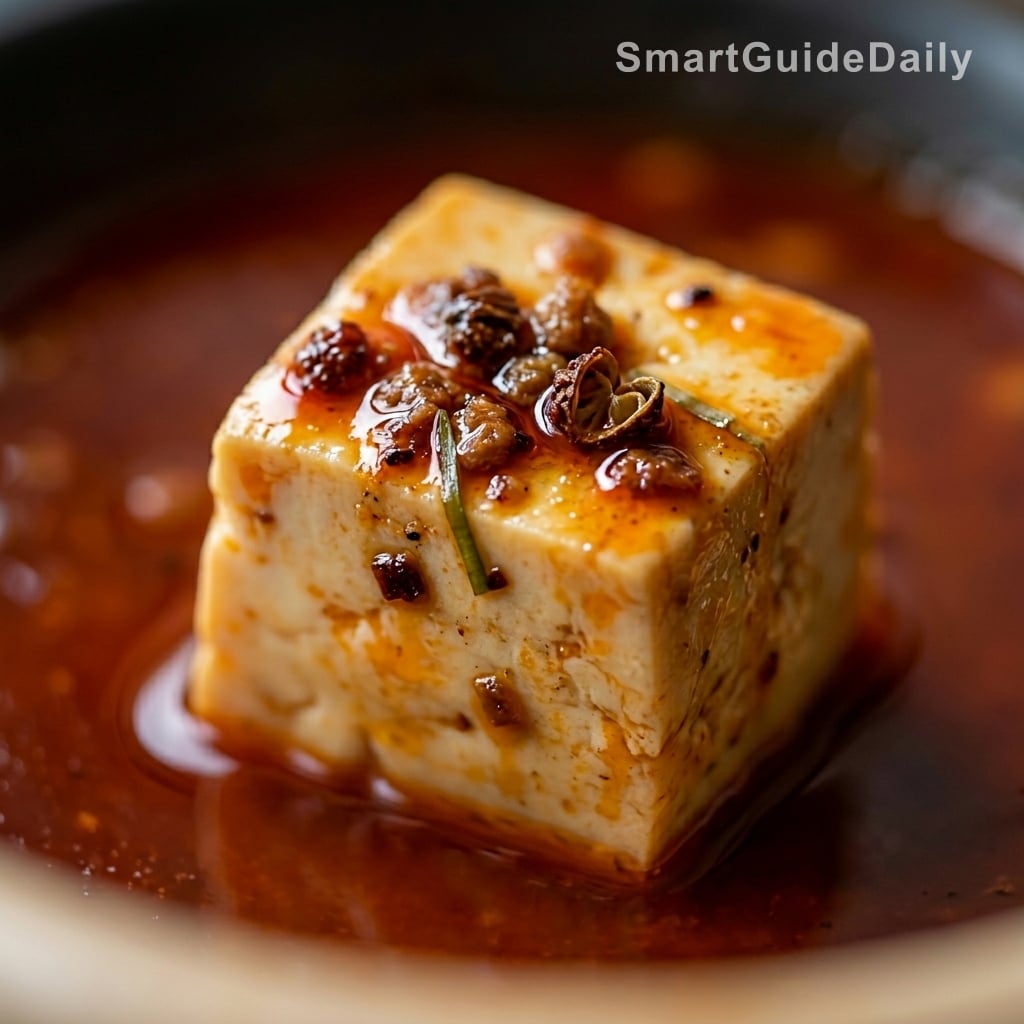
Add the stock first, let it come to a simmer, then lower the tofu in gently — use a spoon or a spider. Tipping the board and sliding it in is how you get broken cubes. The tofu needs about four minutes at a gentle simmer, enough for it to absorb the flavored liquid without disintegrating at the edges. Do not stir aggressively. You can tilt the wok and spoon the sauce over the top, or give it one slow, careful fold at the halfway mark. The goal is tofu that’s warm all the way through and has taken on some of the brick-red color at its edges — a visible sign the sauce has started to penetrate the surface.
The Last Two Minutes
This is where texture is decided. Mix a teaspoon of cornstarch with a teaspoon of cold water and add it in two stages, stirring gently between additions. The sauce should coat the back of a spoon and cling to the tofu without going gluey. If it’s still watery, another thirty seconds of high heat with the lid off will tighten it. Finish with a few drops of sesame oil and the ground toasted Sichuan pepper. The pepper goes on last — heat destroys the volatile oils responsible for the numbing sensation, so adding it early is a waste of the ingredient’s only purpose. Taste once for salt. The doubanjiang is already doing a lot of work in that direction, so you may not need any. Serve immediately over plain steamed rice. The red oil that pools at the surface is not a flaw. Spoon it over the rice.
Tips & Tricks
- Tofu that’s been frozen and thawed develops a spongier, more porous structure that absorbs sauce aggressively. If you have time, freeze your block the day before and thaw it overnight in the fridge. It changes the mouthfeel of the finished dish in a way that’s worth the planning.
- If your doubanjiang tastes very salty — saltiness varies by brand and by how long a jar has been open — use unsalted stock and hold off on any soy sauce entirely. Adding soy sauce is almost never necessary with a good-quality Pixian paste.
- Leftover mapo tofu reheats best in a small saucepan over low heat with a splash of water. The wok method on high heat will push the tofu past the point of no return on the second round.
- The numbing effect of Sichuan peppercorns is not heat in the conventional sense — it’s a tingling, almost electric sensation caused by hydroxy-alpha-sanshool. If you’ve never cooked with them before, add them cautiously the first time. They are more potent than most people expect.
Can I substitute another chili paste if I can’t find Pixian doubanjiang?
You can use a standard doubanjiang, but expect a noticeably different result — less fermented depth, more straightforward heat. Korean gochujang is not a substitute; it’s sweeter and thicker and will take the dish in a completely different direction. If you can’t find Pixian doubanjiang locally, most Chinese grocery stores stock it, and it’s widely available online.
Can I use silken tofu instead of medium-firm?
Technically, yes. Practically, it’s harder to manage — silken tofu breaks apart under any meaningful heat or stirring, and you’ll end up with something closer to a sauce than a dish. If silken is all you have, reduce the simmer time to two minutes and don’t touch it once it’s in the wok.
What exactly are Sichuan peppercorns doing, and can I skip them?
They cause a tingling, numbing sensation on the tongue — technically called paraesthesia, caused by a compound called hydroxy-alpha-sanshool. It’s not heat in the conventional sense. You can skip them, but the dish becomes a straightforward chili stir-fry rather than mapo tofu. If you’ve never used them before, start with half the quantity and adjust.
Is this dish genuinely spicy?
At the quantities listed, it has a clear, sustained heat — not aggressive, but present throughout the meal. The Pixian doubanjiang is the main source. If you want less heat, reduce the doubanjiang to two tablespoons and compensate with a small amount of plain fermented bean paste (tianmianjiang) to maintain body in the sauce.
How do I store and reheat leftovers?
Refrigerate in an airtight container for up to two days. Reheat gently in a small saucepan over low heat with a splash of water or stock — the sauce will have thickened overnight and needs loosening. Do not use a hot wok for reheating; the tofu won’t survive a second round of high heat.
Can I make a vegetarian version?
Yes, and it works well. Replace the ground beef with 150g of finely diced shiitake mushrooms, cooked down until most of their moisture has evaporated before you add the stock. Use vegetable stock in place of chicken stock. The sauce will be slightly less rich but otherwise holds together.
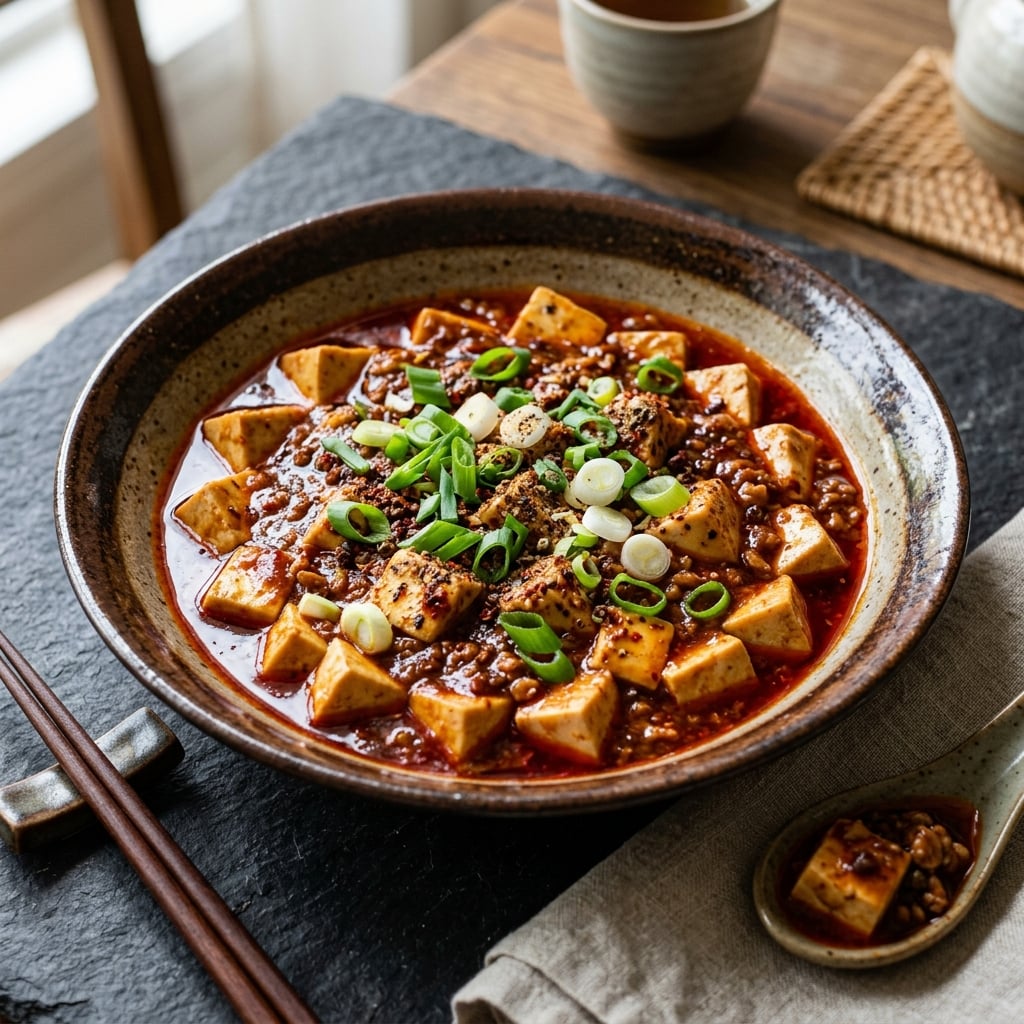
Mapo Tofu the Sichuan Way
Chinese
Mains
|
Prep Time
15 minutes
|
Cook Time
20 minutes
|
Total Time
35 minutes
|
Servings
4 portions
|
A Sichuan classic built on fermented broad bean paste, ground beef, and the numbing heat of toasted Sichuan peppercorns. The quality of the doubanjiang determines the quality of the dish.
Ingredients
- 600g medium-firm tofu, drained and cut into 1.5-inch cubes
- 200g ground beef, 80/20 fat ratio
- 3 tbsp Pixian doubanjiang (Sichuan fermented broad bean paste)
- 1 tbsp douchi (fermented black beans), roughly chopped
- 4 garlic cloves, finely minced
- 1-inch piece fresh ginger, finely minced
- 1 tsp Sichuan peppercorns, toasted and ground
- 200ml unsalted chicken stock
- 3 tbsp neutral oil (vegetable or sunflower)
- 1 tsp cornstarch
- 1 tsp sesame oil
- 2 scallions, thinly sliced, for garnish
Instructions
- 1Toast Sichuan peppercorns in a dry pan over medium heat for 90 seconds until fragrant. Grind with a mortar or spice grinder and set aside.
- 2Pat tofu cubes dry with paper towels. Mince garlic and ginger. Roughly chop douchi.
- 3Heat wok over high heat until smoking. Add neutral oil and heat until it shimmers.
- 4Add doubanjiang and fry for 90 seconds, stirring constantly, until the oil turns deep red and the paste darkens at the edges.
- 5Add garlic, ginger, and douchi. Stir-fry for 30 seconds.
- 6Add ground beef and break it apart with a spatula. Cook for 3 minutes until no longer pink.
- 7Pour in chicken stock and bring to a simmer.
- 8Gently lower tofu cubes into the wok using a spoon. Simmer for 4 minutes, spooning sauce over the tofu without stirring aggressively.
- 9Mix cornstarch with 1 tsp cold water. Add to the wok in two stages, stirring gently, until the sauce coats the back of a spoon.
- 10Remove from heat. Add sesame oil and ground Sichuan pepper. Taste for salt — additional seasoning is usually not needed.
- 11Garnish with sliced scallions and serve immediately over plain steamed rice.
Notes
• The dish draws most of its salt from the doubanjiang and douchi. Taste carefully before adding anything extra — oversalting is the most common mistake.
• Sichuan peppercorns lose their volatile oils quickly after grinding. Grind them fresh for each use; pre-ground powder from a jar is substantially less effective.
• For a vegetarian version, substitute 150g finely diced shiitake mushrooms for the ground beef (cook until moisture evaporates before adding stock) and use vegetable stock.
Nutrition Facts (per serving, estimated)
| 320 kcalCalories | 22gProtein | 8gCarbs | 22gFat |