|
Prep Time
20 minutes
|
Cook Time
50 minutes
|
Total Time
70 minutes
|
Servings
1 litre (5 uses)
|
The tomatoes go in at 220°C, cut-side down, and within twenty minutes the kitchen smells like something that took considerably longer. That’s the trade you’re making here: one Sunday afternoon for five weeknights that feel planned. They are. You did it already.
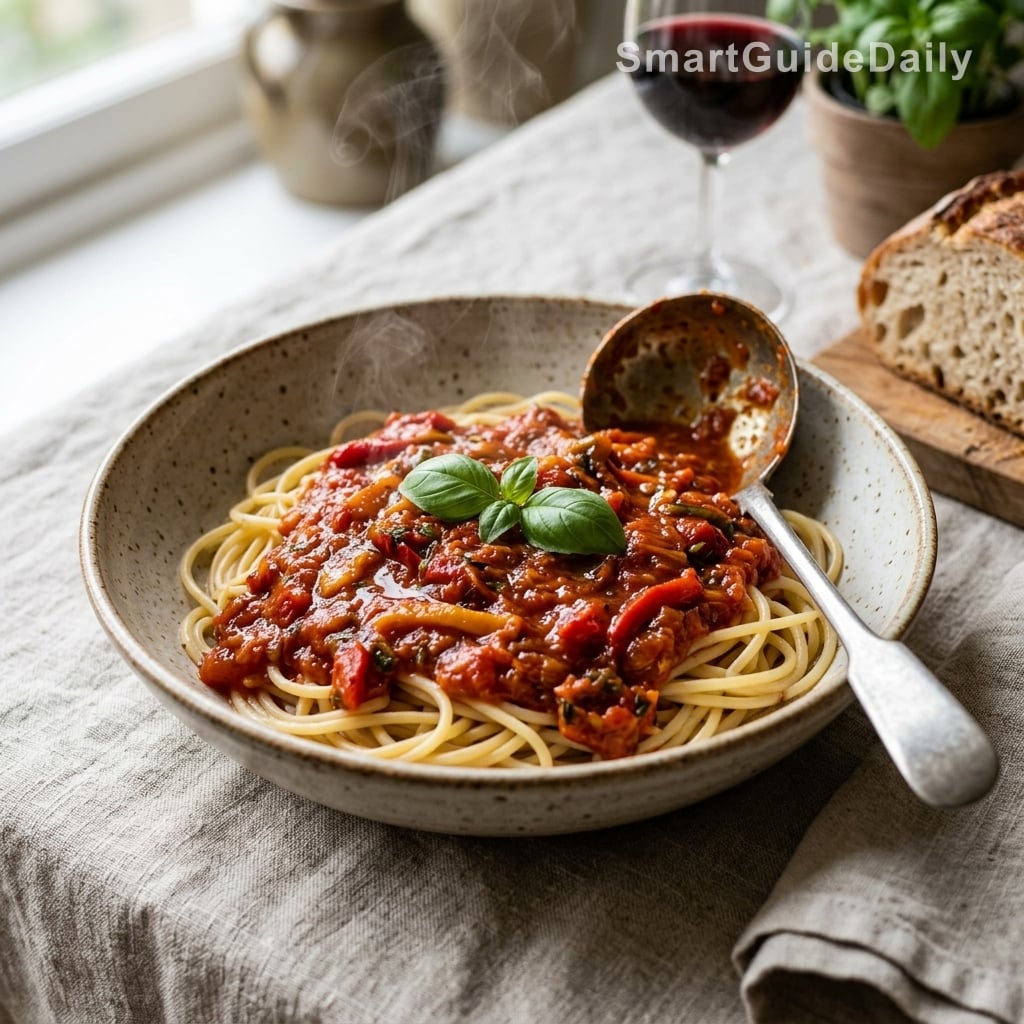
This is a sauce built on reduction and patience, not technique. You roast plum tomatoes and red peppers until their edges blacken and their liquid concentrates into something with actual backbone. Toasted cumin, smoked paprika, walnuts for body, olive oil for cohesion. The result is thick, slightly smoky, and acidic in a way that doesn’t fade when you reheat it. It holds across proteins, across cooking methods, across the whole week.
Why you’ll love this recipe
Ingredient Notes
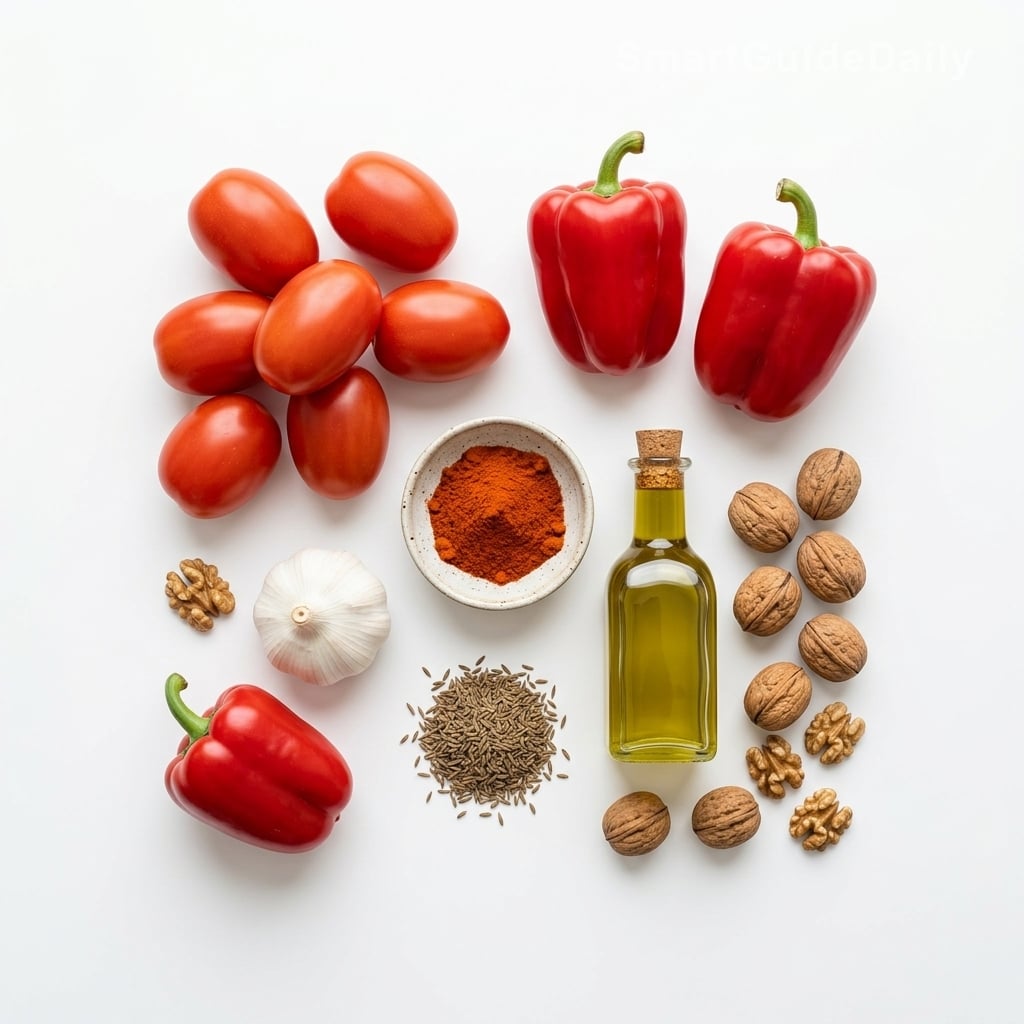
The full roster: nothing that requires a specialty run, everything that rewards patience.
- Plum tomatoes : The base. Plum tomatoes have lower water content than beefsteak and more flesh relative to seed and skin — that matters when you’re reducing. Use 1 kg, halved, placed cut-side down on the sheet pan so the surface caramelizes rather than steams.
- Red bell peppers : Two peppers, halved and seeded. They add sweetness and structural body without adding liquid. Roasted alongside the tomatoes, the edges blacken and char in a way that brings depth the tomatoes alone don’t have.
- Walnuts : Forty grams, toasted in a dry pan until they smell nutty, about four minutes. They thicken the sauce and give it a texture that doesn’t turn watery when reheated. Don’t skip the toasting — raw walnuts contribute almost nothing here.
- Smoked paprika : One teaspoon. Not sweet, not hot. Smoked. It adds a low-level warmth that reads as complexity rather than spice. More than a teaspoon and it dominates everything else.
- Cumin seeds : Half a teaspoon, toasted alongside the walnuts in the final ninety seconds. Whole seeds release more slowly than ground, which is exactly what you want in a sauce that sits in the fridge for days.
- Extra-virgin olive oil : Three tablespoons, stirred in off the heat before you blend. This is what gives the sauce its sheen and keeps it from tasting flat after refrigeration. Neutral oil will not do the same thing.
Turn the Oven to 220°C and Don’t Second-Guess It
High heat is the mechanism, not the setting. You want the cut faces of the tomatoes to caramelize and the pepper skin to blister — not steam, not soften slowly, not cook through gently. Line a sheet pan with parchment. Place the halved tomatoes cut-side down and the pepper halves skin-side up. Scatter six unpeeled garlic cloves around them. Slide the pan into the top third of the oven and close the door. Don’t add liquid. Don’t cover anything. The vegetables need direct, dry heat to concentrate. After twenty minutes the kitchen will smell of roasted acidity and something faintly sweet. That’s correct. Leave them for another ten.
Let the Pan Sit — Five Minutes, Uninterrupted
Pull the pan out. The tomatoes will have collapsed and released a dark, near-syrupy juice pooled at their bases. The pepper skins will be black and blistered in places. Tent the peppers loosely with foil and leave them for five minutes. The trapped steam does the work of loosening the skin — after that, it slips off cleanly without tearing. Meanwhile, squeeze the roasted garlic from its papery skin directly into the pot you’ll use for simmering. The flesh will be soft and golden, with none of the sharpness raw garlic carries. That transformation is exactly why you roasted them unpeeled.
Pass It Through the Mill — or Don’t, But Decide Before You Start
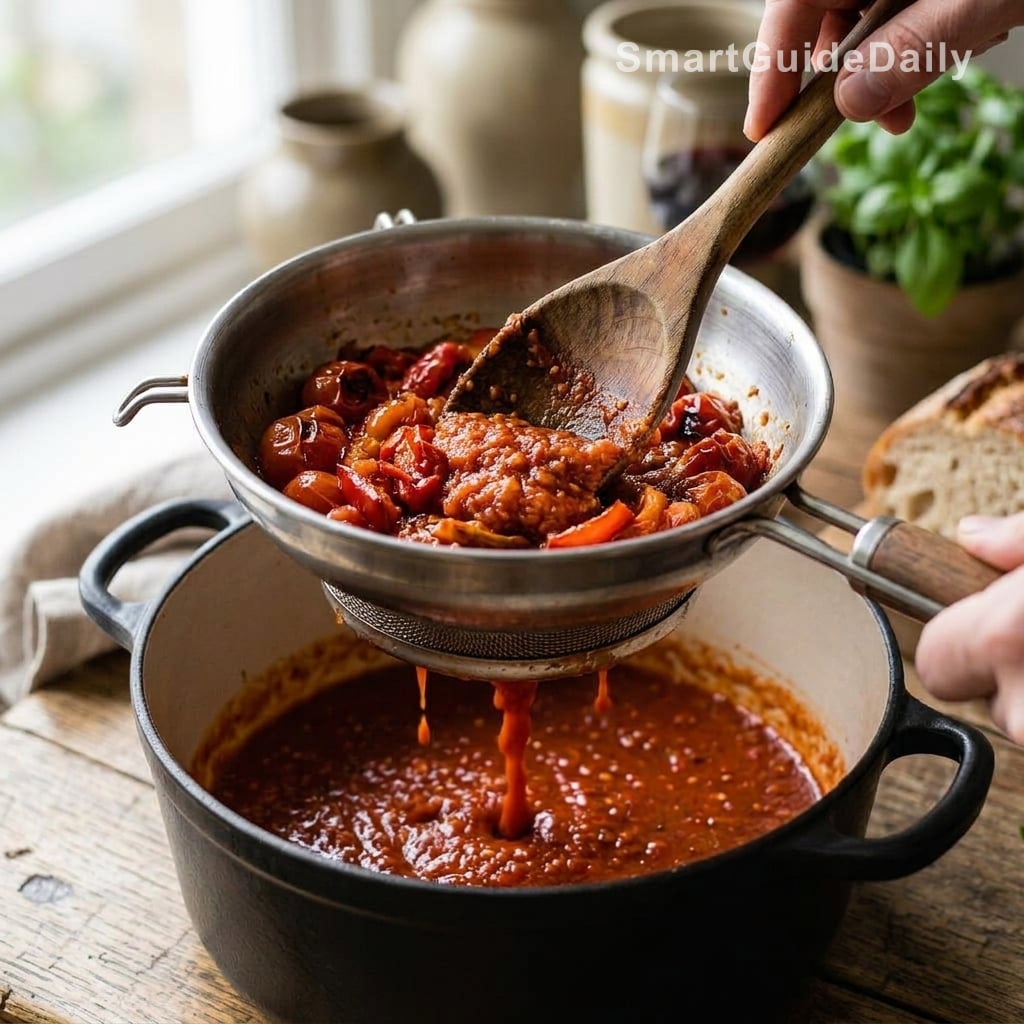
A food mill gives you a sauce with texture: some resistance, some body, small shreds of tomato. A blender gives you something smoother and more uniform, which works well as a flatbread base but loses something in a braise. A stick blender pulsed five or six times in the pot gives you the most control — and that’s the approach worth defaulting to. Add the toasted walnuts before you blend. They incorporate partially, thickening without making the sauce grainy. Add the smoked paprika and cumin seeds at the same point, then stir in the olive oil. The sauce should coat the back of a spoon and hold when you run a finger through it. Not thin. Not paste.
Simmer It Down. Then Taste It Once.
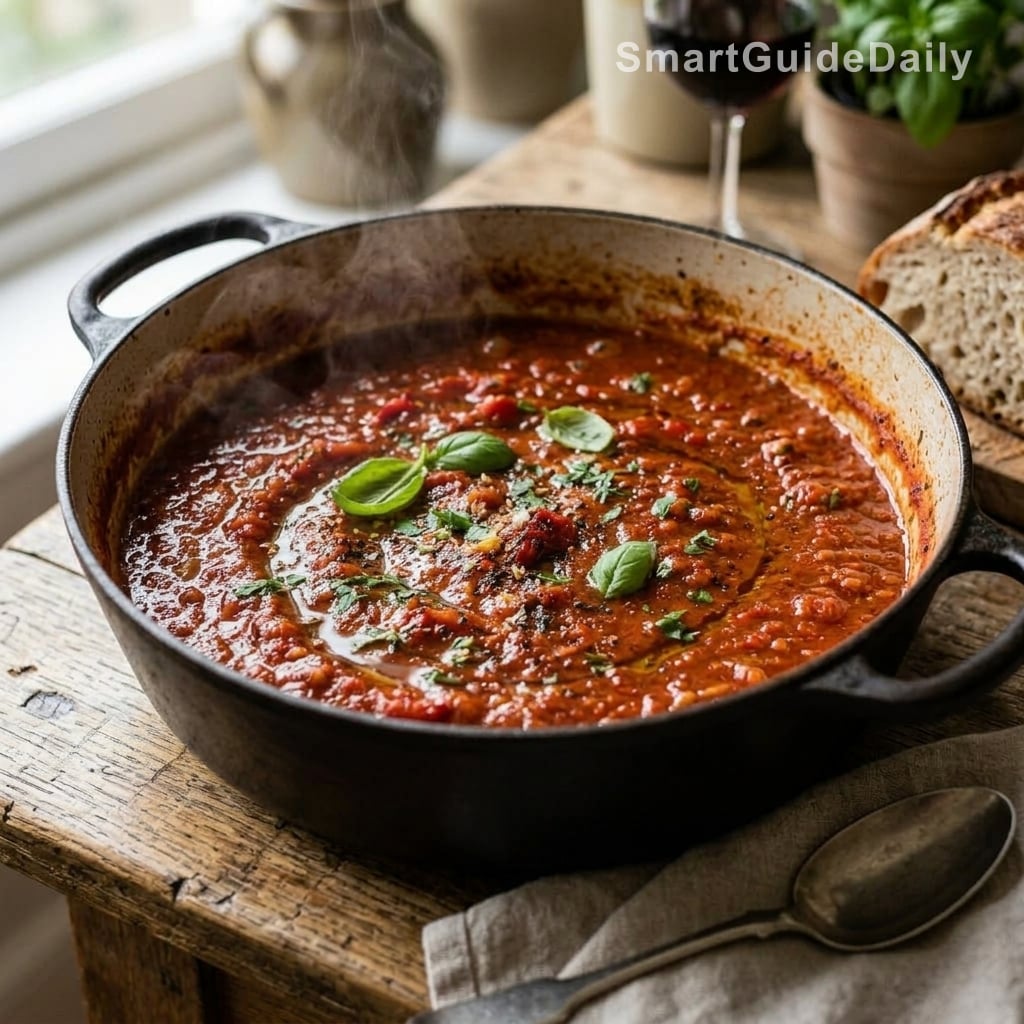
Return the sauce to medium-low heat. Let it simmer uncovered for fifteen minutes, stirring occasionally. You’ll see it darken slightly as water leaves and the surface begins holding slow, reluctant bubbles rather than a fast boil. Season with salt now — the sauce concentrates as it cooks, and what tastes underseasoned at the start will be correct at the end. Taste it once when it comes off the heat. Adjust. Stop there. Tasting repeatedly at this stage makes you lose calibration; you stop registering what’s actually changing and start chasing a moving target.
Pour It Into a Jar and Cover the Surface with Olive Oil
Transfer the finished sauce to a clean glass jar. Smooth the surface flat and pour a thin layer of olive oil over the top — two teaspoons is enough. This isn’t decoration. The oil creates a barrier between the sauce and the air, slowing oxidation and keeping the surface from developing the dull, slightly metallic quality refrigerated tomato sauces often have by day three. Label the jar with the date. Refrigerate. On Monday, you pull it out and the planning is already behind you.
Tips & Tricks
- Don’t seed the tomatoes before roasting. The seeds contain pectin, which helps the sauce thicken naturally during simmering. They disappear in the blender, and a food mill catches them anyway.
- Toast the walnuts and cumin in the same dry pan, but add the cumin seeds in the last ninety seconds only. Walnuts need four minutes; cumin burns faster than you expect and tastes bitter when it does.
- If the sauce looks too thick after a few days in the fridge, add a tablespoon of water when reheating — not more olive oil, which will make it heavy. It should loosen back to the right consistency within two minutes over medium heat.
- For chicken or lamb braises, thin the sauce with 100ml of stock and use it as the braising liquid from the start, not as a finish. It needs time in the pan to bind with the cooking juices. Added at the end, it just sits on top.
Can I use canned tomatoes instead of fresh?
You can, but you lose the roasting step, which is where most of the depth comes from. Drain canned tomatoes well, skip the oven phase, and go straight to simmering — the result will be noticeably flatter. Fresh plum tomatoes at any stage of ripeness will outperform canned here because dry heat concentrates them in a way a wet environment simply can’t.
How long does this sauce keep?
Five days refrigerated, covered with a thin layer of olive oil on the surface — that layer is not optional, it slows oxidation. If you won’t finish it within five days, freeze it in 200ml portions; it holds for up to three months with no meaningful loss.
What are five practical ways to use it across the week?
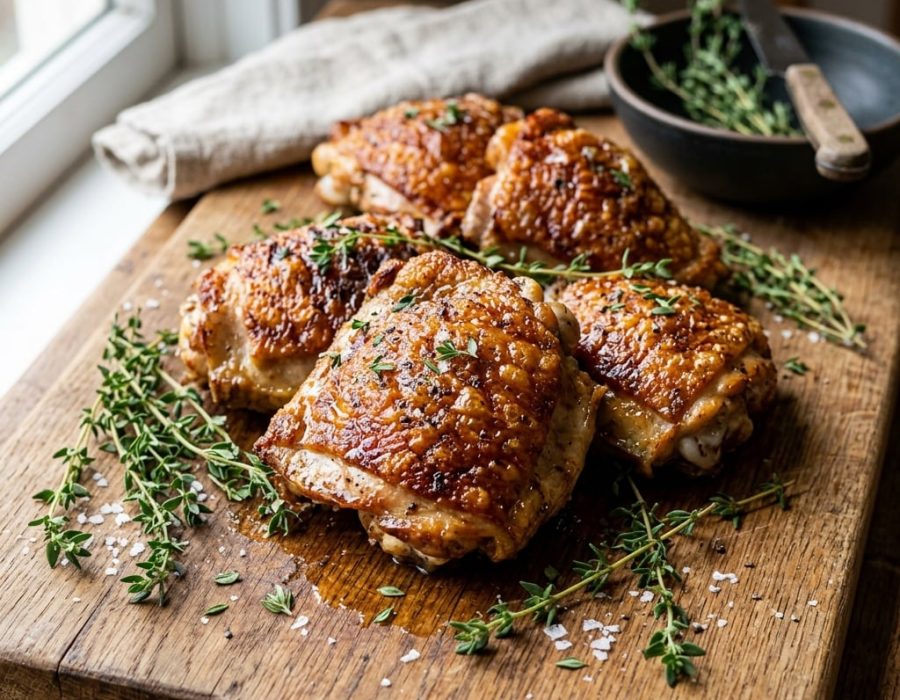
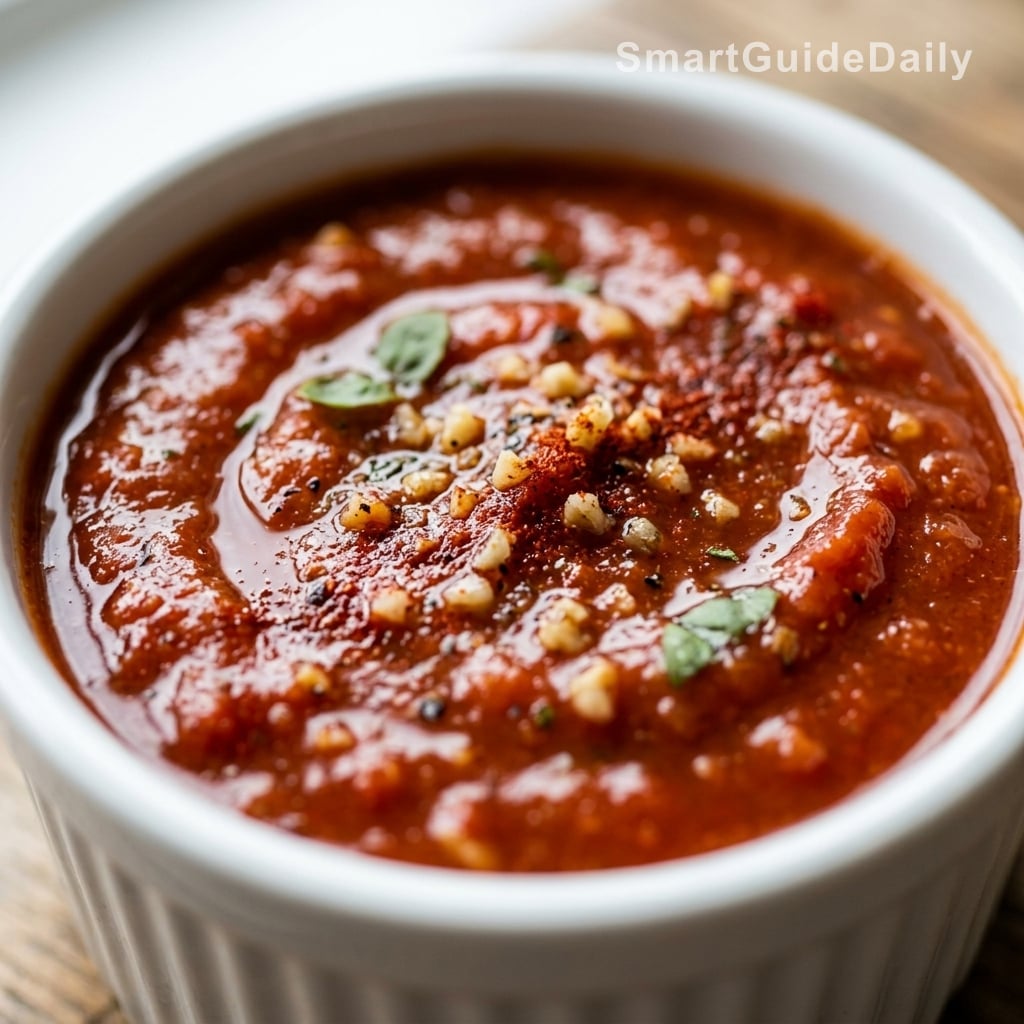
Monday, over pasta with fresh herbs. Tuesday, thinned with stock and used as braising liquid for chicken thighs; Wednesday, spooned over a grain bowl; Thursday, spread on flatbread as a base; Friday, served at room temperature alongside roasted vegetables as a dipping sauce. The sauce works as infrastructure — varied enough that it doesn’t read as the same dinner five times.
Do I need a food mill, or will a blender work?
A blender works fine. If you use a stick blender, pulse five or six times rather than running it continuously — that keeps some body in the sauce, which matters more in braises than in pasta applications.
Can I scale the recipe up?
Yes, and it’s worth doing. Use two sheet pans without crowding the vegetables — crowding steams rather than roasts, and steamed tomatoes reduce to a different texture entirely. A double batch, portioned and frozen, covers two weeks of weeknights.
The sauce tastes too acidic. What should I adjust?
First, check whether it’s undersalted rather than genuinely acidic — salt suppresses perceived acidity, and the fix is often simpler than it looks. If it’s still sharp after seasoning, add half a teaspoon of sugar during simmering. Don’t reach for more olive oil; it masks the issue rather than correcting it.
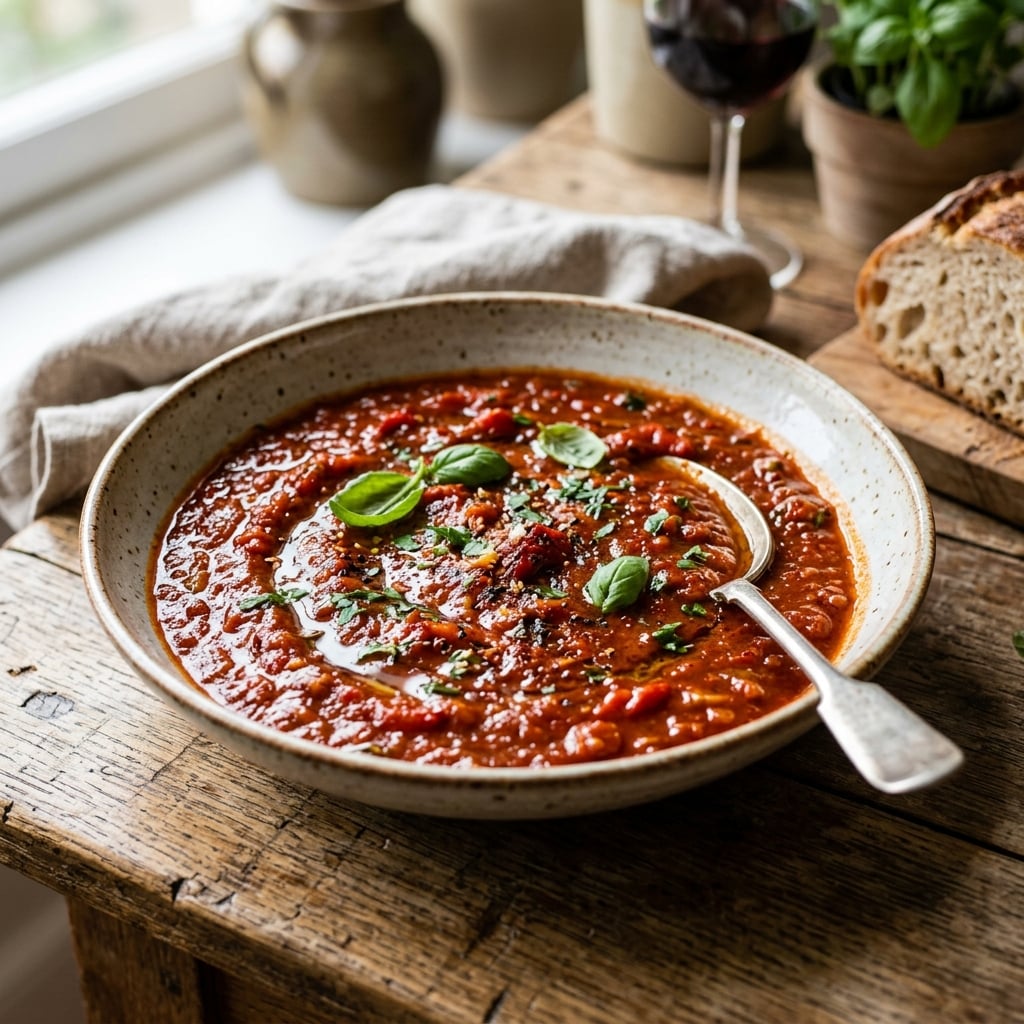
The Sauce That Turns Five Weeknights Into One Cohesive Menu
Mediterranean
Sauces & Condiments
|
Prep Time
20 minutes
|
Cook Time
50 minutes
|
Total Time
70 minutes
|
Servings
1 litre (5 uses)
|
A slow-roasted tomato and red pepper sauce with walnuts, smoked paprika, and cumin. Made once on the weekend, used across five dinners without repetition.
Ingredients
- 1 kg plum tomatoes, halved
- 2 red bell peppers, halved and seeded
- 6 garlic cloves, unpeeled
- 40 g walnuts
- 1 tsp smoked paprika
- ½ tsp cumin seeds
- 3 tbsp extra-virgin olive oil, plus extra to finish
- 1 tsp fine salt, or to taste
Instructions
- 1Preheat the oven to 220°C (425°F). Line a large sheet pan with parchment paper.
- 2Place the tomato halves cut-side down and the pepper halves skin-side up on the pan. Tuck the unpeeled garlic cloves in around them. Roast on the top rack for 30 minutes, until the tomato skins blister and the pepper skins are charred in places.
- 3Remove the pan from the oven. Transfer the peppers to a bowl and cover tightly with foil. Let sit 5 minutes, then peel and discard the skins. Squeeze the garlic cloves from their skins directly into a medium heavy-bottomed pot.
- 4Toast the walnuts in a dry skillet over medium heat for 4 minutes, shaking the pan occasionally. Add the cumin seeds for the final 90 seconds. Remove from heat.
- 5Add the roasted tomatoes, peppers, and walnuts to the pot with the garlic. Pulse with a stick blender 5–6 times for a textured sauce, or blend longer for a smoother result.
- 6Stir in the smoked paprika and olive oil. Simmer uncovered over medium-low heat for 15 minutes, stirring occasionally, until the sauce darkens slightly and holds its shape on a spoon.
- 7Season with salt. Taste once. Adjust if needed. Remove from heat.
- 8Transfer to a clean glass jar. Smooth the surface flat and pour a thin layer of olive oil over the top. Refrigerate for up to 5 days, or freeze in portions for up to 3 months.
Notes
• Do not seed the tomatoes before roasting. The seeds contain pectin, which contributes to the sauce’s body during simmering.
• Use smoked paprika specifically — sweet or hot paprika produce a different result and won’t achieve the same low-level warmth.
• If the sauce tastes acidic after seasoning, add ½ tsp sugar during the simmering phase. Do not add more oil.
• For braising, thin the sauce with 100ml of chicken or vegetable stock and add the protein from the start of cooking, not at the end.
Nutrition Facts (per serving, estimated)
| 185 kcalCalories | 4 gProtein | 11 gCarbs | 14 gFat |