|
Prep Time
30 minutes
|
Cook Time
0 minutes
|
Total Time
4 hours 30 minutes
|
Servings
8 portions
|
Amaretto in tiramisu is a convention, not a requirement. The liqueur’s almond sweetness can soften the espresso’s edge in interesting ways, but it also blurs the whole thing into a vague, boozy mush. This version drops the alcohol entirely and leans harder on what tiramisu actually is: a study in contrasts between bitter coffee, fat dairy, and a whisper of vanilla.
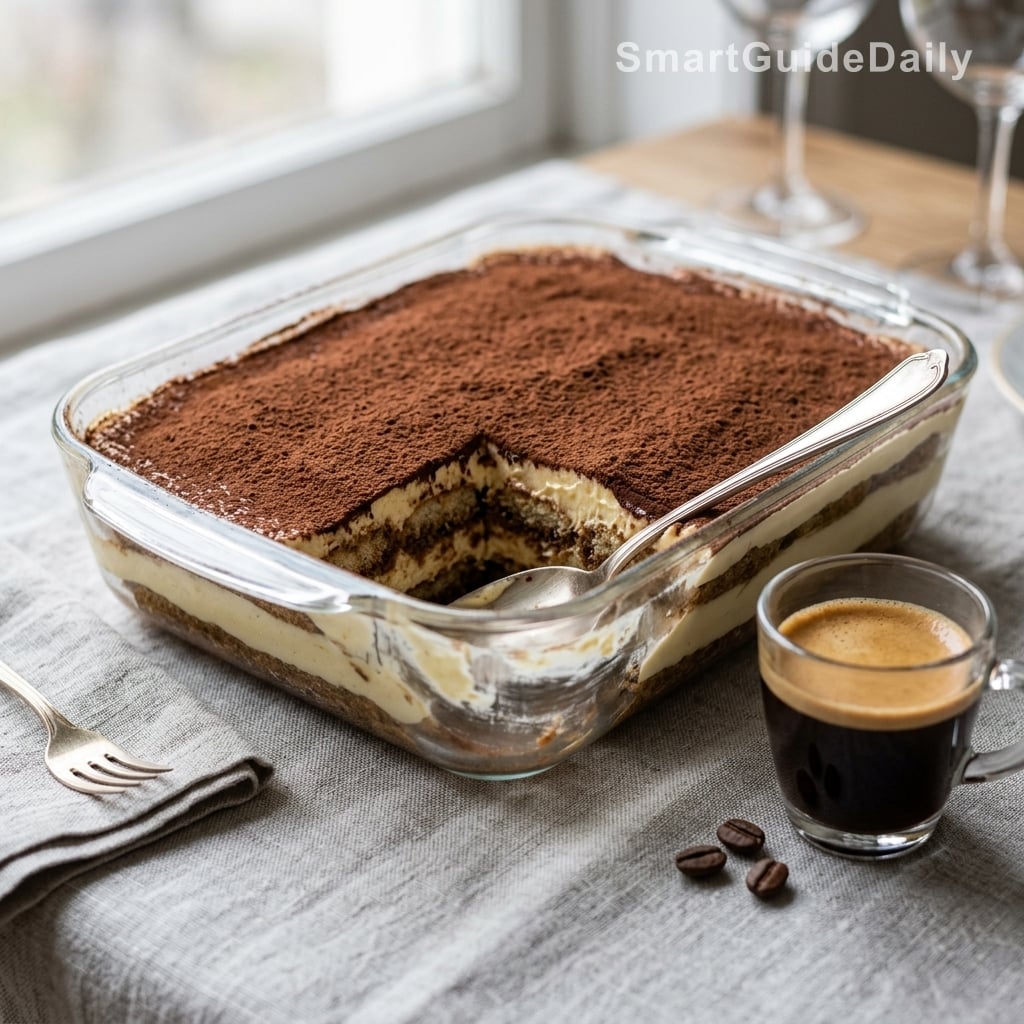
What you get without the amaretto is clarity. The espresso comes through clean — you can taste the roast, the slight bitterness, the way it soaks into the ladyfinger and softens it without turning it to paste. The cream carries lemon zest and vanilla, both of which lift the mascarpone’s density without diluting it. The final texture — cold, just barely set, with that thin layer of cocoa on top that picks up moisture as it chills — is the same architecture. It just reads more precisely.
Why you’ll love this recipe
Ingredient Notes
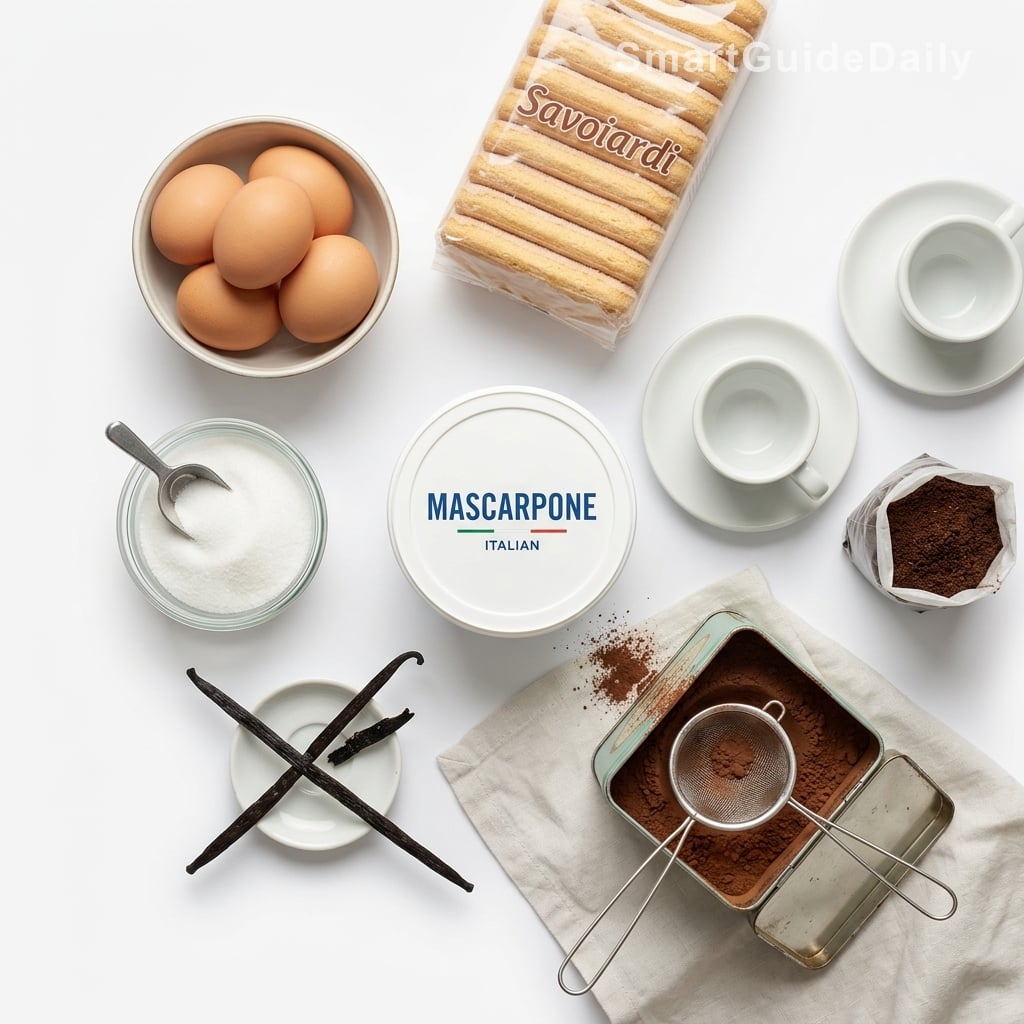
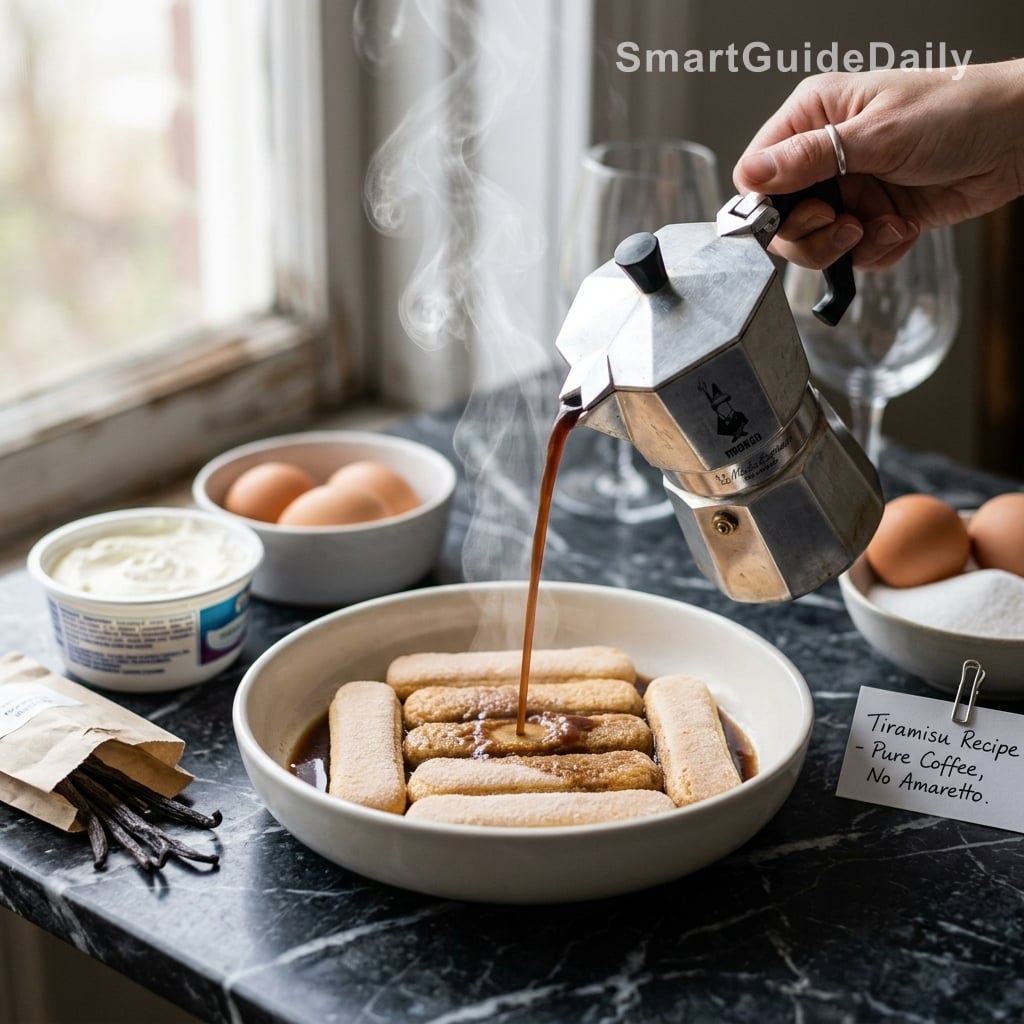
Everything on the counter before it becomes tiramisu: mascarpone, eggs, ladyfingers, espresso, vanilla, cocoa.
- Mascarpone (500g) : The structural fat. At roughly 40% fat content, it holds the cream’s weight without collapsing. Pull it from the fridge 20 minutes before use — cold mascarpone seizes when beaten and goes grainy in a way that is very difficult to fix.
- Egg yolks (4, with sugar) : Beaten pale and thick with sugar, they form the base emulsion. The ratio is about 25g sugar per yolk — enough sweetness, not so much that the cream becomes cloying. The mixture should turn a pale straw color and fall from the whisk in a ribbon.
- Egg whites (4, beaten stiff) : They do the structural work. Folding stiff whites into the mascarpone keeps the cream airy. Without them, tiramisu sets dense and heavy — which some people prefer, but this version doesn’t aim for that.
- Strong espresso (350ml, cooled) : The backbone of the whole dish. Use a coffee you’d actually drink — weak espresso produces a timid result. It goes in cool. Hot espresso softens ladyfingers on contact and turns them to mush before assembly is even finished.
- Savoiardi ladyfingers (200g) : They need a fast dip: one second per side in the coffee, then straight into the dish. They continue absorbing moisture from the cream during refrigeration. Over-soaked ladyfingers collapse the layers and wreck the textural contrast that makes a slice worth cutting.
- Lemon zest (from 1 unwaxed lemon) : Folded directly into the cream, not the coffee. One lemon’s worth of zest — roughly a teaspoon — is all it takes. More than that and the dessert tips into something else entirely.
Why Removing the Alcohol Is Not a Compromise
The standard argument for amaretto in tiramisu is that it adds complexity and rounds out the bitterness of the espresso. That’s true, to a point. But it also blurs the flavor profile in a way that makes the whole dessert taste like a sweet, vague cloud. When you remove it, the coffee asserts itself. The bitterness of a dark roast against the fat of the mascarpone cream — that contrast is the actual structure of the dish. Amaretto, in many versions, was softening something that didn’t need softening. This version lets the espresso be the espresso, and the result is more coherent.
The Part Everyone Gets Wrong: The Dip
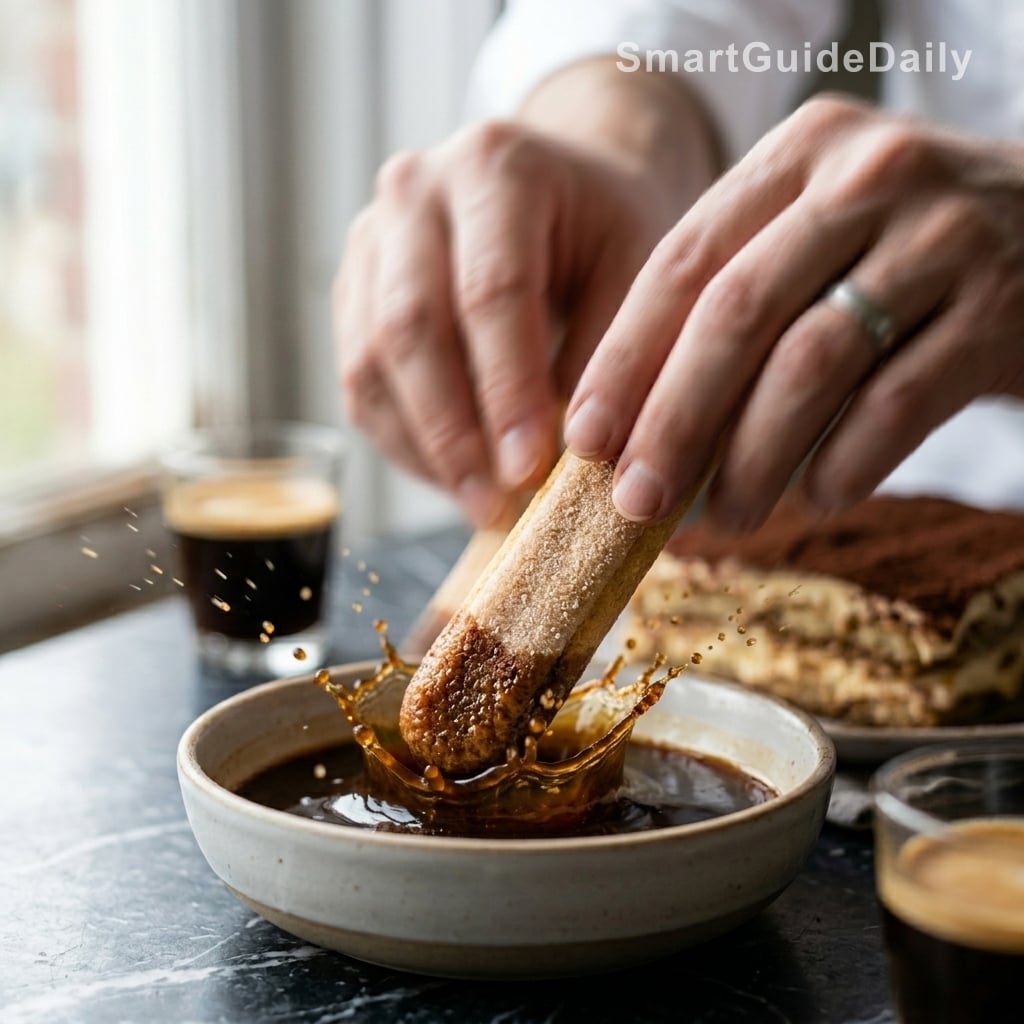
A proper ladyfinger dip is not a soak. One second per side. The ladyfinger goes in dry and comes out lightly wet on the surface, still mostly firm in the center. In the fridge, over the next four to six hours, it will continue to absorb moisture from the cream above and below it — slowly, evenly, all the way through. By the time you serve, it will be soft without being waterlogged. The distinction matters because over-soaked ladyfingers collapse when you try to cut a clean portion. You lose the layer structure, which is half the visual and textural point of the whole thing.
The ladyfinger is not a sponge. It’s a platform. Treat it accordingly.
Building the Cream: Ratios First, Then Feel
The cream is a three-part system: yolk emulsion, mascarpone, beaten whites. Start by beating the yolks and sugar until the mixture turns pale — when you lift the whisk, it should fall back on itself in a ribbon that holds for a count of three. That takes about five minutes with a hand mixer. Fold in the mascarpone in two additions, working slowly to prevent lumps. The lemon zest and a teaspoon of vanilla extract go in at this stage — you’ll catch a faint citrus note that smells almost floral. Finally, fold in the beaten whites a third at a time, using a spatula and a light hand. The finished cream should hold a soft peak. It won’t be stiff, but it shouldn’t flow when you tilt the bowl.
Assembly: It Takes Twelve Minutes
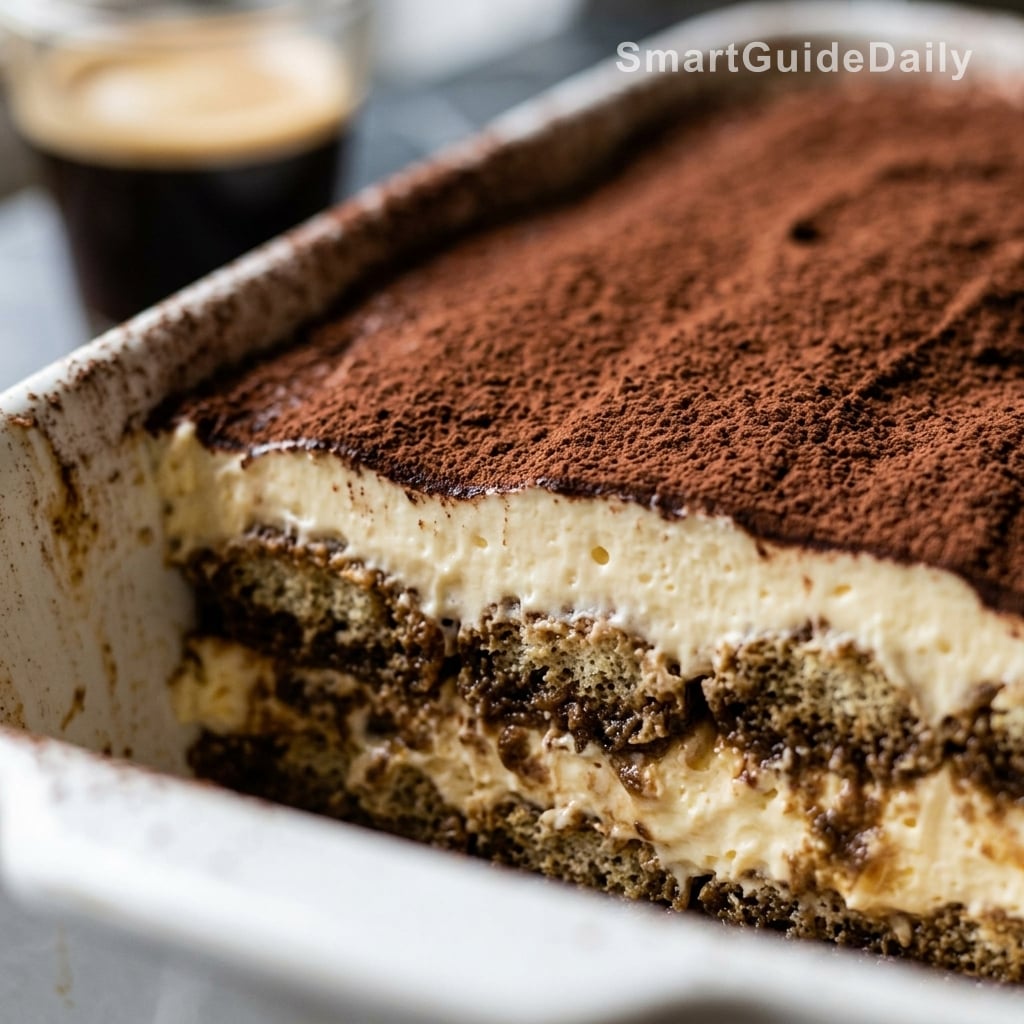
Layer one: coffee-dipped ladyfingers laid flat in a single layer, fitted as tightly as possible without cracking them. Then half the cream, spread level with an offset spatula. Then a second layer of ladyfingers, same method. Then the remaining cream. The cocoa goes on last — right before serving, not during assembly. Cocoa dusted hours in advance absorbs moisture and turns from a dry, slightly bitter powder into something grey and muddy-looking. Use a fine sieve and dust from height for an even, thin coat. The cocoa is the last thing that happens before the first spoon goes in.
Tips & Tricks
- Rest the finished tiramisu for at least 4 hours — overnight is better. The first two hours are still active setting time. Cut into it before that and the cream runs. Overnight chilling firms the layers and lets the coffee migrate evenly through every ladyfinger from edge to center.
- Don’t skip cooling the espresso. Hot coffee softens the ladyfingers the moment they make contact, long before they reach the dish. You lose all control over the dip. Cool it to room temperature, or spread it in a wide shallow bowl to speed things up.
- Chill your mixing bowl before beating the egg whites. A cold bowl keeps the whites stable longer and produces a stiffer foam — one that holds its structure when folded into the mascarpone rather than deflating on contact.
Can I use instant coffee instead of espresso?
You can, but the result will be noticeably flatter. Instant coffee lacks the oils and acidity of brewed espresso, which means the ladyfingers absorb a thinner, less complex liquid. If espresso is genuinely not an option, brew very strong filter coffee — double the usual grounds, half the usual water — and let it cool completely before using.
Is it safe to eat raw eggs in tiramisu?
The egg yolks in this recipe are uncooked, which carries a small risk of salmonella. If you’re serving this to pregnant people, young children, or immunocompromised guests, use pasteurized eggs — they’re available in most grocery stores. The texture and behavior are essentially identical.
How long does tiramisu keep in the fridge?
Two to three days, covered tightly with plastic wrap. Beyond that, the ladyfinger layers continue absorbing moisture and start to break down, and the cream begins to weep. The first day is always the most structurally clean — the second is acceptable. After that, you’re eating something different.
Why lemon zest — isn’t that unusual for tiramisu?
It’s not traditional in the strict sense, but the citrus does something measurable: it cuts through the fat of the mascarpone and lifts the overall flavor. The ratio matters — one lemon’s worth of zest into 500g of mascarpone is subtle enough that most people won’t identify it as lemon, they’ll just notice the cream tastes cleaner. More than that, and the dessert shifts register entirely.
Can I make this without separating the eggs?
You can skip the egg whites and fold whipped heavy cream (200ml, stiff peaks) into the yolk-mascarpone base instead. It works because the whipped cream provides the same aeration. The texture is slightly denser and richer, with less of the characteristic lightness — but it holds its shape a bit better when sliced.
Can I assemble it in individual glasses?
Yes, and it’s arguably more controlled that way. Layer broken ladyfinger pieces and cream in alternating layers in wide glasses or ramekins. The dip method is the same — one second per side. Individual portions also chill faster, which matters if you’re short on time: two hours is usually sufficient for a single-serve glass versus four for a full dish.
Tiramisu Without Amaretto: The Cleaner, Brighter Version
Italian
Dessert
|
Prep Time
30 minutes
|
Cook Time
0 minutes
|
Total Time
4 hours 30 minutes
|
Servings
8 portions
|
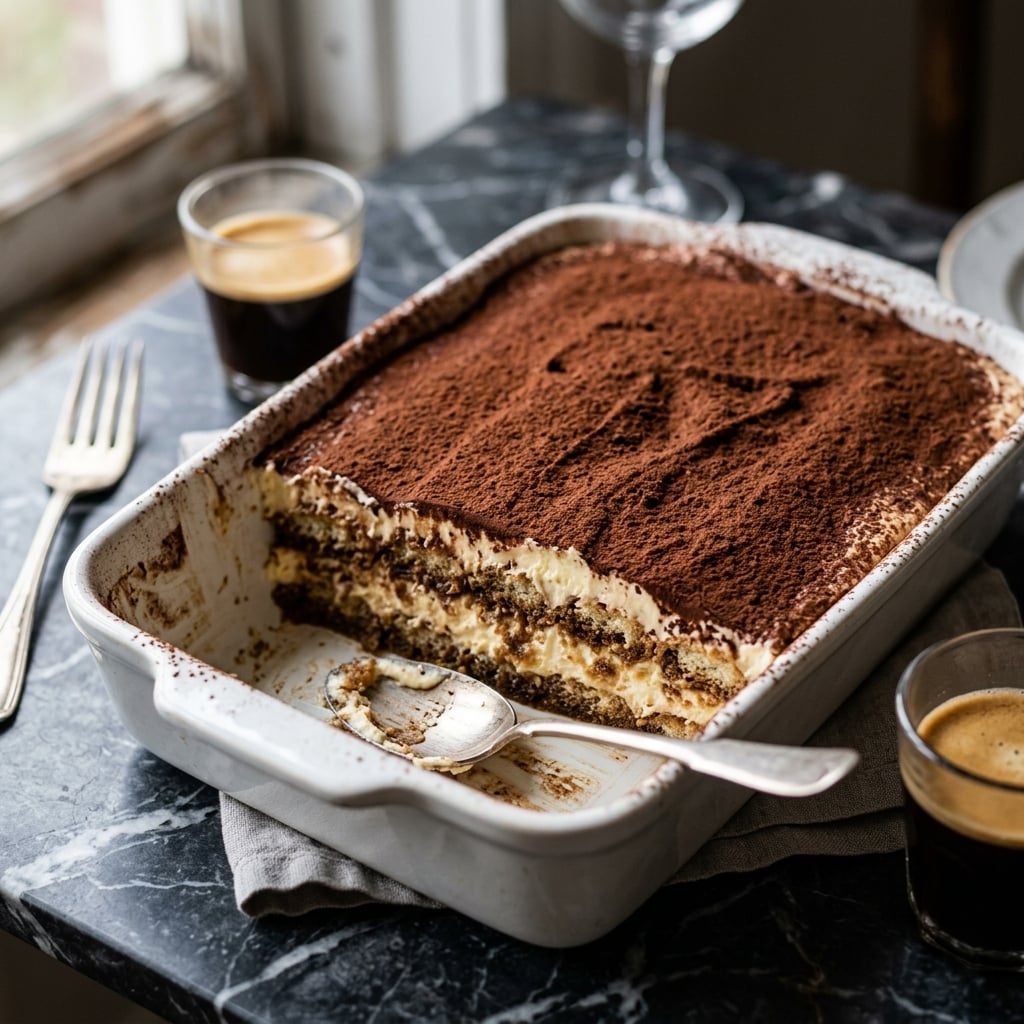
A no-alcohol tiramisu built around strong espresso and a lemon-zest mascarpone cream. The structure is classic; the flavor is sharper and more direct than the amaretto version.
Ingredients
- 500g mascarpone, at room temperature
- 4 egg yolks
- 4 egg whites
- 100g caster sugar
- 350ml strong espresso, cooled to room temperature
- 200g savoiardi ladyfingers
- 1 tsp pure vanilla extract
- 1 unwaxed lemon, zest only
- 3 tbsp unsweetened cocoa powder, for dusting
Instructions
- 1Brew espresso and spread it in a wide shallow bowl to cool completely. Do not use it warm.
- 2Beat egg yolks and sugar with a hand mixer on medium-high until the mixture turns pale and falls from the whisk in a ribbon that holds for three seconds — about 5 minutes.
- 3Fold mascarpone into the yolk base in two additions, working slowly until smooth and lump-free. Stir in vanilla extract and lemon zest.
- 4In a clean, cold bowl, beat egg whites to stiff peaks. Fold them into the mascarpone mixture in three additions using a spatula, cutting and folding rather than stirring. Stop when no streaks remain.
- 5Dip each ladyfinger into the cooled espresso — one second per side, no longer. Lay them in a single flat layer in a 20×30cm dish, fitting them tightly without breaking.
- 6Spread half the cream evenly over the ladyfinger layer using an offset spatula.
- 7Add a second layer of dipped ladyfingers using the same method, then cover with the remaining cream and smooth the surface.
- 8Cover with plastic wrap and refrigerate for at least 4 hours, or overnight.
- 9Just before serving, dust the surface evenly with cocoa powder through a fine-mesh sieve held above the dish.
Notes
• Pull the mascarpone from the fridge 20 minutes before you start. Cold mascarpone seizes when beaten and produces a lumpy cream that cannot be fixed.
• Do not dust with cocoa during assembly — cocoa absorbs moisture in the fridge and turns from a clean powder into a grey, wet layer. Dust only at the moment of serving.
• The lemon zest is doing structural work, not decoration. It cuts through the fat of the mascarpone and balances the bitterness of the espresso. Do not omit it.
• For individual portions, assemble in wide glasses using broken ladyfinger pieces. Chill time reduces to approximately 2 hours.
Nutrition Facts (per serving, estimated)
| 460 kcalCalories | 7gProtein | 31gCarbs | 26gFat |