Why does plain choux always look slightly apologetic? The ring puffs unevenly, cracks wherever it feels like it, browns in patches. It tastes fine — that’s not the issue. The issue is that choux, without intervention, has no structural incentive to behave. Craquelin is that intervention.
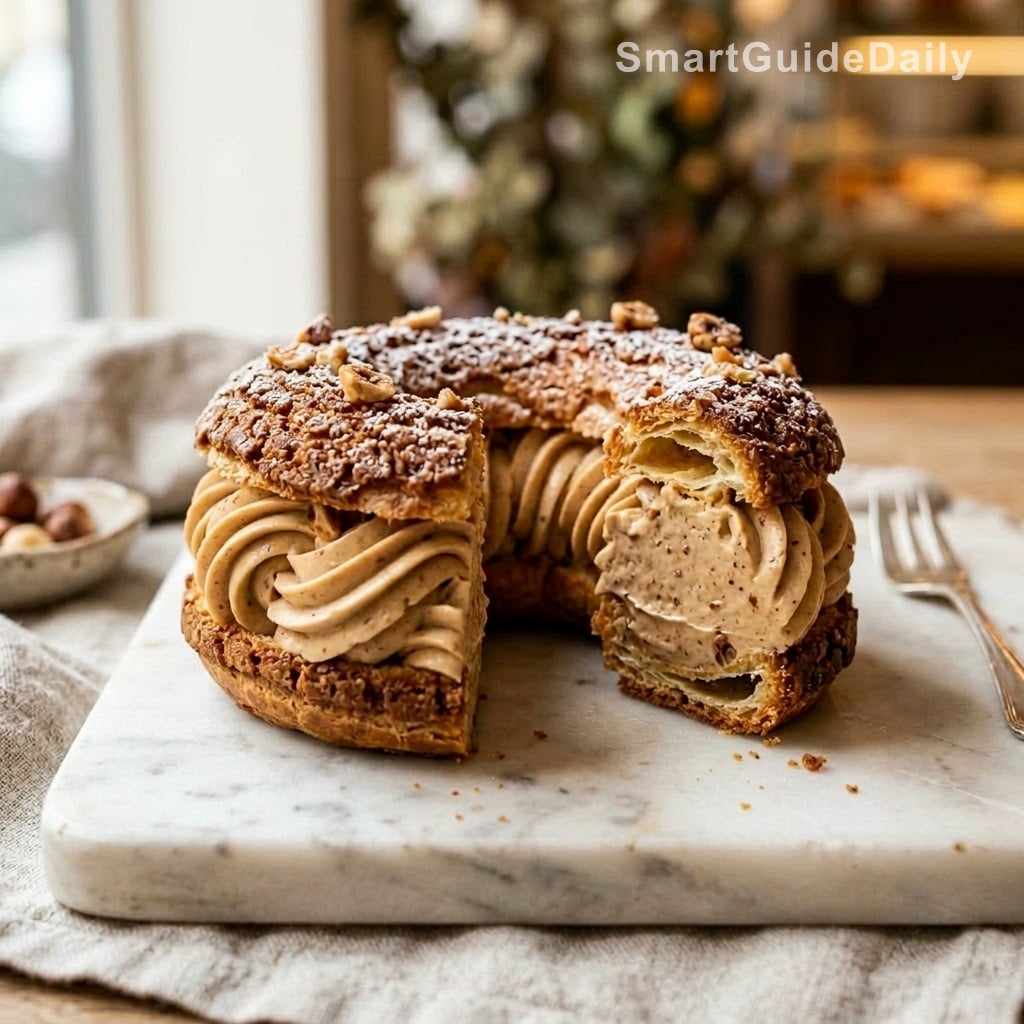
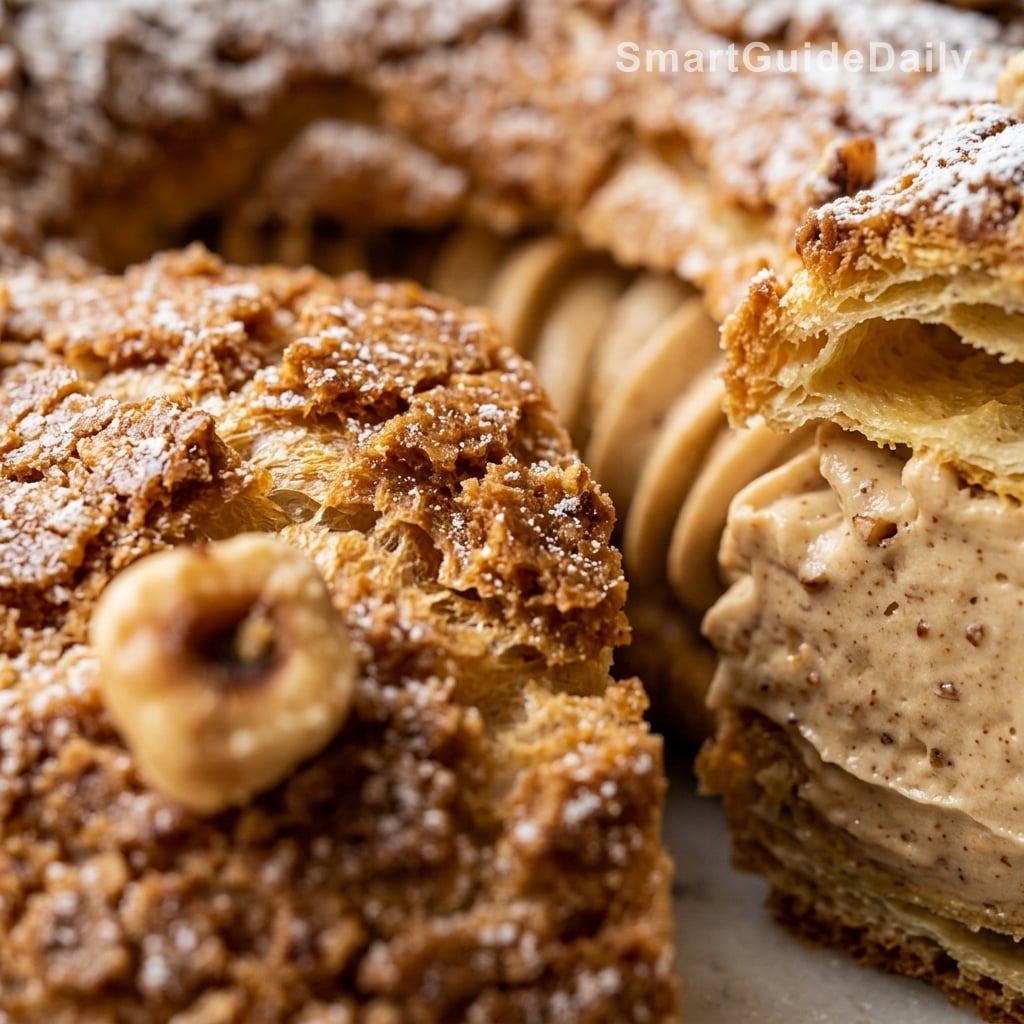
A Paris-Brest made with craquelin has a specific sound when you press it gently: a low, papery crackle, the sugar-butter crust giving way in shards. Underneath, the choux is lighter than it looks — hollow, dry, warm if it just came out of the oven. The praline mousseline inside smells like roasted hazelnuts with a faint bitterness at the edge, which is exactly right. Nothing about this pastry is supposed to be timid.
Why you’ll love this recipe
Ingredient Notes
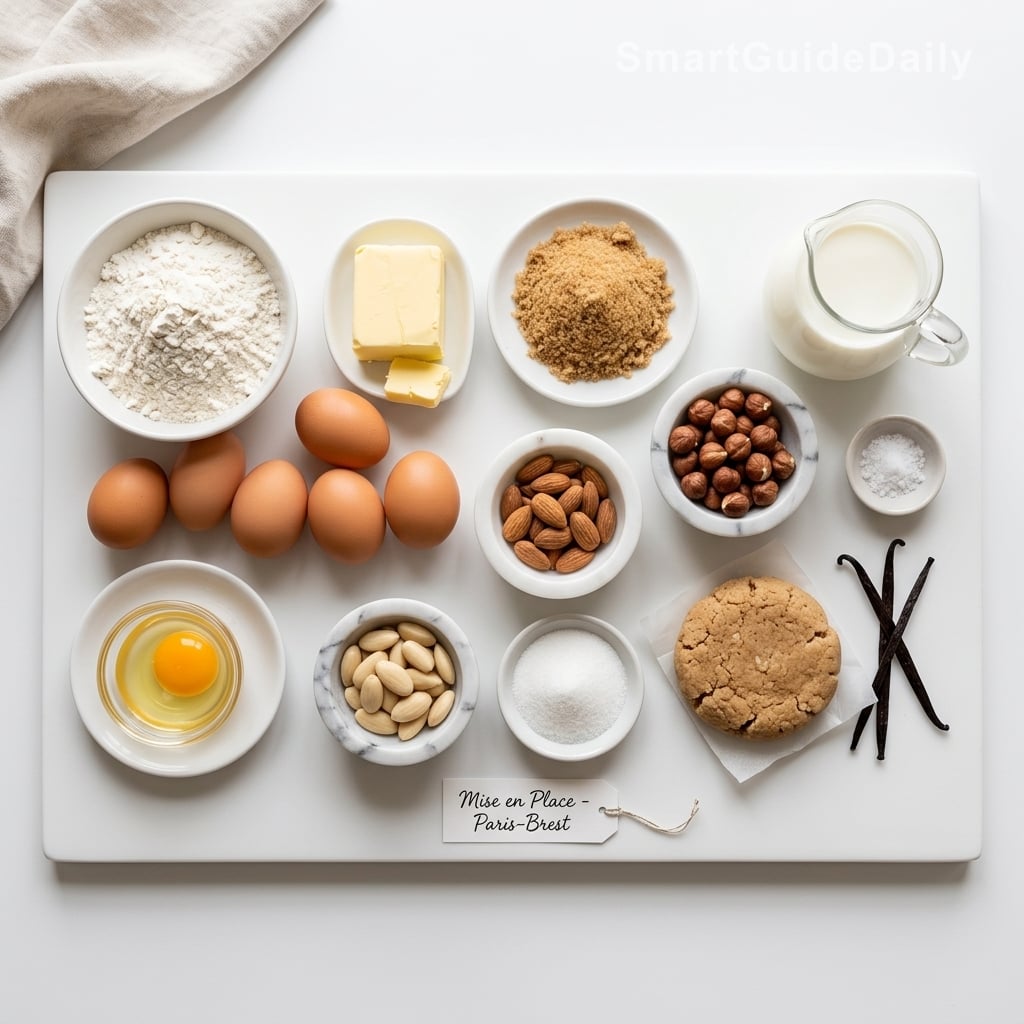
Everything on the counter before anything happens — eggs, butter, flour, hazelnuts, almonds, sugar, milk.
- Hazelnuts and almonds : The praline runs roughly 60% hazelnuts, 40% almonds by weight. Hazelnuts carry the flavor — roasty, slightly bitter at the skin — while almonds lighten the paste and keep it from becoming too dense. Skin-on hazelnuts are fine; the skins add color and a faint tannin note that reads as depth.
- Whole milk (in the choux) : Most classic choux is water-only. Replacing half with whole milk adds fat and lactose — the fat enriches the crumb slightly, and the lactose browns faster. Keep the ratio at 50/50; much more milk and the choux gets heavy.
- Butter (craquelin) : The craquelin is roughly equal parts cold butter, brown sugar, and flour by weight. Brown sugar rather than white gives a faint molasses note and caramelizes more readily at oven temperature. The butter must be cold when you mix it — not frozen, but cold.
- Eggs : Choux is held together almost entirely by egg protein and steam. The standard ratio is about 2 eggs per 100g of flour. Add them one at a time, beating well after each. The dough should fall from a spatula in a slow, reluctant ribbon. Too much egg and it spreads flat; too little and the inside stays doughy.
- Butter (mousseline) : The mousseline is a pastry cream beaten off the stove with softened butter and praline paste. Butter content runs around 30–35% of the total cream weight. The working temperature window is narrow: 18–22°C. Too cold and it seizes; too warm and it breaks into a greasy pool.
First, the Praline
Start here, because it needs time to cool. Spread 100g of hazelnuts and 70g of blanched almonds on a baking sheet and roast at 350°F (175°C) for 12–14 minutes, until the hazelnut skins blister and the kitchen smells like a very good reason to keep going. While the nuts cool, make a dry caramel: put 150g of granulated sugar in a heavy saucepan over medium heat and leave it alone. Watch the edges. When the sugar at the perimeter begins to melt and amber, stir once and reduce the heat. You’re aiming for deep amber — the color of old teak, not blonde wood. Too light and the praline tastes like sugar. Too dark and it turns acrid. Pour the hot caramel over the nuts on a silicone mat, let it harden completely, then break it into chunks and process in a food processor for 3–5 minutes until the mixture becomes a smooth, oily paste. It works because the fat in the nuts loosens the caramel as it’s ground.
The Case for Craquelin
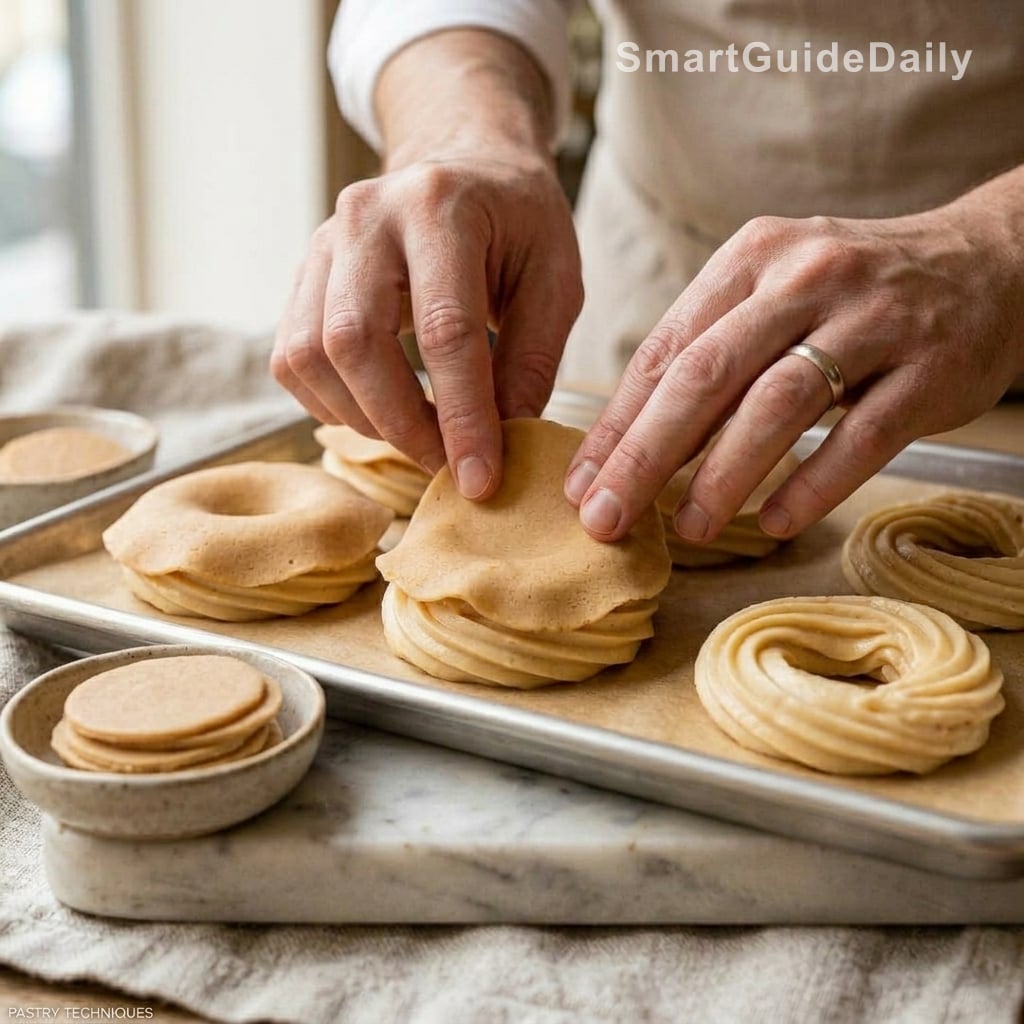
Craquelin is not decoration. It’s structural. The thin disc of butter, brown sugar, and flour that sits on top of raw choux melts into the surface as the dough bakes, creating a hard, uniform crust that controls expansion and adds texture to an otherwise soft exterior. Make it while the praline cools: beat 50g cold butter with 60g brown sugar until just combined, add 60g all-purpose flour, and work quickly until you have a cohesive dough. Roll it between two sheets of parchment to about 2mm thick, then slide it onto a flat surface and freeze for at least 20 minutes. Cut it into strips or rings to fit your piped choux. The craquelin should be firm — nearly frozen — when it goes on top of the raw dough. If it softens before you use it, return it to the freezer and wait.
Making the Choux
Combine 125ml water, 125ml whole milk, 100g unsalted butter, a pinch of salt, and a small pinch of sugar in a saucepan. Bring to a full boil. Add 130g all-purpose flour all at once and stir hard over medium heat for 2–3 minutes — you’re cooking out the raw flour and driving off moisture. The dough should pull cleanly from the sides of the pan and leave a light film on the bottom. Transfer to a stand mixer with the paddle, or work by hand. Add 4 large eggs one at a time, beating each one in fully before adding the next. The finished dough should be smooth, shiny, and fall from a spatula in a slow, thick ribbon. Pipe it into a ring roughly 22cm in diameter on a parchment-lined sheet, using a 16mm round nozzle. Lay the craquelin pieces over the top. Don’t press. Set them in place and let the oven do the rest.
Baking: Don’t Open the Door
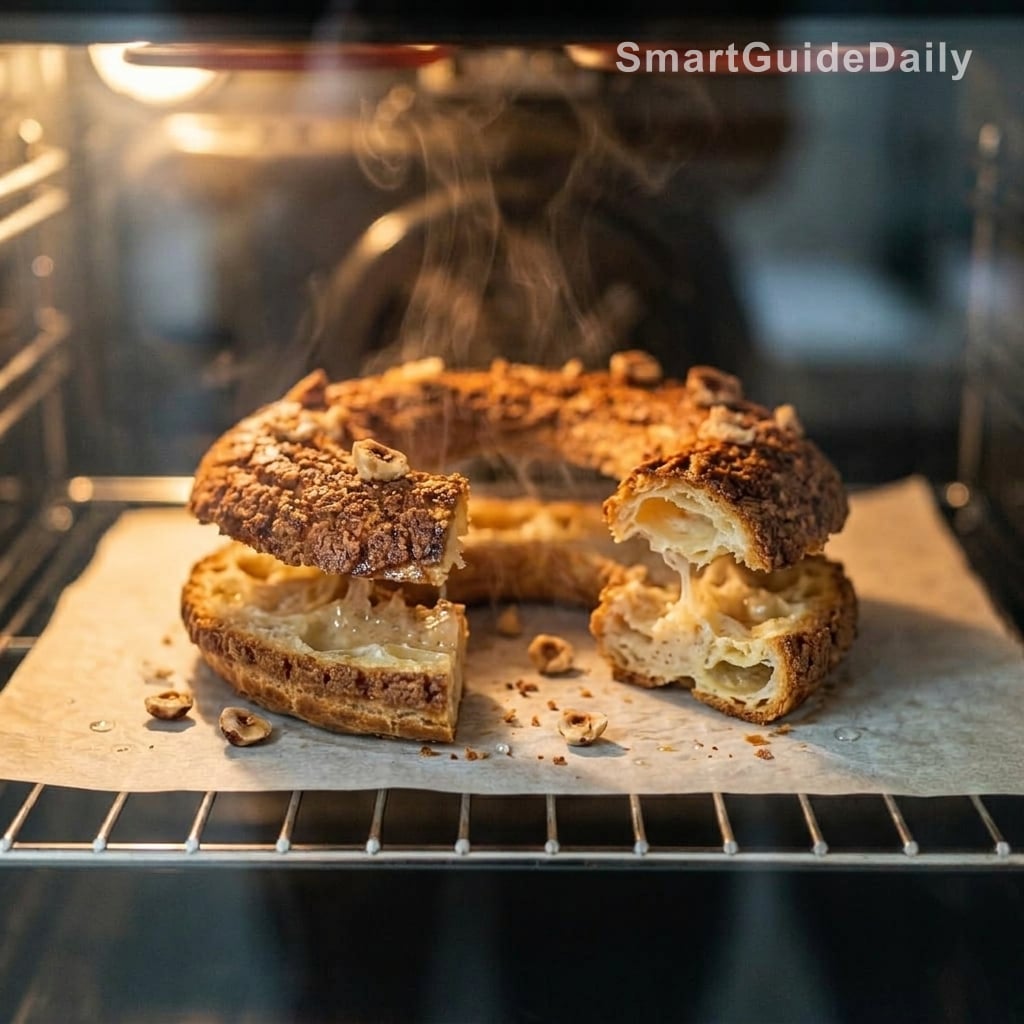
Bake at 375°F (190°C) for 35–40 minutes. The critical rule: do not open the oven in the first 25 minutes. Steam is what pushes the choux up — break the seal too early and the structure collapses before it’s set. The ring is done when it’s a deep, uniform brown and feels noticeably light when lifted off the tray. At that point, turn off the oven, prop the door open with a wooden spoon, and leave the ring inside for another 10 minutes. This step dries the interior and prevents the shell from softening as it cools. A damp center is the most common failure point in an otherwise well-made Paris-Brest.
The Mousseline
Make a standard pastry cream: heat 500ml whole milk to just below a simmer while whisking 4 egg yolks with 100g sugar and 40g cornstarch in a bowl. Pour a third of the hot milk into the yolk mixture slowly, then return everything to the saucepan. Cook over medium heat, whisking constantly, until it thickens and bubbles — about 2 minutes past the first bubble. Stir in 30g cold butter off the heat, transfer to a shallow pan, press plastic wrap directly onto the surface, and refrigerate until fully cold. Then beat the cold cream in a stand mixer until smooth. With the mixer running, add 150g softened butter in pieces, then 120g of your praline paste. Beat for 3–4 minutes until the mousseline is pale and holds its shape. If it looks broken or greasy, the butter was too warm — refrigerate the bowl for 15 minutes and beat again.
Tips & Tricks
- Don’t rush the caramel. A pale praline tastes flat. You want the sugar deep amber — 180°C on a candy thermometer if you’re measuring. Err on the side of darker rather than lighter.
- The craquelin must go on frozen. If it softens before baking, it merges with the choux too quickly and you lose the distinct crust. Return it to the freezer and wait five minutes.
- When splitting the ring for filling, use a serrated knife and work in one slow, steady stroke. Choux compresses if you saw at it, and a compressed shell is harder to fill cleanly.
- The mousseline pipes best at around 20°C. Too cold and it tears; too warm and it slumps. If your kitchen runs hot, refrigerate the filled pastry bag for 10 minutes before piping.
Can I make this Paris-Brest over two days?
Yes, and it’s worth planning that way. Make the praline paste and pastry cream on day one — both keep well refrigerated for 24 hours, and cold pastry cream beats into mousseline more reliably than freshly made. Bake the choux shell on day two, dry it in the oven, and assemble once the mousseline is ready.
What do I do if my mousseline breaks and looks greasy?
A broken mousseline is almost always a temperature problem. If the butter was too warm when you added it, the emulsion separates. Refrigerate the bowl for 10–15 minutes, then beat again on medium-high speed — in most cases it comes back together. If it doesn’t after two attempts, the pastry cream itself was likely still warm when you started; that batch of mousseline will need to be restarted.
Can I use store-bought praline paste instead of making my own?
You can, and the result will be competent. The main trade-off is control: commercial praline paste varies widely in nut-to-sugar ratio and caramel depth. Taste it before using — some brands lean sweet to the point of being cloying, which throws off the balance of the mousseline. Adjust the sugar in your pastry cream downward if needed.
Why does my choux ring collapse after it comes out of the oven?
Trapped moisture. The solution is consistent: when the ring is fully colored, turn off the oven, prop the door open with a wooden spoon, and leave the choux inside for 10 additional minutes. This evaporates remaining interior steam before you expose the shell to cooler room air. Skipping this step is the single most common cause of collapse.
Can the baked choux shell be made ahead and stored?
Yes. A fully baked and dried shell keeps uncovered at room temperature for up to 24 hours — do not wrap it, as trapped moisture softens the craquelin crust. For longer storage, freeze the unfilled shell for up to one month; reheat straight from frozen at 325°F (165°C) for 8–10 minutes before filling. Do not freeze the assembled pastry.
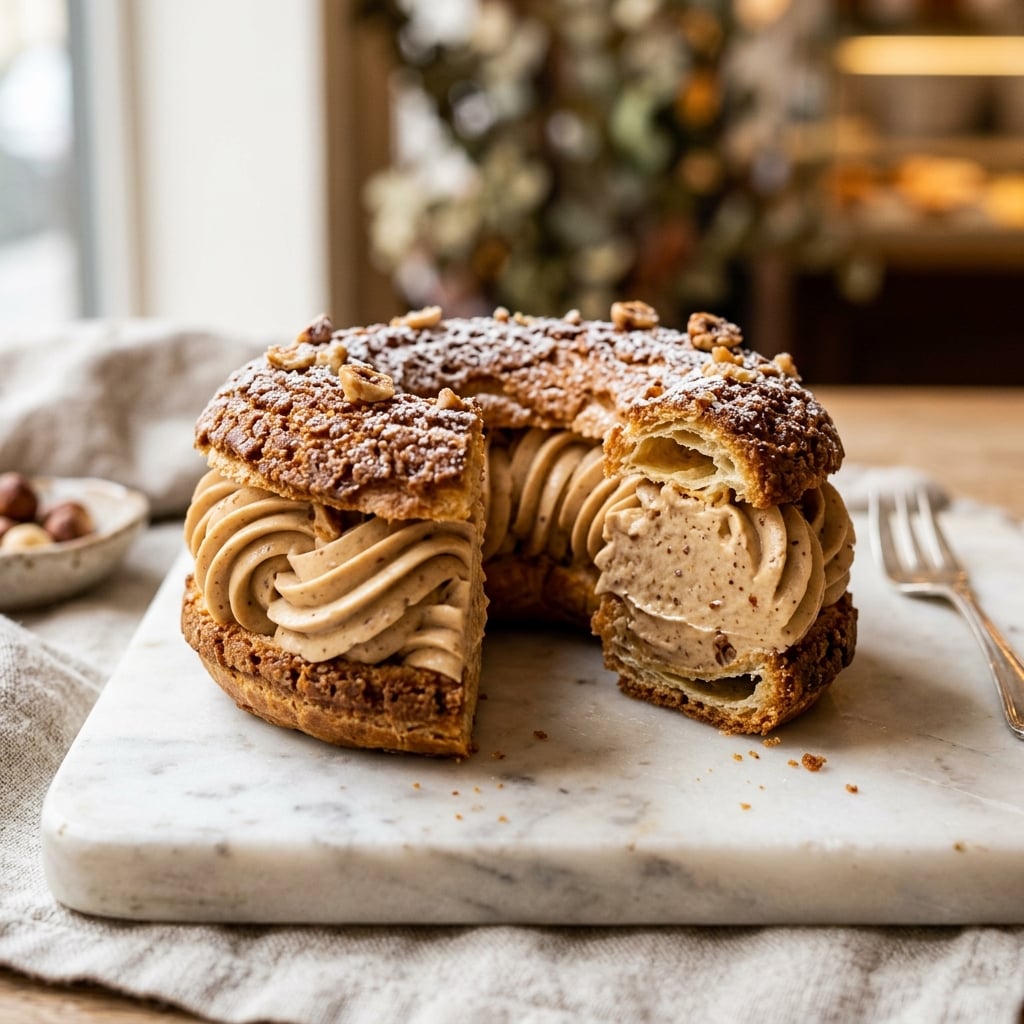
Paris-Brest with Craquelin
French
Dessert
A choux ring topped with a thin butter-sugar crust (craquelin) that controls expansion during baking and adds a distinct crackle. Filled with hazelnut praline mousseline — pastry cream beaten with butter and homemade praline paste.
Ingredients
- — Praline Paste —
- 100g skin-on hazelnuts
- 70g blanched almonds
- 150g granulated sugar
- — Craquelin —
- 50g unsalted butter, cold
- 60g light brown sugar
- 60g all-purpose flour
- — Choux Pastry —
- 125ml water
- 125ml whole milk
- 100g unsalted butter
- 1 pinch fine salt
- 1 tsp granulated sugar
- 130g all-purpose flour
- 4 large eggs
- — Pastry Cream —
- 500ml whole milk
- 4 large egg yolks
- 100g granulated sugar
- 40g cornstarch
- 30g unsalted butter, cold
- — Praline Mousseline —
- 150g unsalted butter, softened to 20°C
- 120g praline paste (from above)
- — Finishing —
- 1 tbsp powdered sugar, for dusting
Instructions
- 1Roast hazelnuts and almonds at 350°F (175°C) for 12–14 minutes until fragrant and the hazelnut skins blister. Spread on a silicone mat to cool.
- 2Make a dry caramel: heat 150g sugar in a heavy saucepan over medium heat without stirring until the edges melt. Stir once, reduce heat, and cook to deep amber. Pour immediately over the cooled nuts and let harden completely.
- 3Break the hardened praline into chunks and process in a food processor for 3–5 minutes until a smooth, oily paste forms. Set aside.
- 4Make the craquelin: beat cold butter with brown sugar until just combined, add flour, and work to a cohesive dough. Roll between two sheets of parchment to 2mm thick. Freeze on a flat surface for at least 20 minutes.
- 5Make the choux: bring water, milk, butter, salt, and sugar to a full rolling boil. Add all the flour at once and stir vigorously over medium heat for 2–3 minutes until the dough pulls from the sides of the pan. Transfer to a stand mixer bowl.
- 6Beat the warm choux dough on medium speed. Add eggs one at a time, beating fully after each. The finished dough should be smooth, shiny, and fall from a spatula in a slow, thick ribbon.
- 7Pipe a 22cm ring onto a parchment-lined baking sheet using a 16mm round nozzle. Cut the frozen craquelin into strips and lay them over the ring without pressing down.
- 8Bake at 375°F (190°C) for 35–40 minutes. Do not open the oven for the first 25 minutes. When the ring is deep brown and feels light, turn off the oven, prop the door open, and leave the choux inside for 10 minutes. Cool completely on a rack.
- 9Make the pastry cream: heat milk to near-simmer. Whisk egg yolks with sugar and cornstarch in a bowl, then slowly pour in a third of the hot milk. Return everything to the saucepan and cook over medium heat, whisking constantly, until thick and bubbling. Stir in cold butter off the heat.
- 10Transfer pastry cream to a shallow container, press plastic wrap directly onto the surface, and refrigerate until fully cold — at least 2 hours.
- 11Beat the cold pastry cream in a stand mixer until smooth. With the mixer running, add softened butter in pieces, then all the praline paste. Beat for 3–4 minutes until pale and firm. If the kitchen is warm, refrigerate the mousseline for 10 minutes before piping.
- 12Split the cooled choux ring horizontally with a serrated knife in one steady stroke. Pipe the mousseline generously onto the base. Replace the top, dust with powdered sugar, and refrigerate until serving. Remove 20 minutes before eating.
Notes
• The mousseline works best at around 20°C. Too cold and it tears when piped; too warm and it slumps. If your kitchen runs hot, chill the filled pastry bag briefly before piping.
• Store the baked, unfilled choux shell uncovered at room temperature for up to 24 hours. Wrapping it traps moisture and softens the craquelin crust.
• The assembled Paris-Brest keeps refrigerated for up to 24 hours. The craquelin softens slightly overnight, which some people prefer.
• Homemade praline paste keeps refrigerated in a sealed jar for up to two weeks. It also works well stirred into buttercream or spread on toast.
Nutrition Facts (per serving, estimated)
| 615 kcalCalories | 11gProtein | 56gCarbs | 39gFat |