Canned beans have a reputation problem, and most of it is unearned. The issue isn’t the bean — it’s what people do with it, which is usually not enough. Forty-five minutes of deliberate simmering, a stock worth using, and the right amount of fat will get you somewhere worth eating.
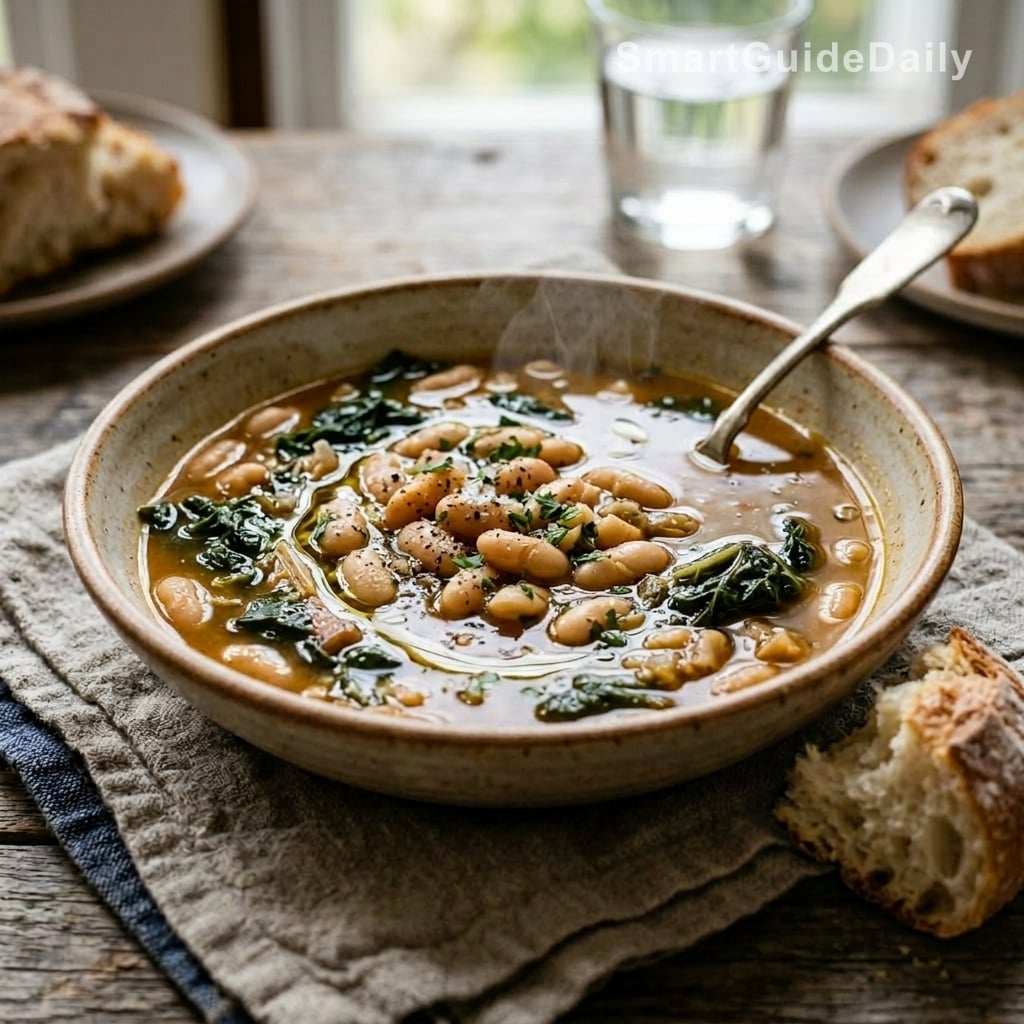
What this bowl gives you is depth without the performance. The broth turns glossy and slightly thickened from the starch the beans release as they break down at the edges. The kale wilts into something silky rather than squeaky. There’s a faint earthiness from the thyme and bay, cut at the end by a squeeze of lemon — not to add brightness as an abstract concept, but because without it, the whole thing goes flat and stays there.
Why you’ll love this recipe
Ingredient Notes
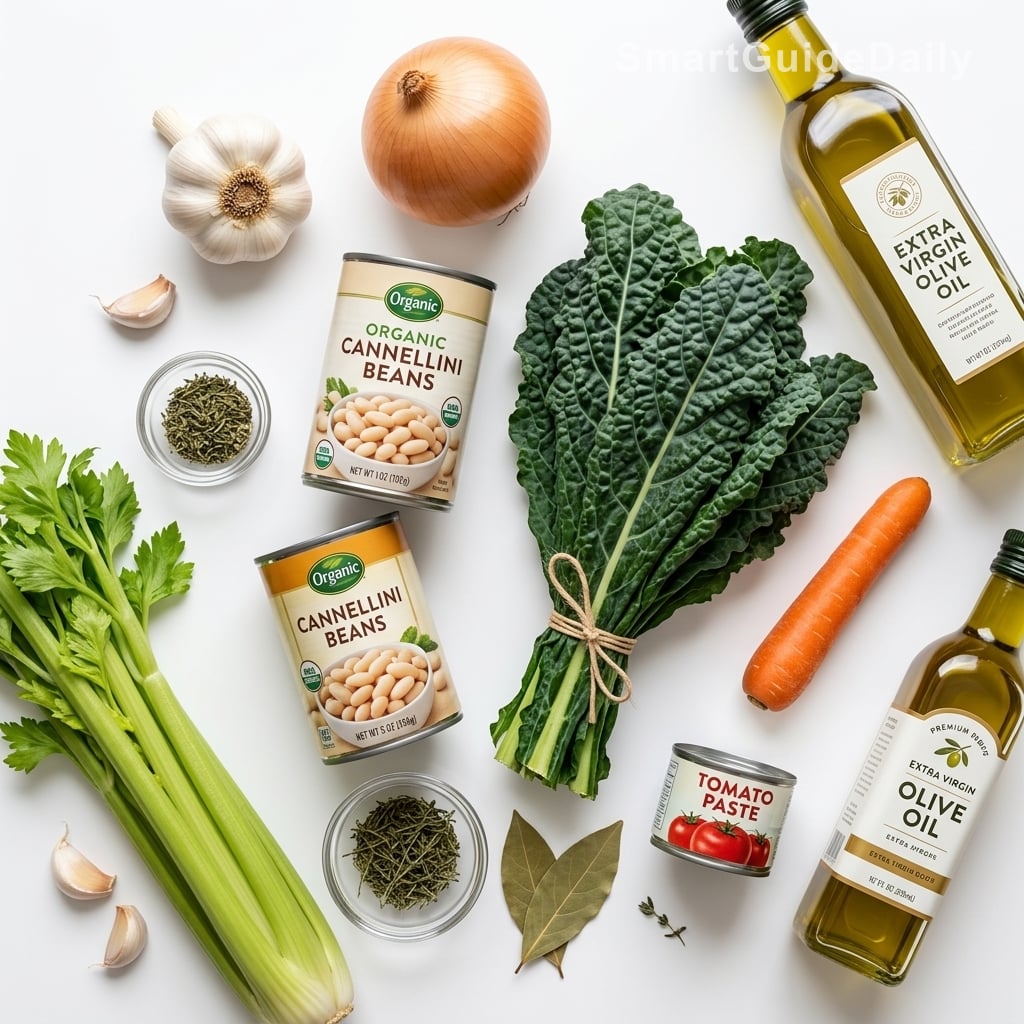
Everything you need: canned beans, aromatics, a few dried herbs, and enough olive oil to finish generously.
- Canned cannellini beans : Use two 400g cans. Don’t rinse both. Drain the first, but add the liquid from the second directly into the pot — that starchy liquid thickens the broth without any extra work on your part.
- Good chicken or vegetable stock : This is most of the liquid. If your stock tastes like nothing, your broth will taste like nothing. Use a decent store-bought or homemade. Now is not the time for the weak stuff at the back of the cabinet.
- Tomato paste : You need two tablespoons, and you need to cook them alone in the hot fat for 90 seconds before anything else goes in. This is not optional. Raw tomato paste tastes tinny and sharp. Browned tomato paste tastes like concentrated umami. Different ingredient, effectively.
- Olive oil : Used twice: at the start for the soffritto, and at the end as a generous finish. The finishing pour is not decorative. It rounds the broth, gives it body, and makes the whole bowl taste like someone cared about it.
- Parmesan rind : Optional, but if you have one in the freezer, drop it into the broth while it simmers. It contributes a quiet, savory depth that’s hard to place and hard to replicate. Pull it out before serving.
- Kale or cavolo nero : Added in the last ten minutes. It wilts down to almost nothing in volume, which means you can add more than you think. It gives the bowl some structure and a slight bitterness that balances the richness of the broth.
Use More Fat Than Feels Right at the Start
The soffritto — onion, celery, carrot, garlic — needs a generous amount of olive oil to do its job. You’re not sautéing vegetables here. You’re building a flavor base that will carry everything else. Keep the heat at medium. Let the onion go translucent and faintly golden at the edges, about eight minutes. The carrot should soften enough that it offers no resistance when pressed with a spoon. If things are moving too fast and browning before they’re soft, turn the heat down. Rushing the soffritto is how you end up with a broth that tastes cooked but not deep.
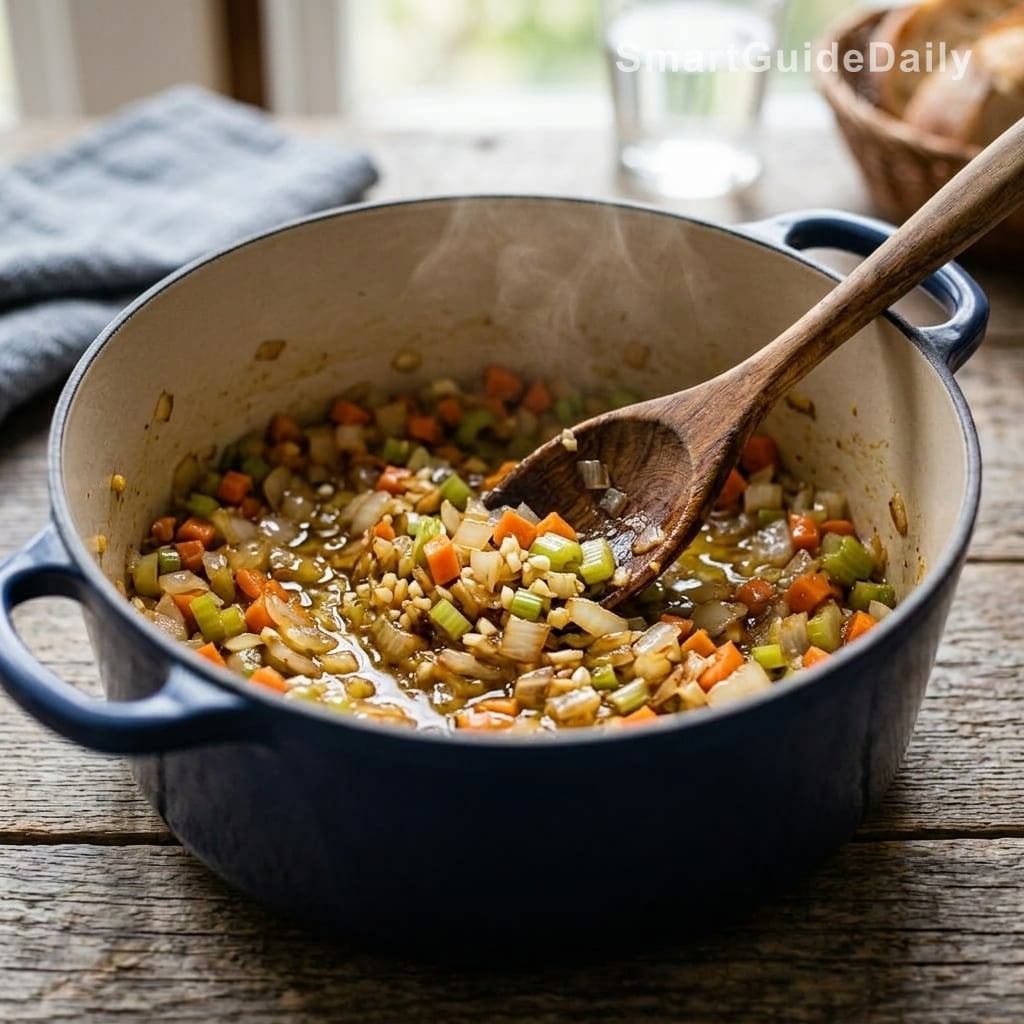
Give the Tomato Paste 90 Seconds Alone in the Pan
Push the softened vegetables to the sides of the pot and add the tomato paste directly onto the hot surface. Leave it. Don’t stir immediately. Let it sit against the heat for about 30 seconds until the edges start to darken and you get a faint, almost nutty smell — that’s the sugars caramelizing and the raw edge burning off. Then stir it into the vegetables and give it another minute. This step is why the broth has color and complexity instead of tasting like something you opened from a carton. It takes 90 seconds and it matters.
Add the Stock Cold and Let It Come Up Slowly
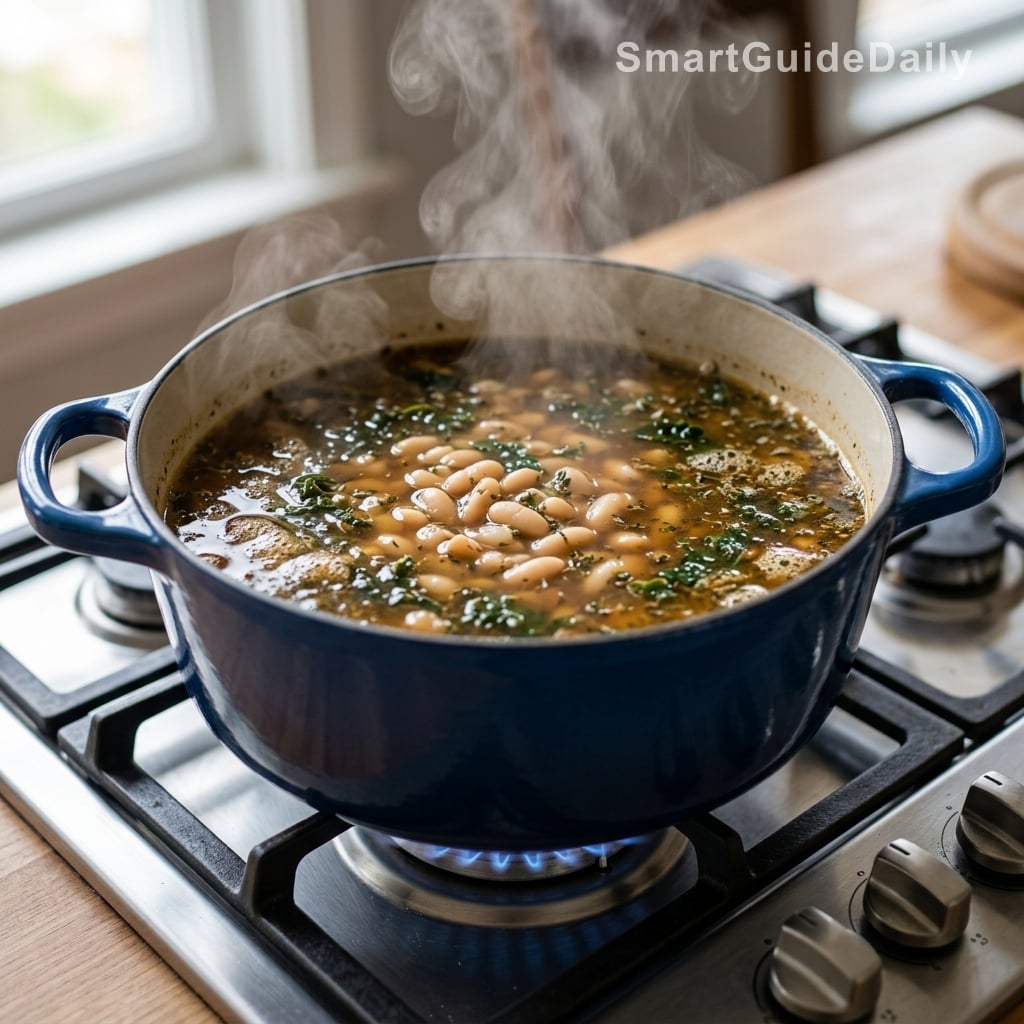
Pour in the stock and the canning liquid from the second can of beans. Add the drained beans from the first can. Add the thyme, the bay leaf, and the parmesan rind if you’re using it. Bring it to a simmer — not a boil, a simmer. You want small, lazy bubbles breaking the surface, not a rolling churn that breaks the beans apart before they’ve had time to give anything back. At this stage, the broth smells like a Sunday kitchen, which is the only thing about this recipe that takes any effort to achieve.
Don’t Touch It for 35 Minutes
Set a timer and walk away. The beans need time to release their starch into the broth, and that process is passive. Stirring constantly doesn’t help. What you’re waiting for is a visible change in the broth — it should look slightly thicker, less watery, with a faint sheen from the starch. Add the second can of beans (drained this time, you want some intact ones for texture) after 20 minutes. They’ll stay firmer while the first batch continues to break down and thicken things. That contrast — some beans that hold their shape, some that have given up their edges — is what makes the bowl feel like it took longer than it did.
Finish Sharp, Finish Fat
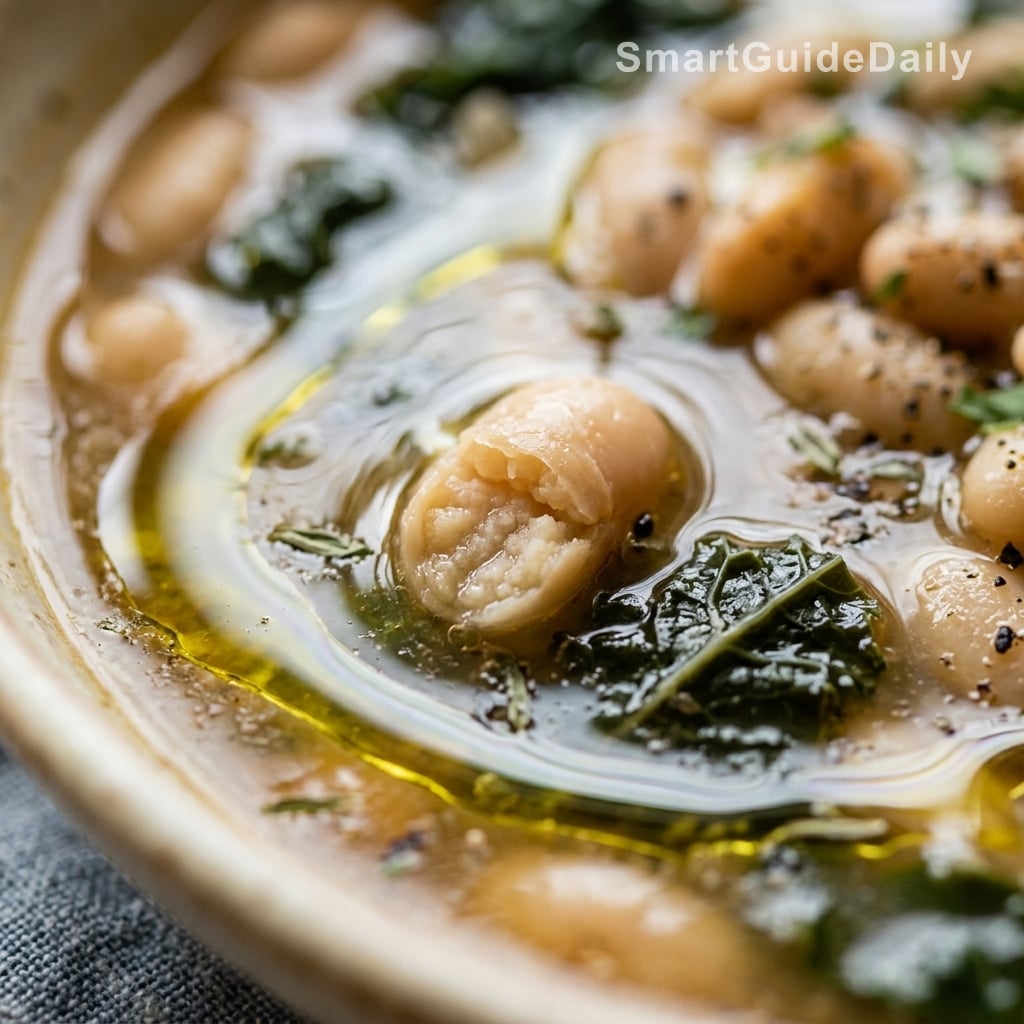
In the last ten minutes, add the kale in batches. It will look like too much. It isn’t. Stir it in and let it wilt down completely before adding the next handful. When the greens are fully incorporated and the broth has returned to a simmer, taste for salt. Then squeeze in half a lemon. Then drizzle olive oil directly over the surface — enough that you can see it pooling slightly in the center of the bowl before you serve. Remove the bay leaf, pull out the parmesan rind if you used one, and serve immediately in wide, deep bowls with bread on the side. The broth will continue to thicken as it sits, so don’t let it wait.
Tips & Tricks
- If the broth tastes flat before you add the lemon, it’s almost certainly under-salted, not under-cooked. Beans absorb salt aggressively. Taste and adjust at the end, not during.
- The parmesan rind trick works because it releases glutamates slowly into the liquid as it simmers — the same reason a well-made stock tastes savory without tasting of any single thing. Keep rinds in a zip bag in the freezer. They last for months.
- Don’t skip the lemon. The whole point of finishing with acid is to cut the richness of the olive oil and bring the individual flavors back into focus. Without it, everything blurs together.
- If you’re reheating leftovers, add a small splash of water or stock before warming — the broth will have gelled overnight and needs a little help returning to the right consistency.
Can I use dried beans instead of canned?
Yes, but the timeline changes significantly. Dried cannellini need an overnight soak and at least 90 minutes of simmering on their own before you even start the soffritto. The result is arguably better — the beans hold their shape more cleanly and the starch they release is cleaner-tasting — but this is no longer a one-hour recipe. If that’s where you’re starting, plan for two and a half hours total.
Can I make this fully vegan?
Without any modifications, it’s vegan as long as you skip the parmesan rind and use vegetable stock. The rind is optional to begin with, and a vegetable stock made with onion, celery, carrot, and a strip of kombu will give you similar depth. The olive oil finish does most of the heavy lifting in terms of richness.
What do you serve alongside it?
Bread is the obvious answer — something with a crust that can handle the broth without disintegrating immediately. Beyond that, this bowl is complete on its own. If you want to extend it into a larger meal, a simple green salad dressed with lemon and olive oil works without competing with the flavors.
How long does it keep, and does it freeze?
Refrigerated, it keeps well for three days. The broth thickens considerably overnight as the starch sets — add a splash of water or stock when reheating and it comes back to the right consistency. It freezes reasonably well for up to two months, though the beans soften further after thawing. If texture matters to you, freeze it in the first 24 hours before it breaks down too much.
I don’t have kale. What else works?
Cavolo nero is the closest substitute and the one I’d reach for first. Spinach works if that’s what you have — add it in the last three minutes only, as it wilts almost instantly and turns gray if overcooked. Swiss chard is a solid middle option: it holds up better than spinach and has a similar mild bitterness to kale. Avoid anything delicate like arugula or watercress, which won’t survive the heat.
The broth tastes flat. What am I missing?
Salt, almost certainly. Beans absorb it aggressively throughout cooking, which means a broth that tasted seasoned twenty minutes ago can taste muted by the time you serve it. Taste just before adding the lemon juice and adjust. If it’s still flat after that, the lemon isn’t negotiable — acid brings individual flavors back into focus in a way that more salt alone can’t.
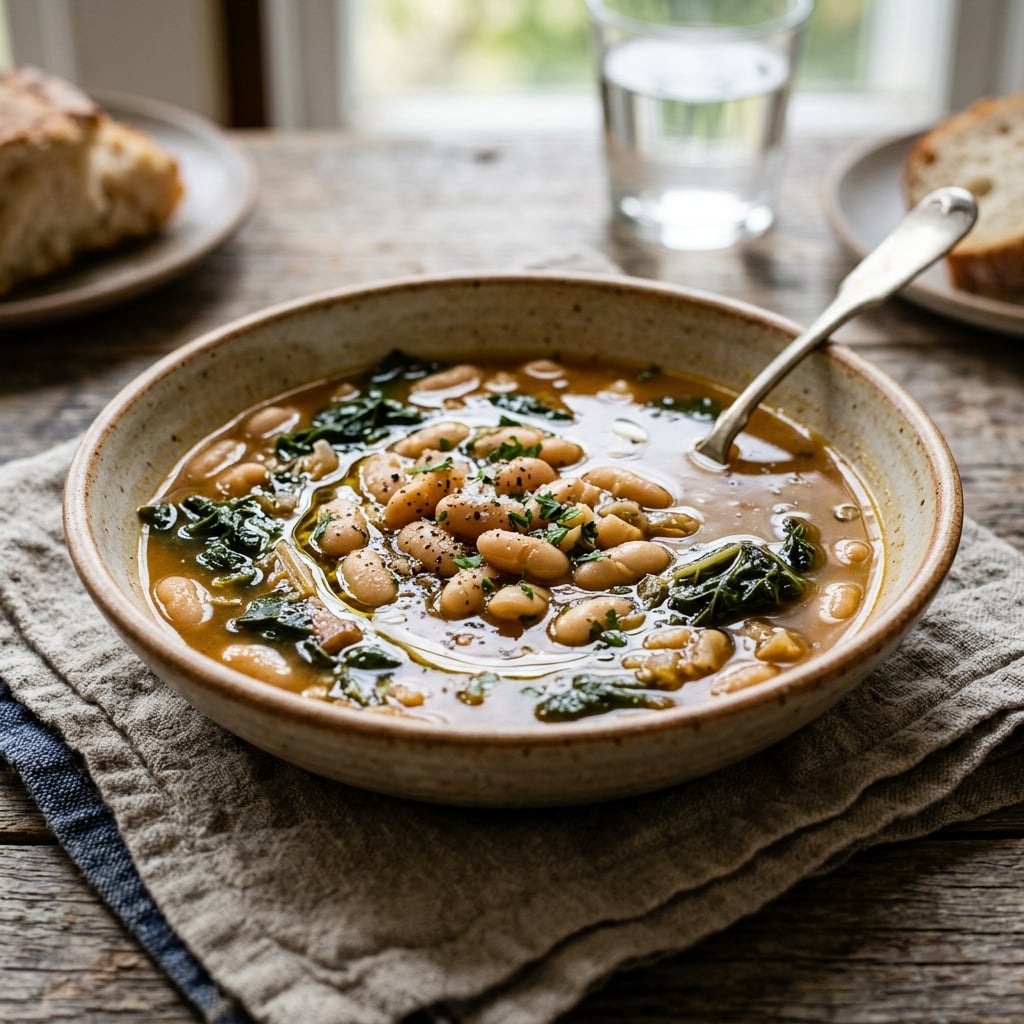
Brothy Beans in an Hour
Mediterranean
Mains
A pantry-built bowl of cannellini beans simmered low in a stock that thickens on its own, finished with wilted kale, lemon, and enough olive oil to make it taste like it started at noon.
Ingredients
- 2 cans (400g each) cannellini beans (drain one, reserve the liquid from the second)
- 750ml good chicken or vegetable stock
- 1 medium yellow onion, finely diced
- 2 celery stalks, finely diced
- 1 large carrot, finely diced
- 4 cloves garlic, minced
- 2 tbsp tomato paste
- 4 tbsp olive oil, divided (3 for cooking, 1 for finishing)
- 1 tsp dried thyme
- 2 bay leaves
- 150g kale or cavolo nero, stems removed, roughly torn
- 1 parmesan rind (optional)
- ½ lemon, juice only
- to taste fine sea salt and black pepper
Instructions
- 1Heat 3 tablespoons of olive oil in a large, heavy-bottomed pot over medium heat. Add the diced onion, celery, and carrot. Cook, stirring occasionally, until fully softened and the onion is faintly golden at the edges, about 8 minutes.
- 2Add the minced garlic and cook for 1 minute, stirring constantly so it doesn’t color.
- 3Push the vegetables to the sides of the pot. Add the tomato paste directly onto the hot surface and leave it undisturbed for 30 seconds until the edges darken slightly. Stir it into the vegetables and cook for another minute.
- 4Add the drained beans from one can, followed by the beans and all their liquid from the second can. Pour in the stock. Add the thyme, bay leaves, and parmesan rind if using. Season with salt.
- 5Bring to a steady simmer — small, lazy bubbles, not a rolling boil. Cook uncovered for 35 minutes, stirring once or twice. The broth should visibly thicken and take on a slight sheen.
- 6Add the kale in two or three batches, stirring each addition until wilted before adding the next. Continue simmering for 10 minutes.
- 7Remove the bay leaves and parmesan rind. Squeeze in the lemon juice. Taste for salt and adjust.
- 8Ladle into wide bowls. Drizzle the remaining tablespoon of olive oil over each serving. Serve immediately with crusty bread.
Notes
• The canning liquid from the second can is not an oversight — it thickens the broth without any extra steps. Don’t discard it.
• If the broth is thicker than you want by the end, add a small splash of warm water or stock and stir to loosen.
• Leftovers keep for 3 days refrigerated. The broth gels overnight; add a little water when reheating.
• For a richer bowl, stir in a tablespoon of good butter at the very end, off the heat.
Nutrition Facts (per serving, estimated)
| 375 kcalCalories | 17gProtein | 44gCarbs | 15gFat |