|
Prep Time
25 minutes
|
Cook Time
1 hour 25 minutes
|
Total Time
1 hour 50 minutes
|
Servings
6 portions
|
The smell that hits you when you lift the lid the next morning — earthy, faintly bitter from the greens, with something deep and sweet underneath — that’s what ribollita is really about. Not the first pot, which is good. The second one, thicker and darker, where the bread has dissolved completely and the whole thing has collapsed into something between soup and polenta. That’s the version worth making.
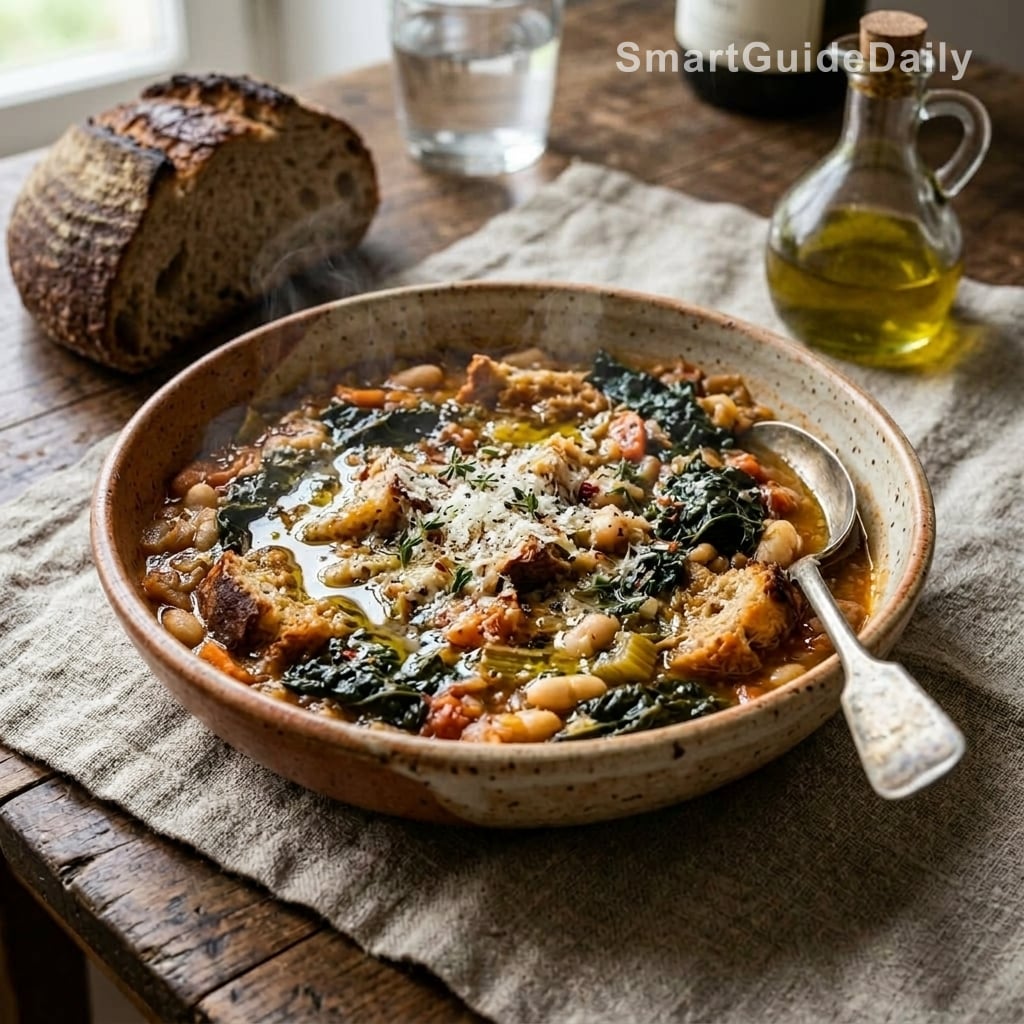
The name means ‘reboiled,’ and that’s not incidental — it’s the architecture of the dish. You cook it once, let it sit overnight, then reheat it until it tightens into something nearly spoonable. The cavolo nero turns silky. The cannellini beans half-collapse into the broth. The bread disappears entirely, thickening the pot in a way no amount of cream could replicate. By the time your guests sit down, the whole thing looks like it required effort and technique. It required time. Those are different things, and only one of them costs you anything.
Why you’ll love this recipe
Ingredient Notes
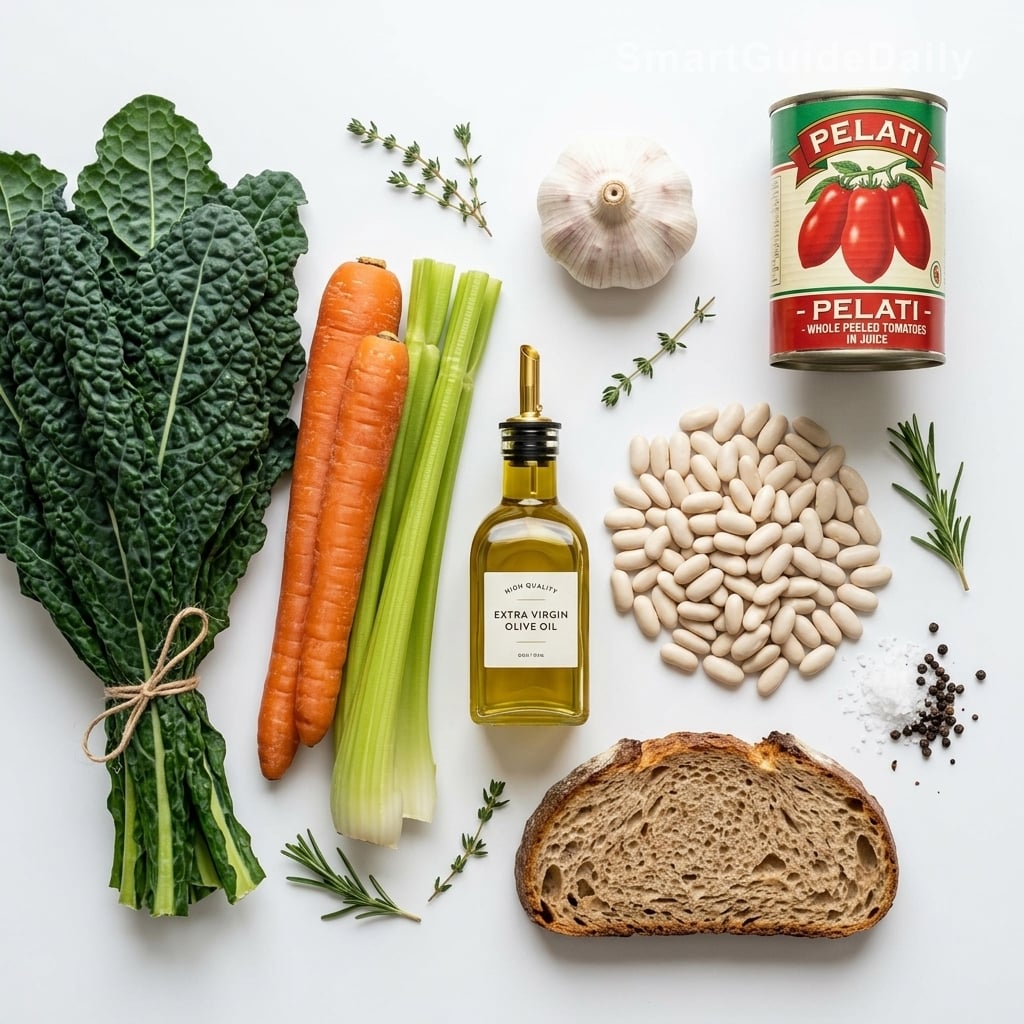
Everything the soup needs — beans, greens, bread, and time.
- Cavolo nero : Not regular kale. The flavor is deeper, less aggressive, and holds up better under long cooking. Strip the ribs completely — they stay tough regardless of time — and use only the leaves. They cook down to almost nothing and give the broth a dark, mineral quality that is central to the dish.
- Cannellini beans : Dried and soaked overnight give better texture: they hold their shape slightly longer before dissolving. Canned work. Either way, you want them fully cooked before they go in — they’re not there to finish cooking in the broth, they’re there to slowly break down into it.
- Stale country bread : Day-old sourdough, ciabatta, or any open-crumb loaf that’s had time to dry out. Fresh bread turns gluey and unpleasant. The bread needs enough structure to absorb without pasting. If your loaf is still soft, slice it and leave it uncovered overnight.
- Canned whole tomatoes : Not fresh. Not paste. Canned San Marzano or equivalent. They add acidity and body without the sweetness problem you get from concentrates. Crush them by hand as they go in.
- Good olive oil : Use it twice: once in the soffritto, and again raw at the table. The finishing pour is not decorative. It changes the flavor. Use something you’d actually eat on bread.
- Garlic : Four cloves minimum for six people. Ribollita is not a shy dish. Slice it thin rather than mincing — it integrates more slowly and you get a softer, less sharp result after the long cook.
Give the Soffritto Fifteen Minutes — Not Five
The base is onion, carrot, celery, and garlic in olive oil, and it takes longer than you’ll want to give it. The onion needs to go translucent and then a little beyond, until the edges take on the faintest color and the pan smells sweet and faintly savory rather than raw and sharp. That shift — from pungent to mellow — is where the depth of the soup comes from. Rush it and you’ll get a flat broth. A burnt soffritto means starting over; there’s no fixing that bitterness once it’s in the pot. Keep the heat medium-low and don’t walk away.
Add the Greens Before the Beans, Not After
Strip the cavolo nero from its ribs and tear the leaves into rough pieces — they’ll shrink dramatically, so use more than you think you need. Add them to the pot after the crushed tomatoes have had about ten minutes to reduce. The greens need time in liquid before the beans arrive: they release some of their bitterness into the broth in a way that works in the soup’s favor, rounding out the acidity of the tomatoes. When the leaves have gone dark, wilted, and fully collapsed — that slightly resistant, mineral smell fading into something rounder — the beans go in. Not before.
Tear the Bread and Push It Under the Surface
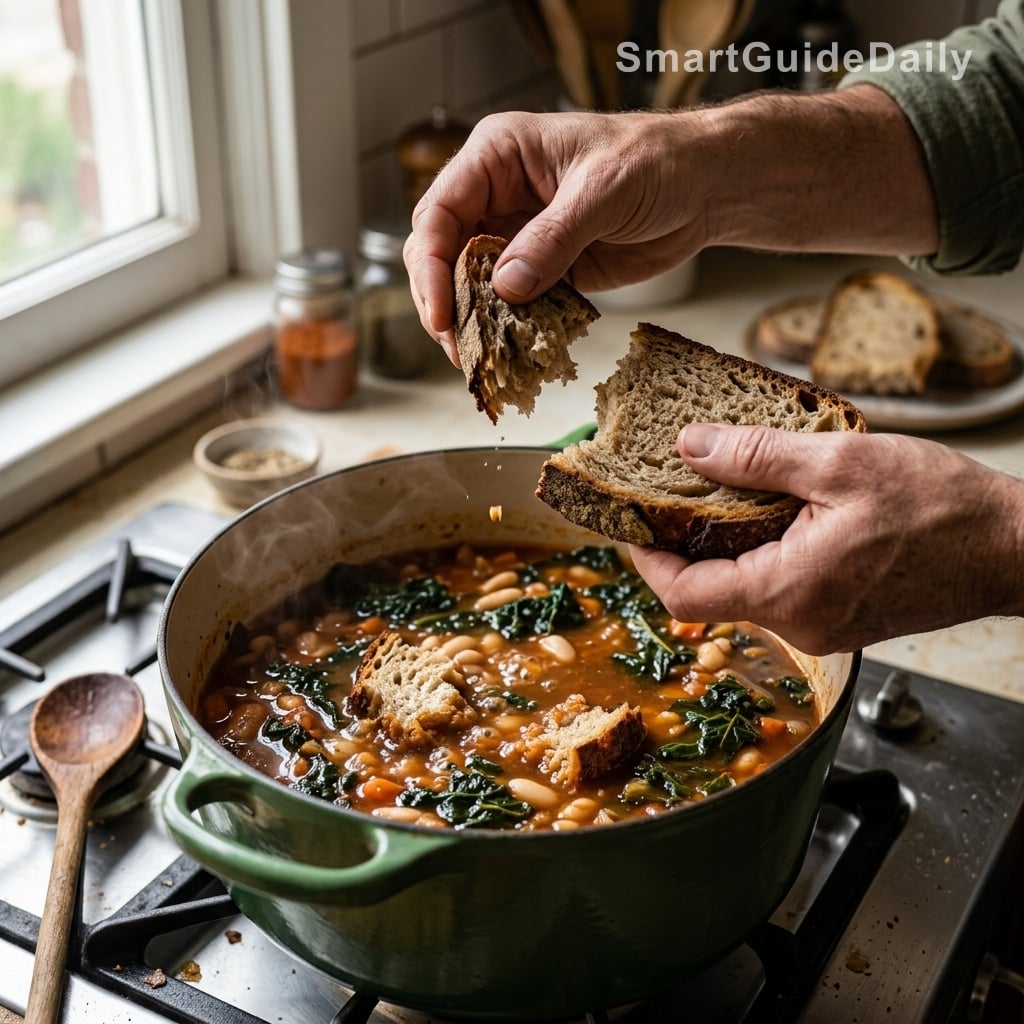
The bread is not a garnish. It goes into the pot with roughly twenty minutes of cooking left, torn into irregular pieces around the size of a golf ball. Push each piece below the surface of the broth and resist the urge to stir immediately. Give it five minutes to begin absorbing before you move it. Stale bread tears cleanly and holds its structure long enough to soak through before it dissolves. What you’re aiming for is a texture somewhere between thick soup and loose porridge — the bread fully integrated, no distinct chunks visible, the wooden spoon leaving a trail when you drag it across the surface. If you can still identify individual pieces of bread, keep going.
Leave It Overnight — This Part Is Not Negotiable
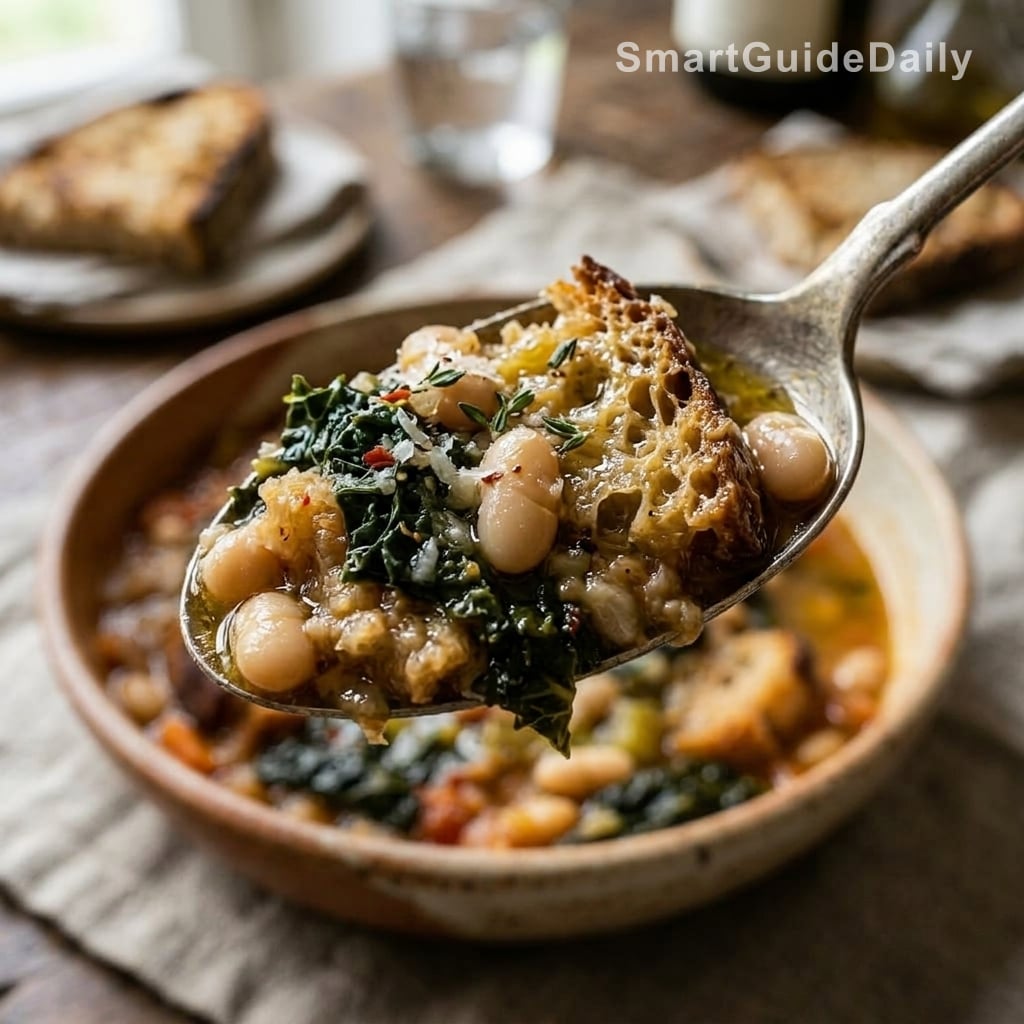
Once the pot has cooled, cover it and refrigerate it. The ribollita will thicken considerably as it sits — the starches from the bread continue to swell, the flavors consolidate, and whatever edge the garlic or tomatoes had gets smoothed out by morning. When you reheat it the next day, do it low and slow, stirring occasionally, adding a small splash of water or stock if the consistency has gone too dense to move. The target is thick enough to mound slightly in a wide shallow bowl but not so stiff it holds a peak. Serve it with a raw pour of olive oil over the top and coarse black pepper at the table.
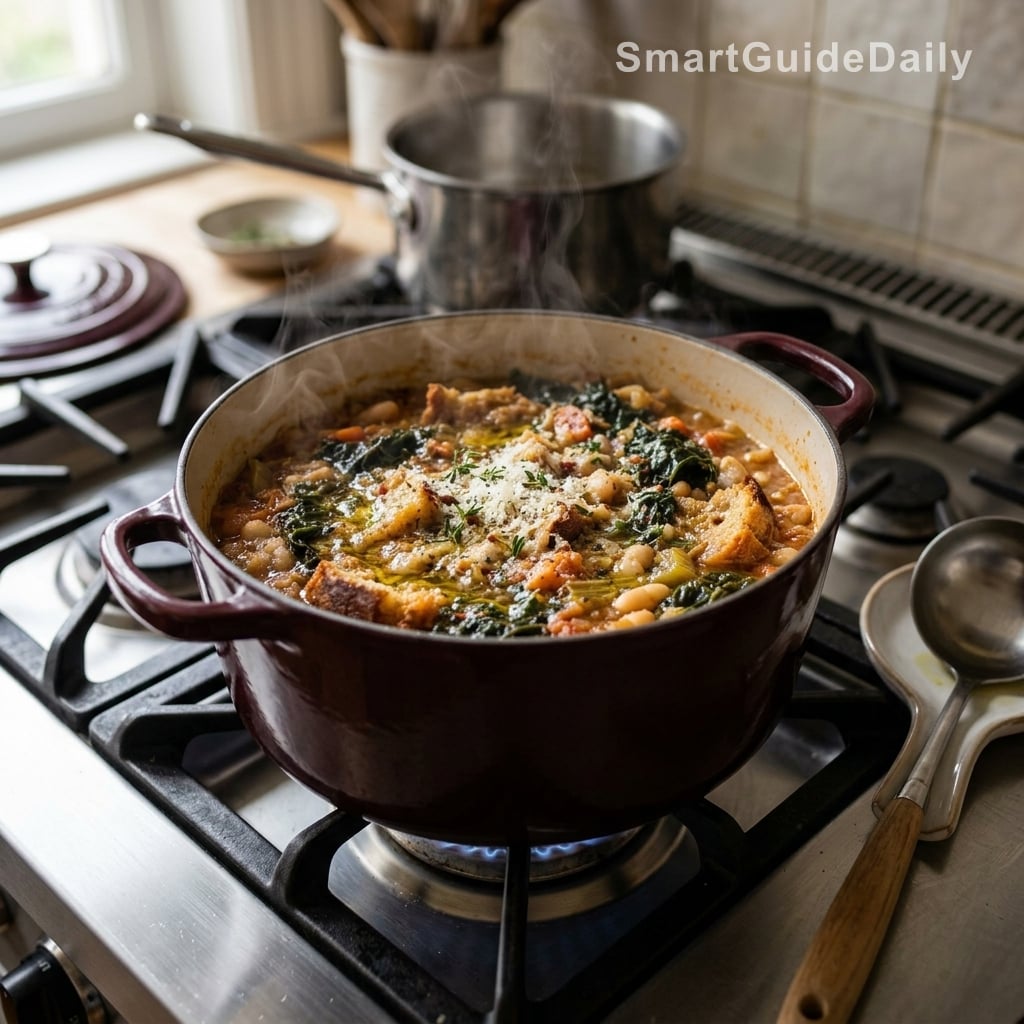
- Use a heavy-bottomed pot — enameled cast iron is ideal. It holds heat evenly during the long simmer and, more importantly, prevents scorching when you’re reheating the next day on a low flame.
- Don’t salt aggressively until after the bread has been in for ten minutes. The bread absorbs salt as it cooks, and what tastes right before it goes in will taste overseasoned by the time the pot is ready.
- If your guests are eating the same day, make the ribollita in the morning. Four hours at room temperature at the end of cooking does most of what overnight refrigeration accomplishes — the bread integrates, the flavors settle.
- Parmesan rind, if you have one, can go into the broth with the tomatoes and cook low and slow with everything else. It adds a quiet, savory depth. Remove it before serving.
Can I use regular kale instead of cavolo nero?
You can, but the result is different. Regular kale has a sharper, more aggressive flavor and a tougher texture that doesn’t break down as smoothly during a long cook. Savoy cabbage is actually a closer substitute — it collapses more gracefully and leaves a quieter, more mineral quality in the broth.
Can I skip the overnight rest and serve it the same day?
Make it in the morning, let it cool at room temperature for a few hours, then reheat it in the evening. It won’t be as cohesive or as deep in flavor as the overnight version, but it’s a workable meal. Same-day ribollita is valid. Overnight ribollita is the actual dish.
Which bread works best?
Open-crumb, unsweetened country bread that’s at least a day old — sourdough, ciabatta, or a sturdy rustic white loaf. It needs to be dry enough to absorb without going gluey, which means fresh bread is out. Avoid enriched loaves entirely; they turn the soup sweet and dense in the wrong way.
Dried beans or canned?
Dried beans soaked overnight hold their shape slightly longer before dissolving, which is a real difference in a soup where bean texture matters. That said, two cans of drained cannellini beans work reliably. The difference is genuine but not worth an extra twelve hours of planning if you’re already pressed.
Does ribollita freeze well?
Yes. Freeze it after the overnight rest, portioned into containers. Thaw in the refrigerator and reheat low and slow, adding water or stock if it’s gone very stiff. The texture holds better than most bean soups because the bread is already fully integrated and there’s nothing left to separate.
What if it comes out too thick — or too thin?
Too thick: add water or warm stock a ladleful at a time over low heat, stirring until it loosens to a pourable consistency. Too thin: keep cooking uncovered, stirring often, until more liquid evaporates. The target is thick enough to mound slightly in a wide bowl but loose enough to settle flat within a few seconds.
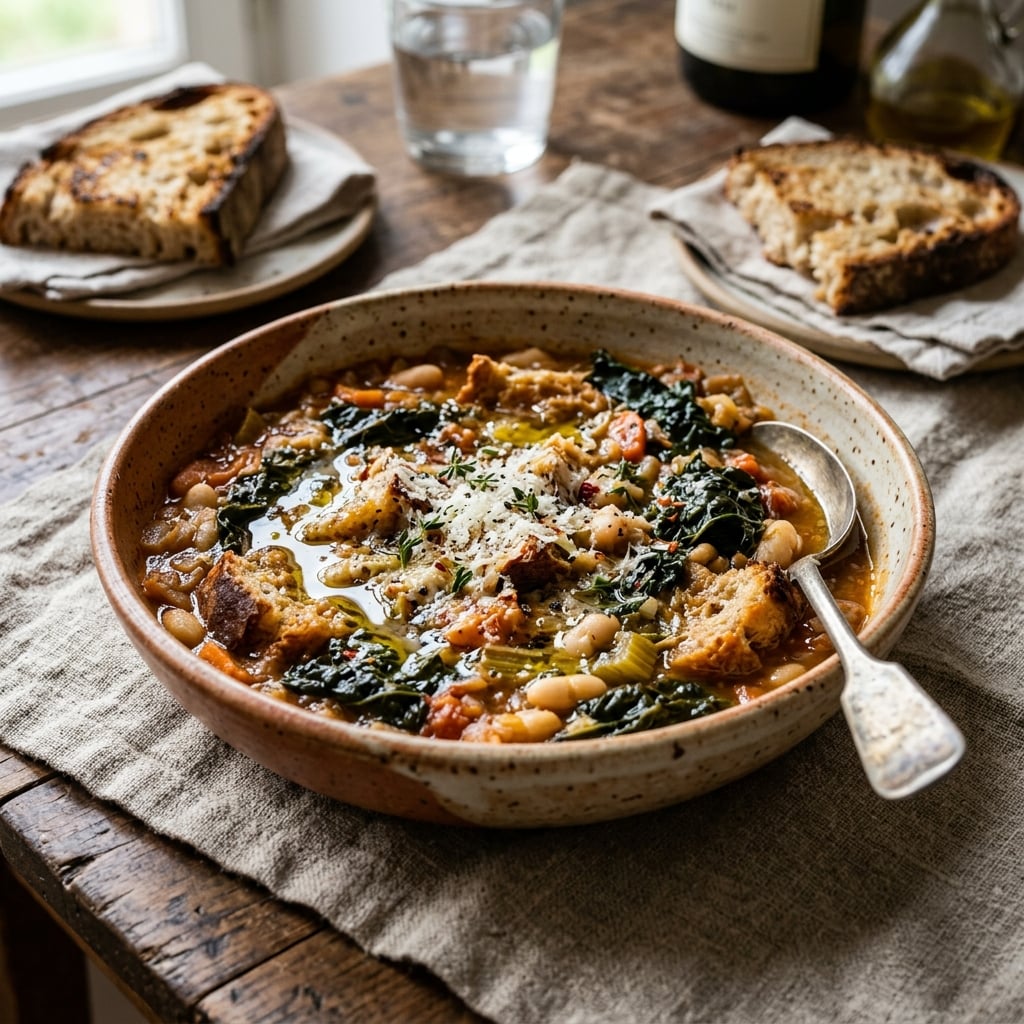
Ribollita Done Properly: Bread, Beans, Greens, and the Next Day
Italian
Soups & Stews
|
Prep Time
25 minutes
|
Cook Time
1 hour 25 minutes
|
Total Time
1 hour 50 minutes
|
Servings
6 portions
|
A Tuscan bread soup built to be made ahead. Cook it once, rest it overnight, reheat it the next day. The bread dissolves completely into the broth, the cavolo nero goes silky, and the whole pot becomes something considerably more than the sum of its parts.
Ingredients
- 400g cavolo nero (Tuscan kale), ribs stripped, leaves torn
- 2 x 400g cans cannellini beans, drained and rinsed
- 250g stale country bread (sourdough or ciabatta), torn into rough pieces
- 1 large yellow onion (about 180g), finely diced
- 2 medium carrots (about 200g), finely diced
- 3 stalks celery (about 150g), finely diced
- 4 garlic cloves, thinly sliced
- 1 x 400g can whole peeled tomatoes
- 1.5 liters vegetable stock
- 4 tbsp olive oil, plus extra for serving
- 1 Parmesan rind (optional, but worthwhile)
- to taste salt and freshly ground black pepper
Instructions
- 1Heat the olive oil in a large heavy-bottomed pot over medium-low heat. Add the onion, carrot, and celery. Cook, stirring occasionally, for 15 minutes until soft, fragrant, and lightly colored at the edges.
- 2Add the sliced garlic and cook for 2 more minutes without letting it brown.
- 3Crush the canned tomatoes by hand directly into the pot. Raise the heat slightly and cook for 10 minutes, stirring occasionally, until the tomato base thickens.
- 4Add the cavolo nero leaves and stir to coat them in the base. Pour in the vegetable stock and add the Parmesan rind if using. Bring to a gentle simmer.
- 5Simmer for 20 minutes until the cavolo nero is fully wilted, dark, and tender throughout.
- 6Add the drained cannellini beans and simmer for 15 more minutes. Season with salt — taste before you add.
- 7Tear the bread into pieces roughly the size of a golf ball and push each piece below the surface of the broth. Cook over low heat for 20 minutes, stirring occasionally, until the bread has fully dissolved into the soup and the pot is thick and slow-moving.
- 8Remove the Parmesan rind if used. Taste and adjust seasoning. Let the pot cool to room temperature, then cover and refrigerate overnight.
- 9The next day, reheat over low heat, stirring frequently. Add water or stock, a ladleful at a time, if the soup has thickened beyond a pourable consistency.
- 10Serve in wide, shallow bowls with a generous pour of raw olive oil over the top and coarse black pepper at the table.
Notes
• Cavolo nero shrinks dramatically during cooking — the raw pile that barely fits in the pot is correct.
• The bread must be noticeably dry and at least a day old. Fresh bread turns gluey. If your loaf is still soft, slice it and leave it uncovered at room temperature overnight.
• Leftovers keep refrigerated for 3–4 days and freeze well for up to 3 months. Portion before freezing and thaw overnight in the refrigerator.
• Do not salt heavily until after the bread has cooked in for at least ten minutes — the bread absorbs salt as it dissolves, and what tastes right beforehand will read as overseasoned by the end.
Nutrition Facts (per serving, estimated)
| 430 kcalCalories | 16gProtein | 58gCarbs | 14gFat |