|
Prep Time
30 minutes
|
Cook Time
1 hour 20 minutes
|
Total Time
1 hour 50 minutes
|
Servings
6 portions
|
Most shepherd’s pie is bad. Not bad in a way that anyone notices at the table — it’s warm, it’s filling, people are grateful. Bad in the specific way of a dish that was never quite taken seriously: thin gravy, bland mince, mashed potato applied like spackle over something you’d rather not think about. This version starts from a different premise.
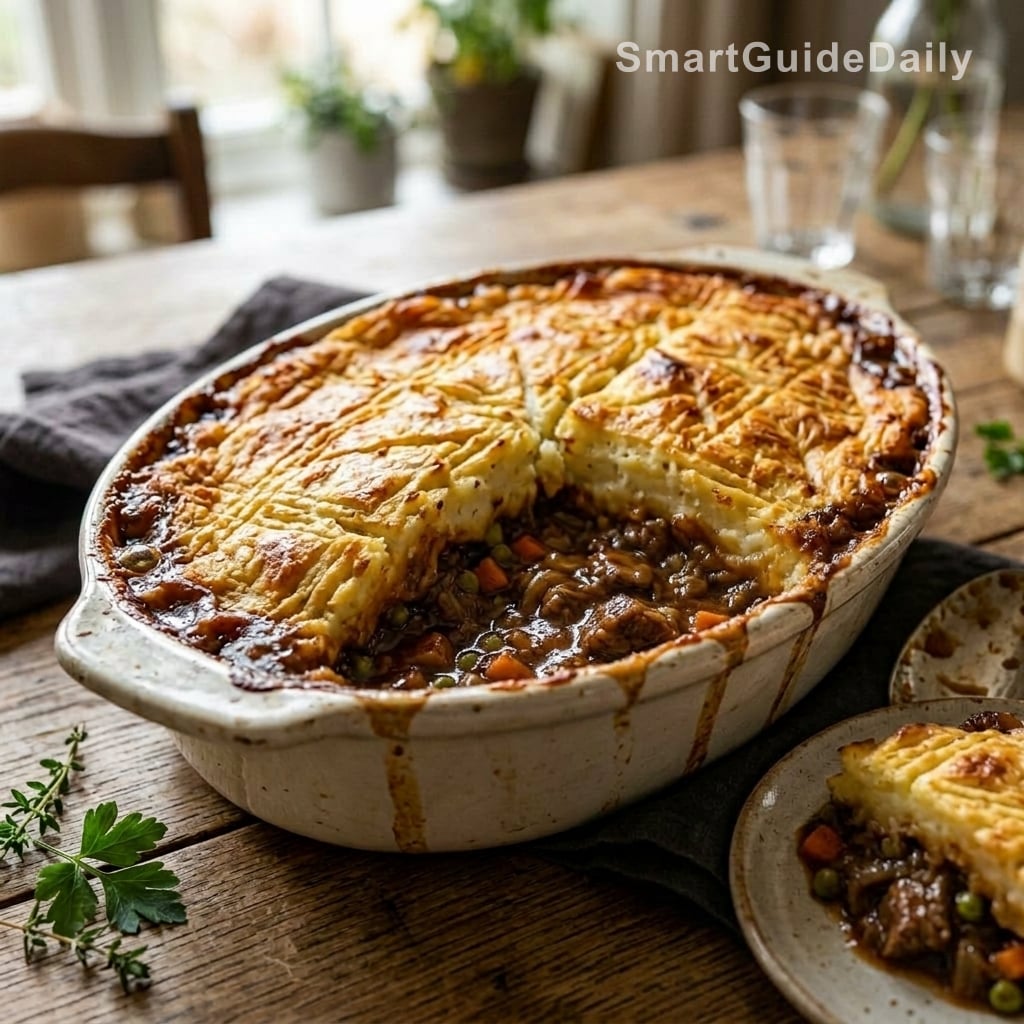
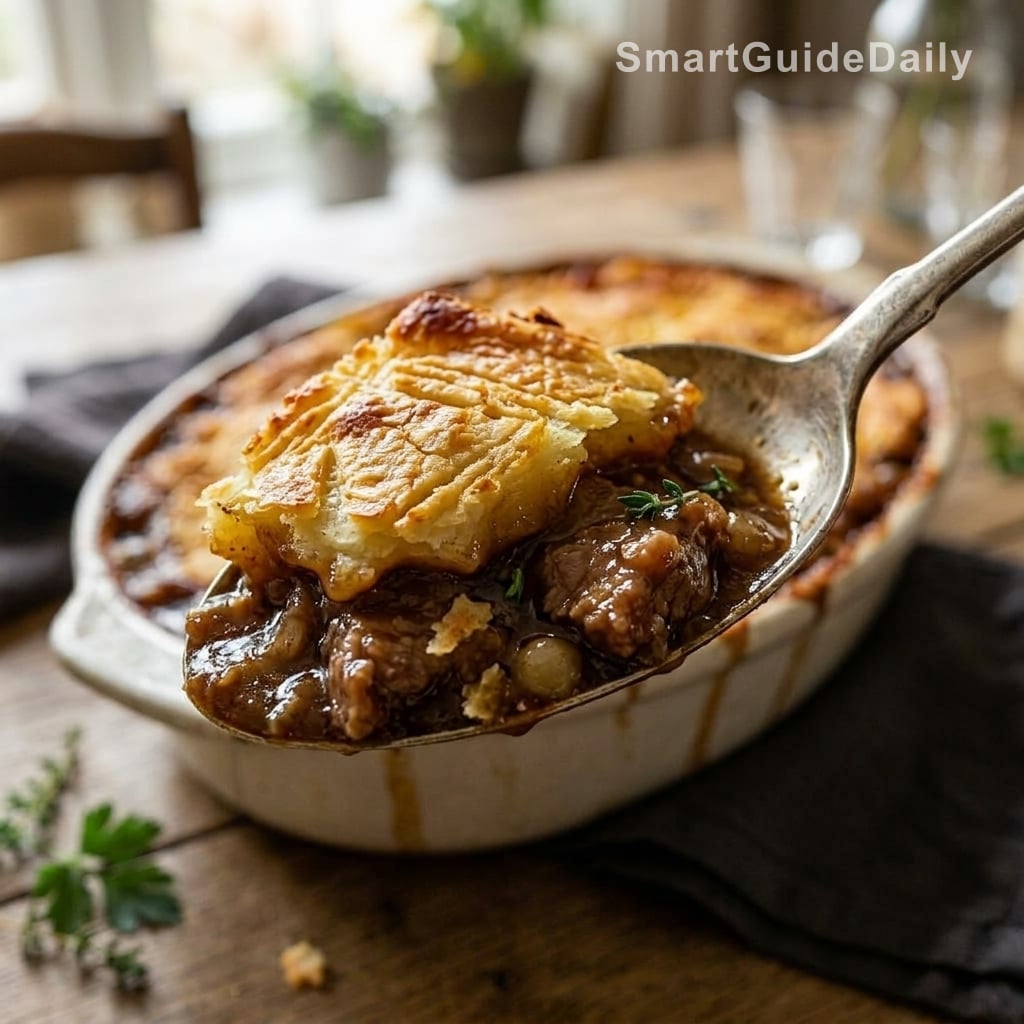
When the filling is right, it’s dark and close-textured — not swimming, not dry, but just barely holding together under the weight of the potato lid. Press a spoon through the crust and it cracks with a short, dry sound before giving way to the lamb underneath. The gravy catches in the ridges. You can smell the rosemary from across the room, but in the finished dish you shouldn’t be able to point to it. That’s the target.
Why you’ll love this recipe
Ingredient Notes
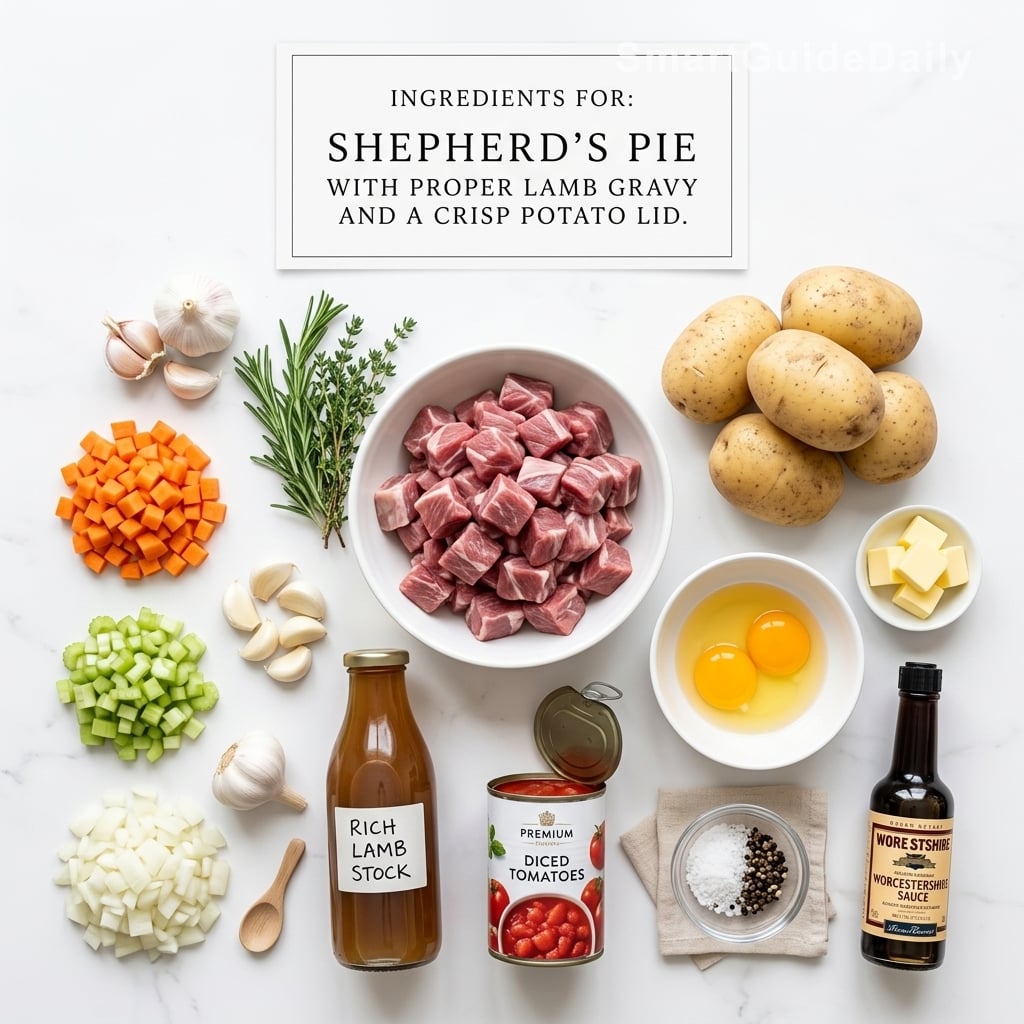
Everything for the pie laid out before it becomes one: lamb shoulder, roots, aromatics, stock, and a few potatoes that will carry more weight than expected.
- Lamb shoulder, diced : Shoulder has enough fat and connective tissue to stay moist through a long braise. Leg of lamb goes dry and fibrous. Lamb mince works in a different version of this dish — faster, leaner, perfectly acceptable — but this is not that version. Buy it in 2cm cubes or cut it yourself.
- Floury potatoes : Maris Piper or King Edward in the UK; Yukon Gold in the US. The starch content is what you’re after. Waxy varieties hold too much water and give you a lid that steams rather than crisps. This is a small distinction with a large effect on the finished dish.
- Lamb stock : If you have bones and the time, make your own. If you’re using shop-bought, taste it before adding — some are aggressively salted, which will compound through the reduction and ruin the balance. Adjust seasoning only after the gravy is nearly finished.
- Worcestershire sauce : Two tablespoons, added with the stock. This is about depth and a low, savoury hum in the background — not a flavour you should be able to identify in the finished dish. If you can taste it distinctly, you’ve added too much.
- Egg yolk : One yolk beaten into the potato while it’s still warm. It binds the mash, adds fat, and gives the surface something that will actually brown in the oven rather than just drying out. This step takes thirty seconds and makes a visible difference.
- Rosemary and thyme : One sprig of each, added whole and removed before the filling goes into the baking dish. The mistake with these two aromatics is almost always generosity. You want a suggestion, not a statement.
Brown the Lamb Harder Than Feels Reasonable
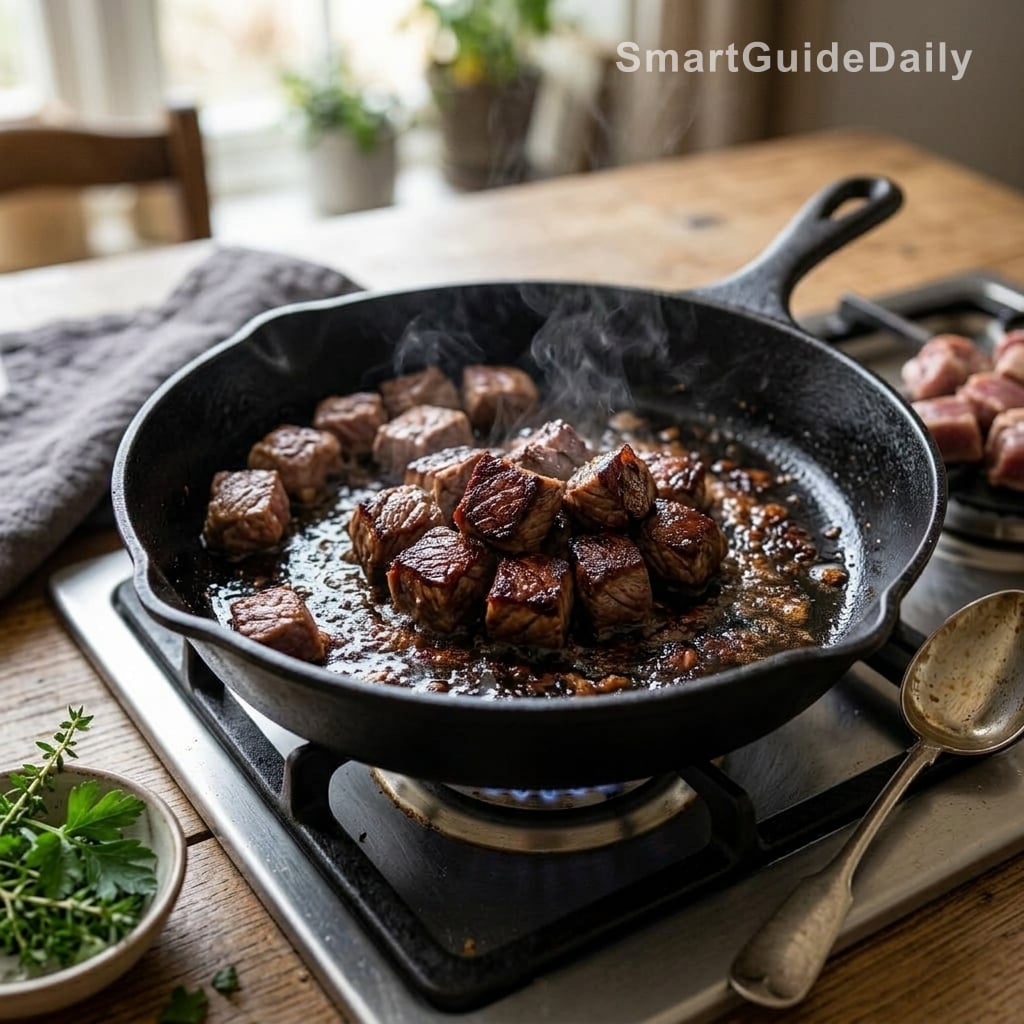
Pat the lamb dry with kitchen paper. This is not optional. Surface moisture is steam, and steam is the enemy of a proper sear. Work in small batches — four or five pieces at a time in a dry, very hot pan. If you hear the meat hiss and see colour forming within thirty seconds, you have the right temperature. If it sits there quietly and starts to sweat, remove the batch, let the pan recover, and start again with less. The fond that builds on the pan base through this process — those dark, caramelised deposits — is where the gravy begins. Do not rinse the pan between batches. Do not rush this step because it feels repetitive. This is Saturday. You have time.
Don’t Walk Away From the Reduction
Once the lamb is browned and resting, soften the onion, carrot, and celery in the same pan with the fat that remains. Let them go properly soft — eight to ten minutes over medium heat, until the onion is translucent and starting to colour at the edges. Add the tomato purée, stir it into the vegetables, and let it cook for two minutes until it darkens slightly and loses its raw edge. Return the lamb, pour in the stock and Worcestershire sauce, add the herbs. Now reduce. The gravy needs to come down to a consistency that coats the back of a spoon with some reluctance — not liquid, not gelatinous, but somewhere disciplined between the two. This takes around twenty to twenty-five minutes of steady simmering with no lid. Stay close. Stir occasionally. Taste it once near the end.
Treat the Potato Lid as a Technical Step
Boil the potatoes in well-salted water until a knife passes through without resistance. Drain them completely, then let them steam dry in the colander for a full five minutes — residual water in the mash is what makes the crust steam rather than crisp in the oven. Pass the potatoes through a ricer or mash firmly until smooth, then beat in butter and the egg yolk while the potato is still warm. Season properly. The lid needs to taste good on its own before it goes anywhere near the filling. Spoon it over the lamb in an even layer, then ridge the surface with a fork — those ridges will catch heat and brown. Don’t smooth it flat. You want texture.
Give It Ten Minutes Before You Cut In
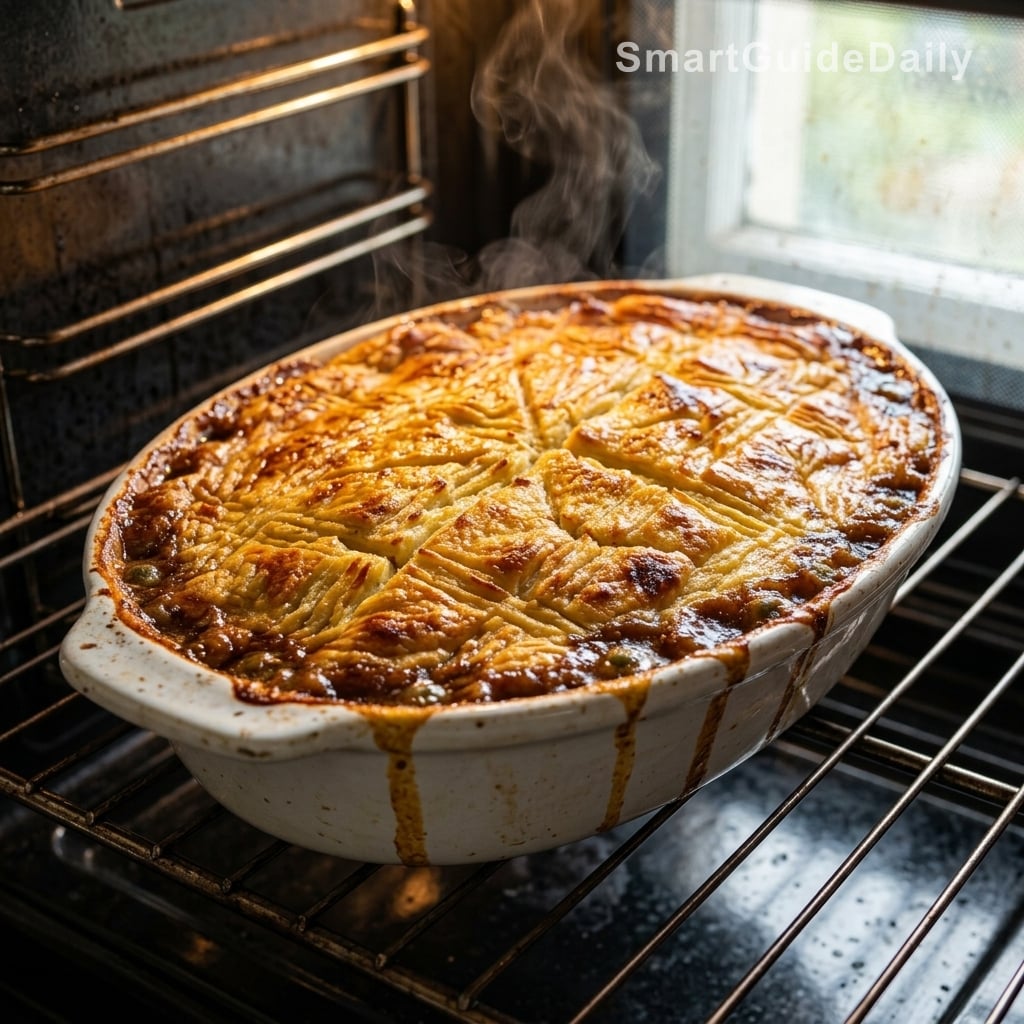
The pie comes out of the oven with the gravy still moving. Cut into it immediately and it runs across the plate. Give it ten minutes, uncovered, on a rack or a folded cloth — the filling settles, the fat redistributes, and the potato crust holds its shape when the spoon goes in. The crust, at this point, should be deeply golden across the ridges with darker colour at the edges where the potato has caught against the hot ceramic. That’s not burning. That’s exactly what you were working toward.
Tips & Tricks
- Season the mash properly before it goes on — generously, the way you’d season potato you were going to eat on its own. Once it’s baked into the pie, you can’t adjust it without pulling the crust apart.
- The pie holds well covered in the refrigerator for up to three days. Reheat individual portions in the oven at 180°C rather than the microwave — the crust will soften in the microwave and not recover.
- If the lamb filling looks loose when it comes off the heat, don’t add more flour. Give it another five minutes of reduction with the heat slightly higher. A starchy thickener added late will change the texture of the gravy in a way that becomes obvious when it cools.
Can I use lamb mince instead of diced shoulder?
You can. Mince cooks faster, yields a finer-textured filling, and is the version most people grew up eating. The difference with diced shoulder is that you get distinct pieces of meat in the gravy rather than a uniform mass — it reads differently on the plate and takes longer to develop properly. Neither is wrong; they produce different dishes.
What potatoes should I use for the lid?
Floury varieties only — Maris Piper, King Edward, or Yukon Gold. Waxy potatoes retain too much water after boiling, and that moisture converts to steam in the oven instead of allowing the surface to brown. The result is a lid that looks pale and feels wet. Don’t use waxy potatoes.
Can I assemble the pie in advance?
Yes. Build it completely — filling, potato lid, fork ridges — cover it, and refrigerate for up to 24 hours before baking. Add 10 to 15 minutes to the oven time to account for the cold start. The filling benefits from the rest; the fat settles and the flavour consolidates overnight.
How do I know when the gravy has reduced enough?
Draw a wooden spoon through the filling. If the gravy closes back over the trail immediately, it needs more time. If it holds the line for a moment before levelling, it’s ready. It should move slowly in the pan — not set, but not fluid. It firms further as it bakes and then rests after the oven.
Can I freeze shepherd’s pie?
The filling freezes well for up to three months. The potato lid is a different matter — it tends to weep water when thawed and the texture becomes grainy. Freeze the filling on its own and make a fresh potato lid when you’re ready to use it. The extra ten minutes is worth it.
The potato crust isn’t browning. What’s going wrong?
Two likely causes: the potatoes were too wet when mashed — drain them and let them steam dry in the colander for a full five minutes next time — or the oven temperature is too low. 190°C is the minimum for proper browning. If the rest of the dish is cooked through but the surface is still pale, finish it under a hot grill for two to three minutes.
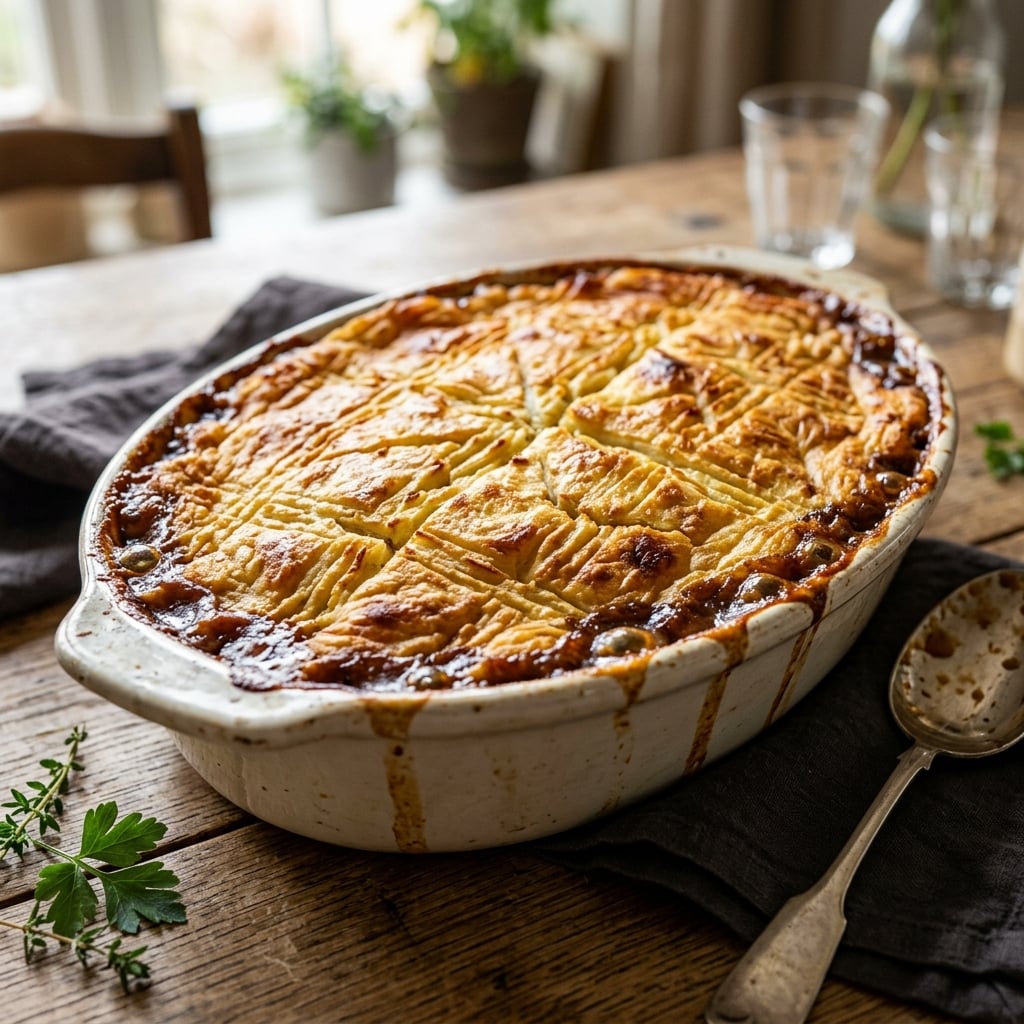
Shepherd’s Pie With Proper Lamb Gravy and a Crisp Potato Lid
British
Mains
|
Prep Time
30 minutes
|
Cook Time
1 hour 20 minutes
|
Total Time
1 hour 50 minutes
|
Servings
6 portions
|
A shepherd’s pie built on diced lamb shoulder browned hard and braised in lamb stock until the gravy is thick and dark, topped with a floury mash enriched with egg yolk and baked until the crust crisps at the ridges.
Ingredients
- 900g lamb shoulder, cut into 2cm cubes
- 2 tbsp neutral oil
- 2 medium onions, finely diced
- 2 medium carrots, finely diced
- 2 sticks celery, finely diced
- 4 cloves garlic, finely minced
- 2 tbsp tomato purée
- 500ml lamb stock
- 2 tbsp Worcestershire sauce
- 1 sprig rosemary
- 1 sprig thyme
- 1.2kg floury potatoes (Maris Piper or King Edward), peeled and quartered
- 60g unsalted butter, cubed
- 1 egg yolk
- salt and black pepper
Instructions
- 1Preheat the oven to 190°C / 375°F. Pat the lamb cubes completely dry with kitchen paper and season generously with salt and pepper.
- 2Heat a large, heavy-based pan over high heat until very hot. Add the oil, then brown the lamb in small batches of 4 to 5 pieces — do not crowd the pan. Leave each piece undisturbed for the first minute to develop colour, then turn. Once deeply browned on all sides, transfer to a plate. Repeat until all the lamb is done.
- 3Reduce the heat to medium. Add the onion, carrot, and celery to the same pan and cook for 8 to 10 minutes, stirring occasionally, until soft and beginning to colour at the edges.
- 4Add the garlic and tomato purée. Stir and cook for 2 minutes until the purée darkens slightly and loses its raw smell.
- 5Return the lamb to the pan with any resting juices. Add the stock, Worcestershire sauce, rosemary, and thyme. Bring to a steady simmer.
- 6Cook uncovered for 20 to 25 minutes, stirring occasionally, until the gravy has reduced to a coating consistency — it should move slowly across the pan and hold a trail briefly when a spoon is drawn through it. Remove the herb sprigs. Taste and adjust seasoning.
- 7Meanwhile, boil the potatoes in well-salted water until a knife passes through without resistance. Drain completely, then leave in the colander for 5 minutes to steam dry.
- 8Pass the potatoes through a ricer or mash firmly until smooth. Beat in the butter and egg yolk while the mash is still warm. Season well — the potato needs to taste properly seasoned on its own.
- 9Transfer the lamb filling to a deep baking dish (approximately 30 x 22cm). Spoon the mash evenly over the filling and ridge the surface with a fork to create texture.
- 10Bake for 30 to 35 minutes until the crust is deeply golden across the ridges and the filling is bubbling at the edges of the dish.
- 11Rest for 10 minutes before serving.
Notes
• The pie can be fully assembled up to 24 hours ahead and refrigerated, covered. Add 10 to 15 minutes to the baking time if it goes into the oven cold.
• Leftovers keep for 3 days refrigerated. Reheat in the oven at 180°C rather than the microwave — the crust holds its texture better.
• If the gravy looks too loose before the potato lid goes on, reduce for another 5 minutes over medium-high heat. Adding flour or starch at this stage changes the texture of the gravy once it cools.
Nutrition Facts (per serving, estimated)
| 545 kcalCalories | 36gProtein | 38gCarbs | 26gFat |