The smell that tells you you’re doing it right is Pecorino Romano hitting warm fat in a bowl — not a pan, not a pot, a bowl — and melting into something that looks like it shouldn’t work. Carbonara has been buried under cream, buried under bacon, buried under garlic, and somehow the original Roman version survives all of it. Five ingredients. Thirty minutes. No cream, no shortcuts, no apologies.
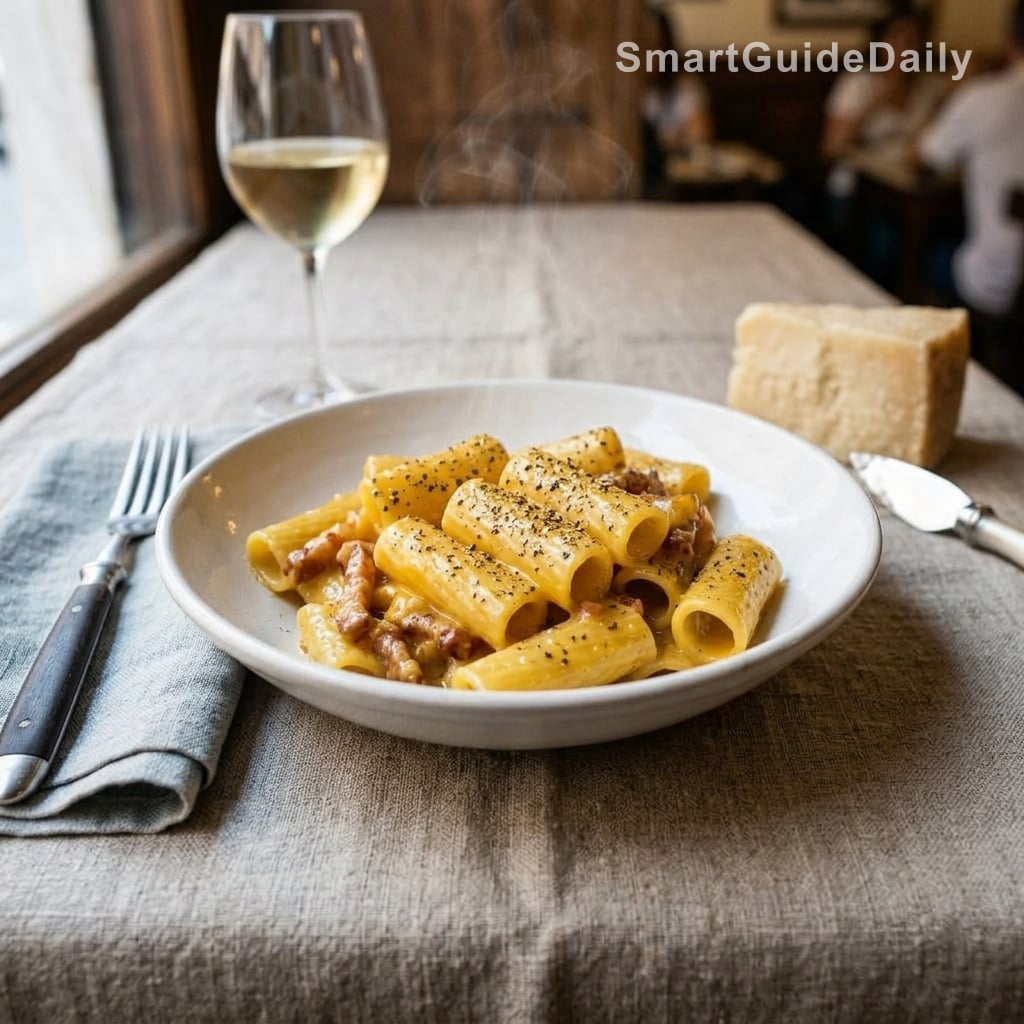
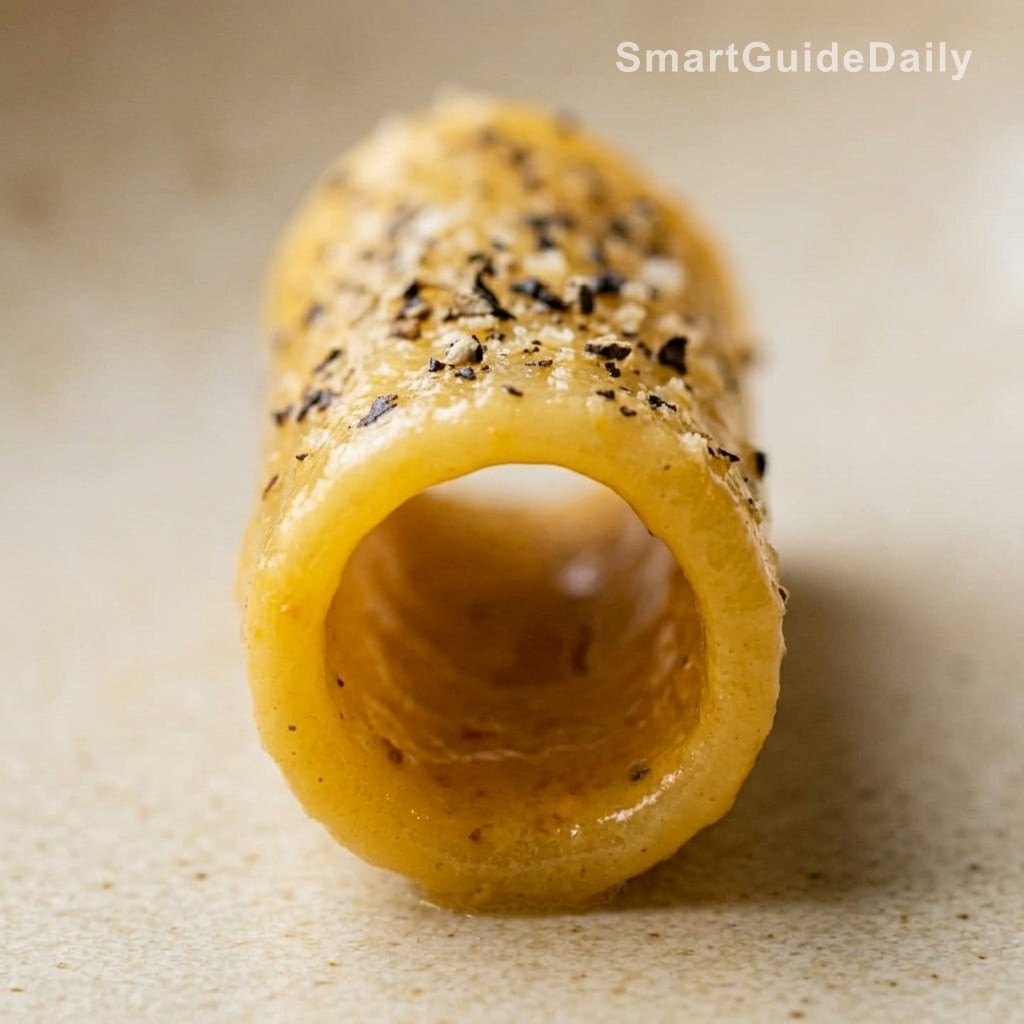
What distinguishes real carbonara from the rest is a textural threshold. The sauce needs to be just set — glossy, fluid enough to coat the back of a spoon, with no visible curds. Cross that line by thirty seconds on the heat and you have scrambled eggs in pasta water. Stay on the right side of it and the sauce clings to each rigatoni tube in a way that is genuinely hard to explain unless you’ve done it. The key variable isn’t technique. It’s temperature.
Why you’ll love this recipe
Ingredient Notes
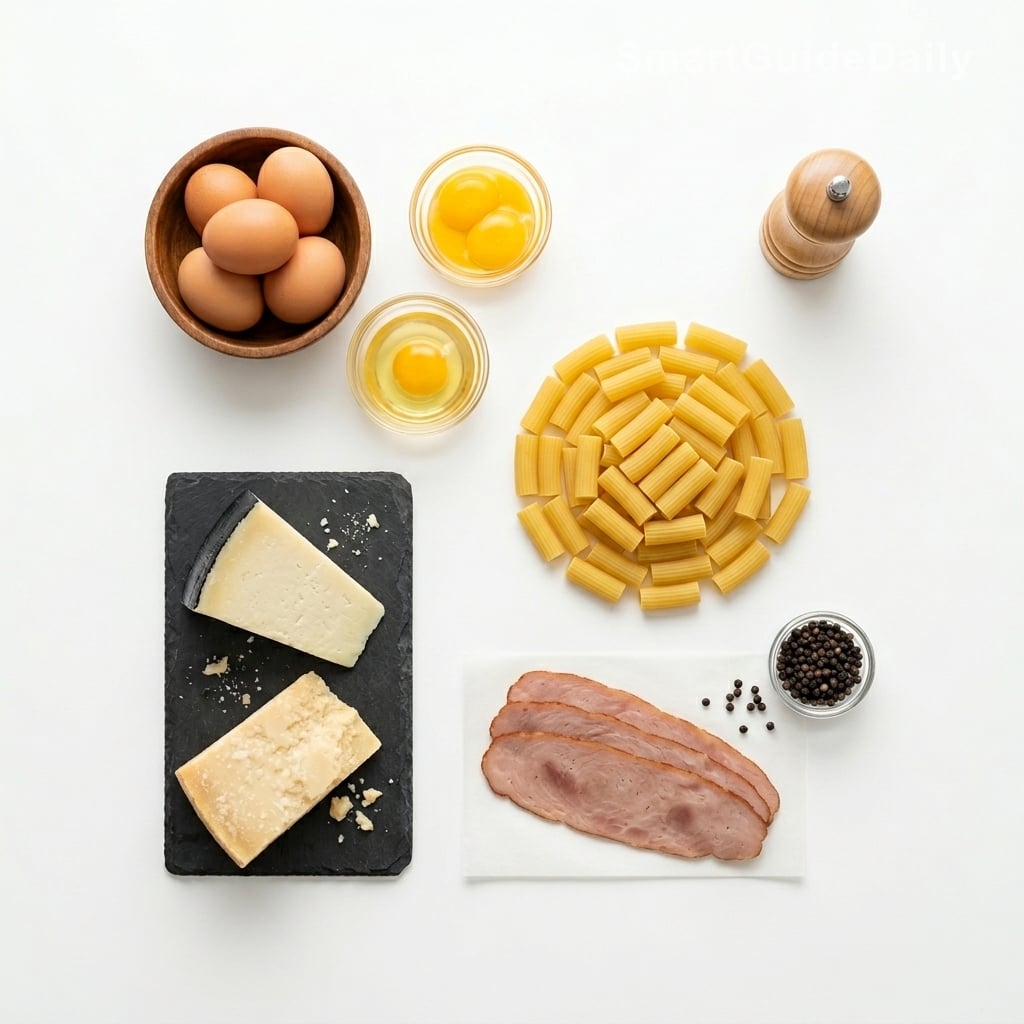
Five ingredients. That is the entire list. Anything extra is a different dish.
- Eggs — 2 whole, 4 yolks : The yolks carry fat and emulsifying power. The whole eggs add water and lighten the texture. A pure yolk-only carbonara is richer but stiffens faster; this ratio holds better over the two minutes it takes to plate for four people.
- Pecorino Romano — 80g, microplane-grated : Sharp, salty, slightly funky. Grate it on a microplane, not a box grater. Coarse Pecorino clumps in the sauce rather than melting evenly. Use the finer tool and the sauce will be smoother.
- Parmigiano-Reggiano — 40g, microplane-grated : Rounds out the sharpness of the Pecorino. Some Roman purists skip it entirely; this version uses a 2:1 ratio of Pecorino to Parmigiano, which keeps the flavor assertive without being abrasive.
- Turkey bacon — 150g : Turkey bacon renders its fat slowly and crisps at the edges without the heavy smokiness of cured pork. Cut it into small strips and render it in a dry pan — no oil — until the edges are brown and the fat has pooled. That fat goes into the sauce.
- Black pepper — freshly cracked, generously : Carbonara is, among other things, a pepper dish. Use whole peppercorns cracked with a mortar, not pre-ground powder from a jar. Toast them briefly in the pan after the turkey bacon comes out. The heat releases something sharper and more aromatic than raw pepper ever gives you.
- Rigatoni — 400g : The tubes trap sauce on the inside. Spaghetti works and is traditional, but rigatoni delivers a more consistent sauce-to-pasta ratio per bite. Use a quality dried pasta that stays firm at al dente and releases enough starch into the cooking water to help the emulsion.
Warm the Bowl Before Anything Else
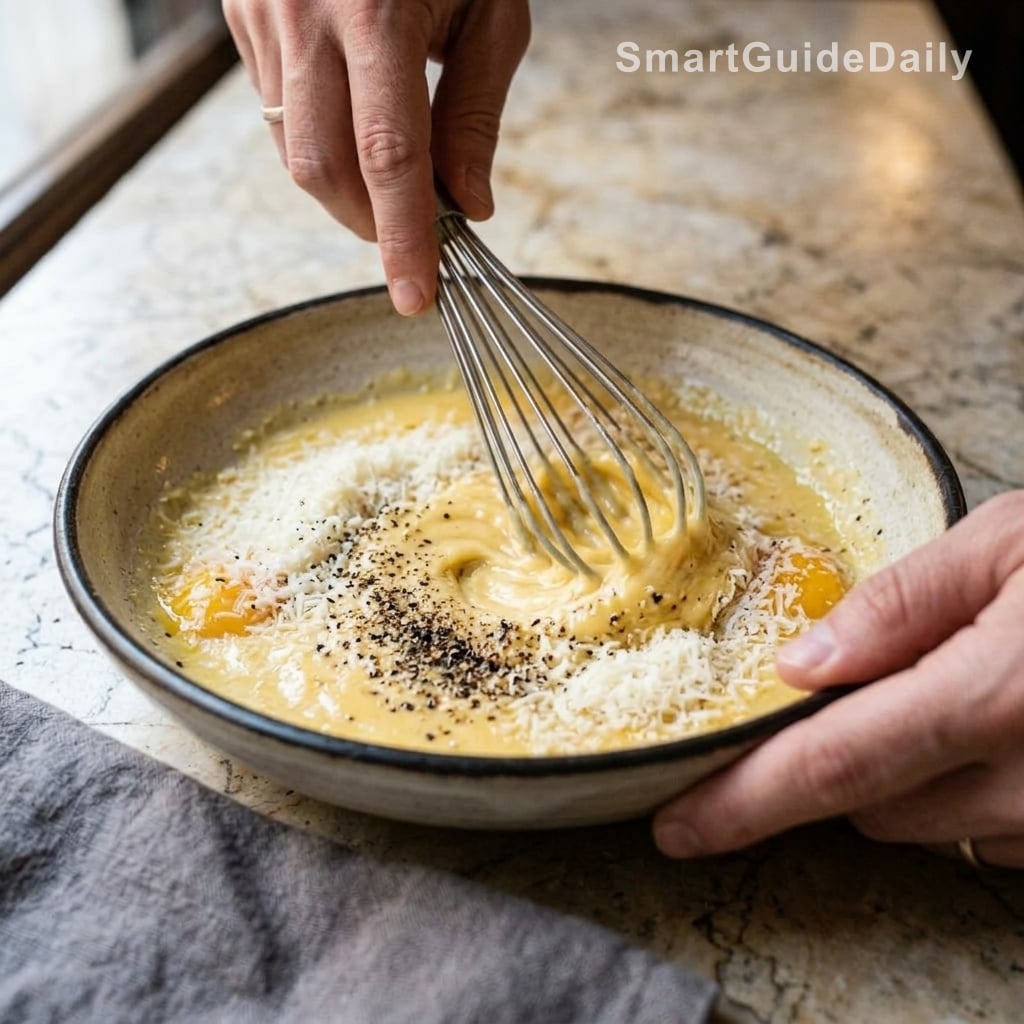
Set a large mixing bowl over the pot of pasta water while it comes to a boil. This is not optional. The egg and cheese mixture needs to start in a warm environment — around 40°C, not hot — so that when the pasta goes in, the sauce begins to set immediately rather than sitting cold against hot pasta and scrambling in patches. Whisk your eggs and yolks with the Pecorino and Parmigiano in this bowl. Add a small ladle of barely-hot pasta water and whisk again. The mixture should be pale yellow, smooth, and thick enough to ribbon off the whisk. Set it aside, off the heat, and keep the bowl warm.
Render the Turkey Bacon Low and Slow
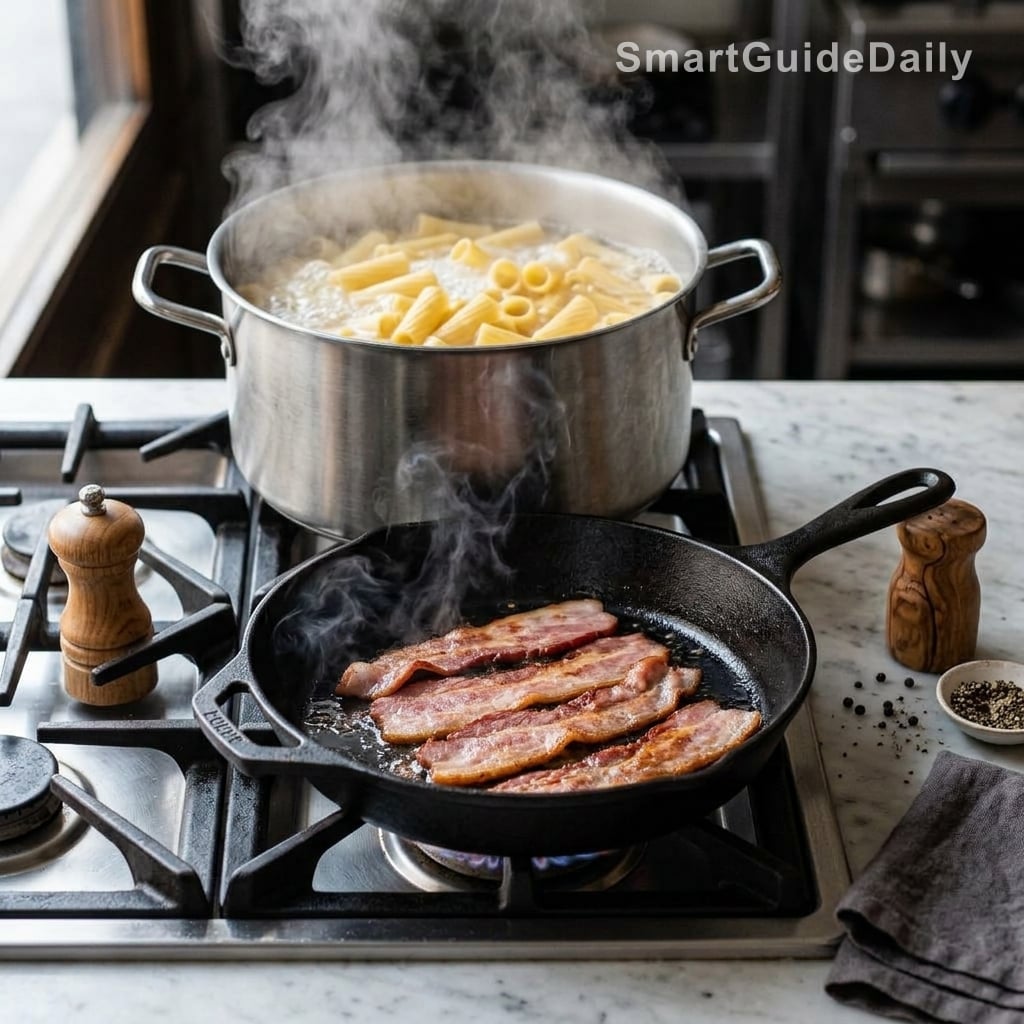
Cold pan, no oil. Lay the turkey bacon strips in and turn the heat to medium-low. You’re not frying it — you’re rendering it. The fat needs time to come out of the meat before the edges brown. If your pan is too hot, the outside crisps before the fat has had a chance to pool, and you lose the lubricant the sauce depends on. Once the strips are brown at the edges and the pan holds a visible layer of rendered fat, pull the bacon out and set it on a plate. Add the cracked black pepper directly to the hot fat, let it toast for thirty seconds — it will smell sharp and slightly floral — then take the pan off the heat entirely.
The Thirty Seconds That Decide Everything
Cook the rigatoni in heavily salted water until just short of al dente. Reserve at least two cups of the pasta water before draining; you will need it. Drain the pasta, add it to the pan with the rendered fat and toasted pepper, and toss over low heat for one minute. Then, and this is the moment: take the pan completely off the heat. Pour the egg mixture over the pasta in a slow stream, tossing constantly with tongs. Add pasta water a splash at a time — you want the sauce fluid enough to move, not pooling at the bottom of the pan. The residual heat from the pasta and the pan will set the eggs without cooking them past glossy. If you see the mixture tightening too fast, add more pasta water immediately.
Stop When It Still Looks a Little Wet
The instinct is to keep going until the sauce looks done. Resist it. Carbonara sets as it sits, and the thirty seconds between the pan and the plate will finish what the heat started. If it looks perfect in the pan, it will look overcooked on the plate. Pull it when it’s still flowing, when the sauce coats the back of the tong rather than sticks to it. Add the crisped turkey bacon back in, toss twice, and plate immediately. There is no holding temperature for carbonara. It goes from pan to bowl to fork in under three minutes, or you accept that it won’t be what it was.
Tips & Tricks
- Reserve more pasta water than you think you need — the two-cup minimum assumes one cup will hit the counter. The water is your insurance policy; the starch in it stabilizes the emulsion when the temperature drops too fast.
- Do not add oil to the pasta water. The rendered fat from the turkey bacon is what bonds the sauce. Extra oil on the pasta surface breaks the emulsion before it has a chance to form.
- If the sauce seizes and curdles: add a splash of hot pasta water and move the pan off the heat entirely, tossing hard for thirty seconds. It won’t fully recover, but it will loosen enough to be presentable.
- Grate your cheese immediately before using it. Pre-grated Pecorino has dried out and won’t melt cleanly into the sauce — you’ll see white specks in the finished dish rather than a smooth, even coating.
Why does cream ruin carbonara?
Cream dilutes the Pecorino flavor and prevents the egg from forming a proper emulsion with the pasta water and rendered fat. The result is a heavy, undifferentiated coating rather than a sauce that responds to the pasta’s texture. Once you understand that the egg yolks are doing structural work — not just adding richness — the cream addition becomes obviously counterproductive.
Can turkey bacon really replace guanciale here?
It won’t taste identical, and it shouldn’t. Guanciale has a specific fat composition and cured depth that turkey bacon doesn’t replicate. What turkey bacon does provide is rendered fat for the emulsion and a savory, textural element in the finished dish. The technique stays the same; the result is a lighter, leaner version of the same logic.
Why did my egg mixture scramble?
The pan was too hot when the eggs went in, or the pasta was too hot, or both. Pull the pan fully off the heat before adding the egg mixture, and have hot pasta water within reach to loosen things if the sauce tightens too fast. The target temperature for the sauce to set properly is around 65–70°C — hot enough to thicken, not hot enough to curdle.
Can I use spaghetti instead of rigatoni?
Yes, and it is the more traditional choice in Rome. Rigatoni has the structural advantage of trapping sauce inside each tube, which gives a more consistent result per forkful. Either works; the technique is identical.
Can carbonara be made ahead of time?
No. Carbonara does not hold. The sauce continues to set after plating, and reheating it breaks the emulsion and curdles the egg. Make it, plate it, eat it — in that order and on that timeline.
Do I need both Pecorino and Parmigiano, or can I use just one?
You can use 120g of Pecorino Romano alone if that’s what you have, and many Roman cooks do exactly that. The Parmigiano is there to moderate the sharpness. Parmigiano alone makes a milder, less interesting sauce. The 2:1 ratio in this recipe is a reasonable middle position.
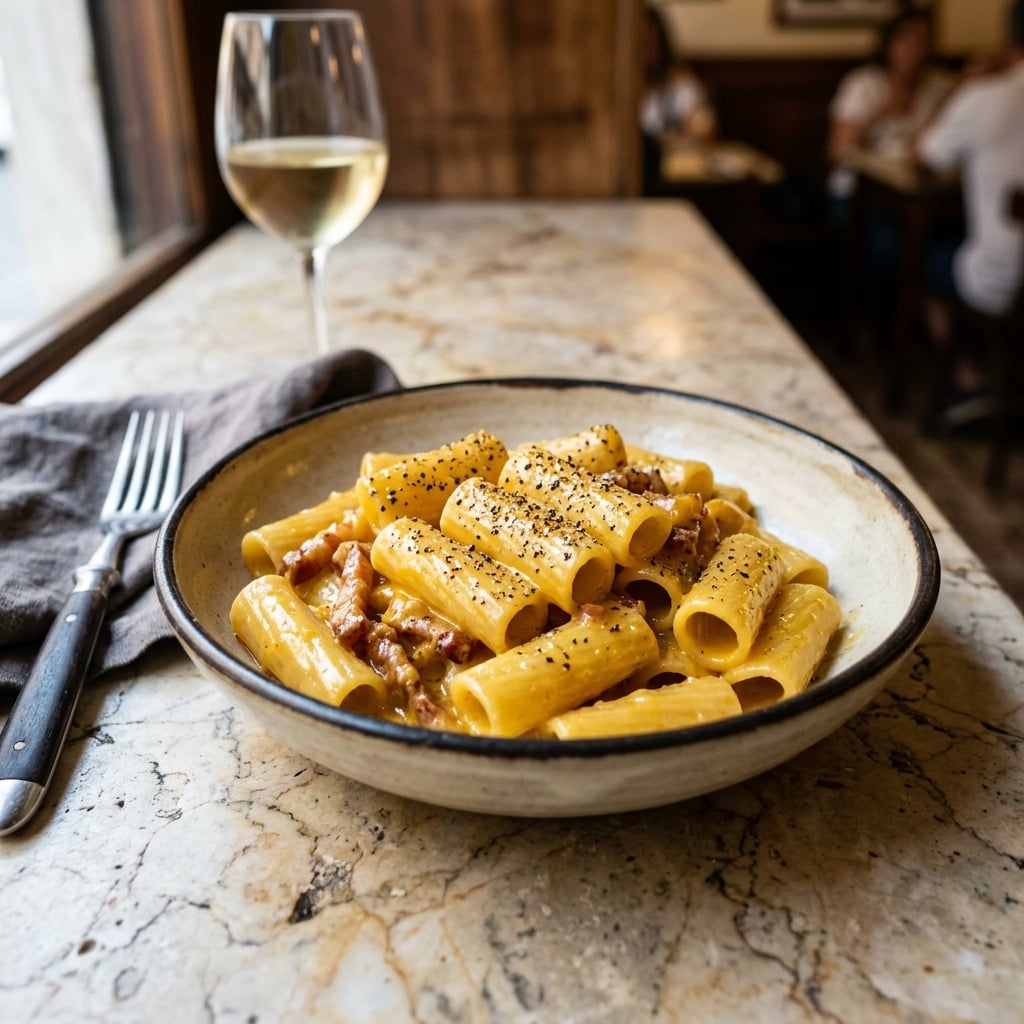
The Real Roman Carbonara: Why Cream and Bacon Fail
Italian
Pasta / Mains
A classic Roman pasta built on five ingredients and one rule: pull the pan off the heat before the eggs go in. No cream. No shortcuts.
Ingredients
- 400g rigatoni (or spaghetti)
- 150g turkey bacon, cut into small strips
- 2 whole eggs
- 4 egg yolks
- 80g Pecorino Romano, microplane-grated
- 40g Parmigiano-Reggiano, microplane-grated
- 2 tsp whole black peppercorns, cracked with a mortar
- to taste fine sea salt (for pasta water)
Instructions
- 1Bring a large pot of water to a boil. Season generously with fine sea salt — it should taste noticeably salty.
- 2Set a large mixing bowl over the pot while the water heats to warm it through.
- 3Whisk the 2 whole eggs and 4 yolks with the Pecorino Romano and Parmigiano-Reggiano in the warm bowl. Add one small ladle of hot pasta water and whisk until smooth and ribbon-thick. Set aside off the heat, keeping the bowl warm.
- 4Cook the turkey bacon strips in a cold, dry pan over medium-low heat. Render slowly until the edges are brown and the fat has pooled in the pan, about 8 minutes. Remove the bacon and set aside on a plate.
- 5Add the cracked black peppercorns directly to the hot fat in the pan. Toast for 30 seconds until fragrant, then remove the pan from the heat entirely.
- 6Cook the rigatoni until just short of al dente. Before draining, reserve at least 2 cups of pasta water.
- 7Drain the pasta and add it to the pan with the rendered fat and toasted pepper. Toss over low heat for 1 minute to coat.
- 8Remove the pan completely from the heat. Pour the egg mixture over the pasta in a slow, steady stream, tossing constantly with tongs.
- 9Add pasta water one splash at a time, continuing to toss, until the sauce is glossy and flows rather than pools. Stop when it still looks slightly underdone — it will continue to set on the plate.
- 10Add the turkey bacon back in, toss twice, and plate immediately. Finish with extra cracked pepper and a light dusting of grated Pecorino.
Notes
• The sauce sets as it sits. Always pull it from the heat while it still looks a touch underdone — the thirty seconds between pan and plate will finish the job.
• If the sauce seizes and curdles, add a splash of hot pasta water and toss hard off the heat for 30 seconds. It won’t fully recover, but it will be presentable.
• Grate the cheese immediately before using it. Pre-grated Pecorino has dried out and won’t melt evenly into the sauce.
• Do not add oil to the pasta water. The rendered turkey bacon fat is what bonds the emulsion — extra surface oil on the pasta works against it.
Nutrition Facts (per serving, estimated)
| 660 kcalCalories | 38gProtein | 73gCarbs | 23gFat |