The pan goes quiet. Not silent — there’s still heat, still movement — but the rolling simmer drops to a low crackle, and you can hear the rice tightening against the steel. That crackle is what you’re cooking toward.
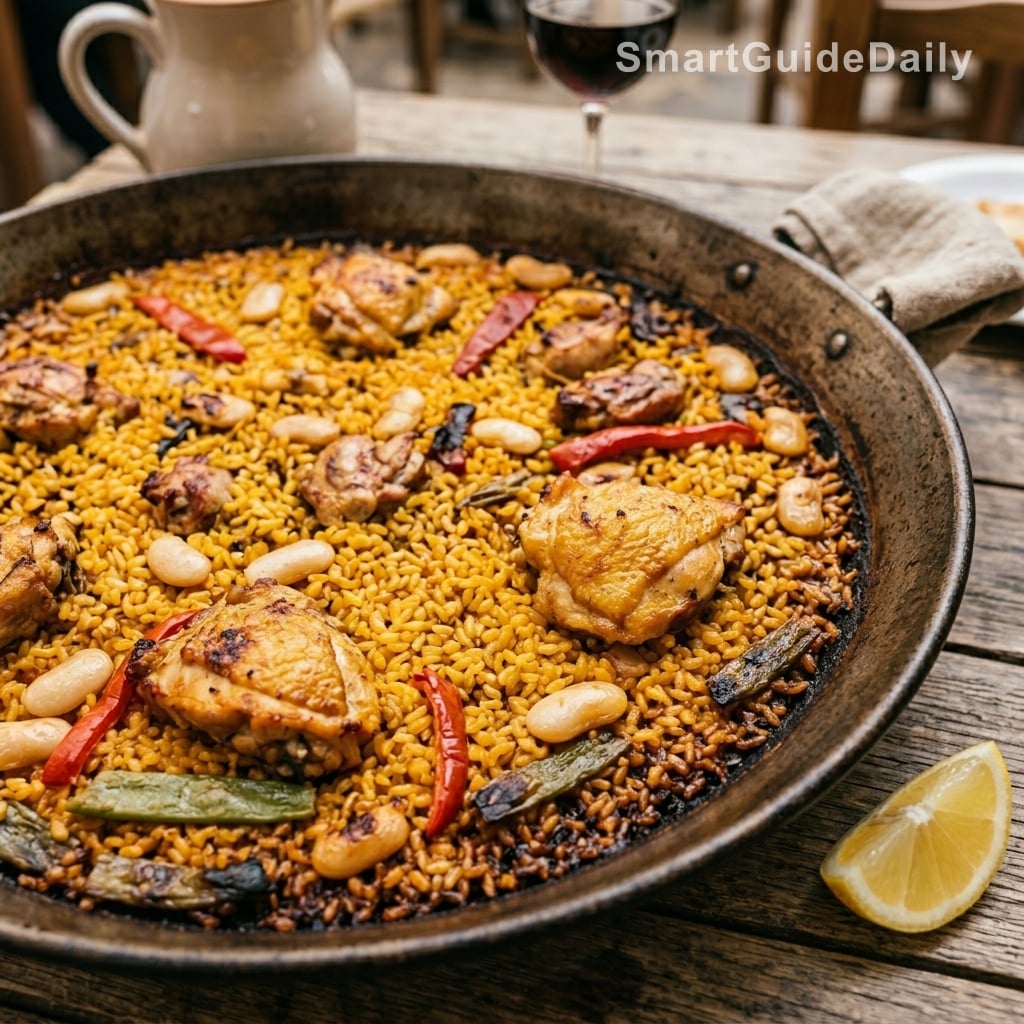
Paella at its core is a rice dish that demands restraint. Not restraint in the sense of minimalism — the flavor base is built layer by layer, and it takes time — but restraint in the sense of leaving things alone once they’re set. The saffron-stained broth going into the pan smells like an argument between the sea and a meadow. You add the rice, you spread it once, and then you do nothing.
Why you’ll love this recipe
Ingredient Notes
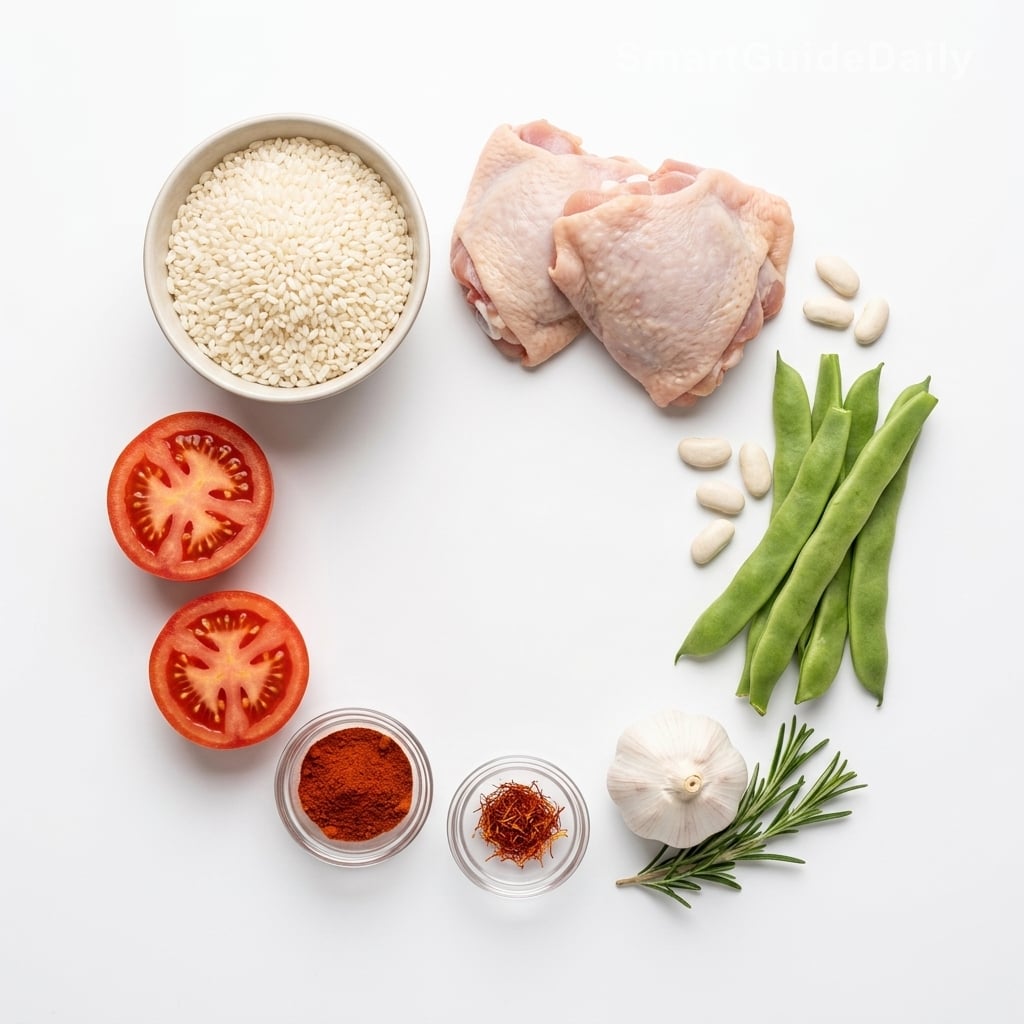
Everything before the heat: bomba rice, saffron, chicken, green beans, and a tomato that actually tastes like one.
- Bomba rice : Short-grain, high-starch, built to absorb up to three times its volume in liquid without going mushy. Do not substitute arborio — arborio is bred for creaminess, which is the opposite of what you want here. Calasparra is an acceptable alternative.
- Saffron : A small pinch, steeped in a tablespoon of warm broth before it goes in. The steeping extracts color and flavor more efficiently than dropping threads in dry. Powdered saffron is a different product — it delivers less, though it’s better than nothing.
- Smoked paprika (pimentón) : It goes into the sofrito for thirty seconds maximum before the liquid follows. Long heat turns it acrid. Short heat blooms it. The timing matters more than the quantity.
- Bone-in chicken thighs : The bone conducts heat and adds body to the base. Boneless works, but the result is thinner. Skin on, browned properly — meaning dark gold, not the pale beige that happens when the pan isn’t hot enough.
- Chicken broth : Homemade or a decent store-bought with no added starch. The rice-to-liquid ratio sits around 1:2.5 to 1:3, depending on your pan’s evaporation rate. Season the broth before the rice goes in — it should taste slightly over-salted, because the rice will mellow it.
- Fresh green beans : Trimmed, halved. They cook down with the sofrito and lose their raw edge. Frozen work in a pinch but turn softer than you want — if that’s what you have, add them later with the rice.
The Oil and the Chicken
Start with olive oil — more than feels comfortable, enough to cover the base of the pan — and get it properly hot before the chicken goes in. The skin should sear on contact with an immediate, loud hiss. If it slides in quietly, the pan isn’t hot enough and you’re steaming rather than browning. Work in batches if needed; crowding drops the temperature and stalls the Maillard reaction. Once the skin is deep gold and the fat has rendered into the oil, remove the pieces. They’re not fully cooked, and that’s intentional. The broth will finish them.
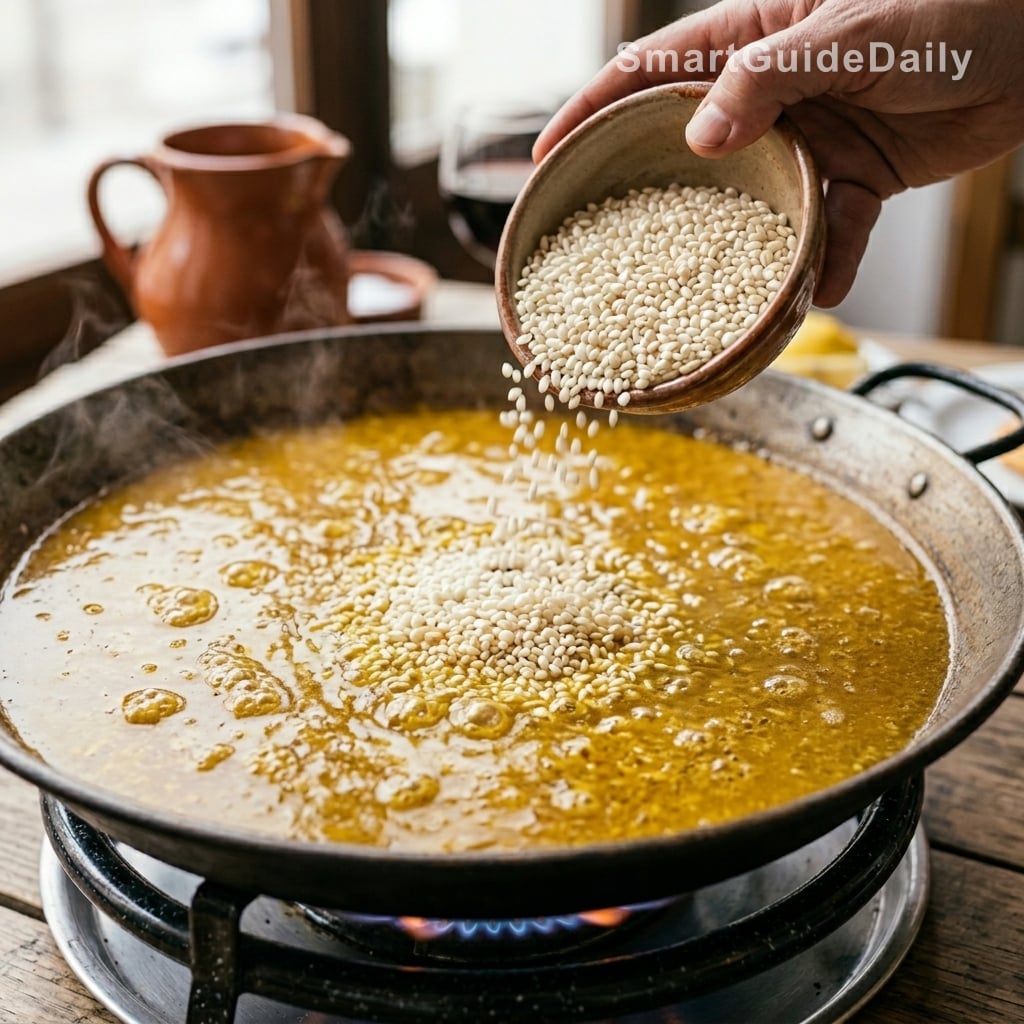
Building the Base
The sofrito is where the flavor accumulates. In the fat left by the chicken, add the green beans and grated tomato — or tomato broken down by hand into rough pieces. Cook it on medium heat, stirring occasionally, until the tomato loses its liquid and begins to concentrate into something almost paste-like. This takes five to eight minutes and shouldn’t be rushed. Then the smoked paprika: stir it through for thirty seconds, no more, and add the hot broth immediately. The bloomed paprika turns the base a deep brick-red. Add the steeped saffron and its soaking liquid. Taste the broth now — it needs to be properly seasoned before the rice absorbs it.
The Rice Goes In and Stays In
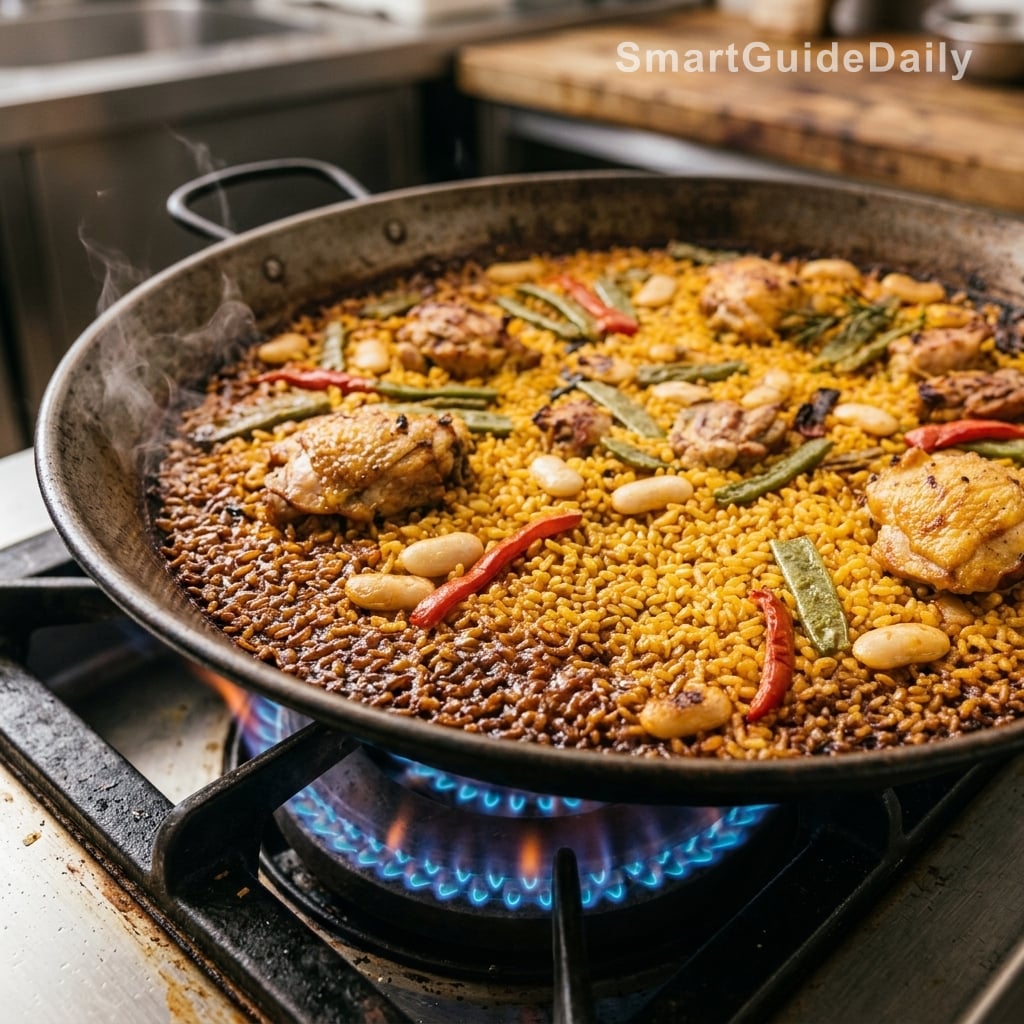
Scatter the rice across the pan in an even layer — a cross pattern works, or simply spread it with a spoon in one pass. Return the browned chicken pieces, pressing them gently into the rice. Then put the spoon down. The rice must not be stirred again. Stirring at this stage releases excess starch, turns the texture glutinous, and prevents any crust from forming at the bottom. Cook on high heat for the first ten minutes; you’ll see the surface begin to dry and small steam craters appear as the liquid absorbs. Reduce to medium-low for another ten to fifteen minutes depending on your stove.
The Critical Window
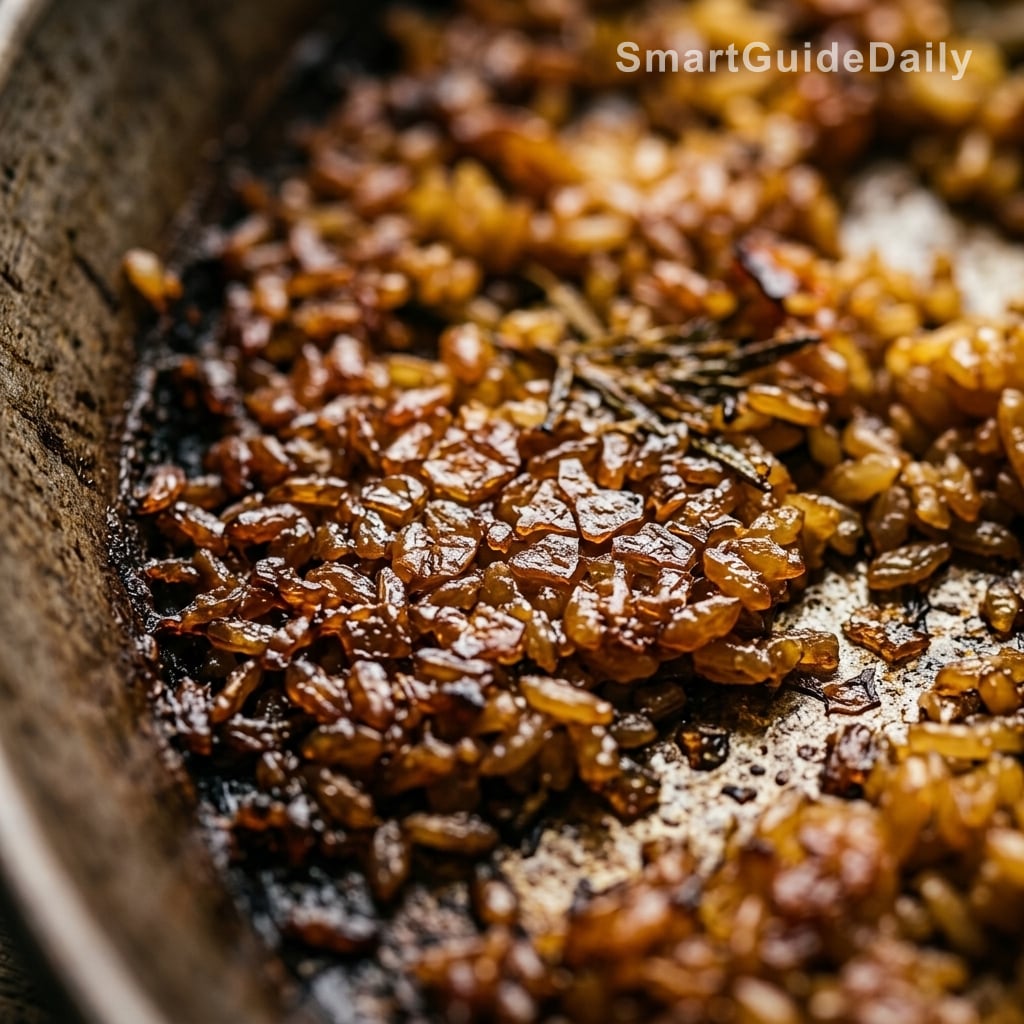
When the surface of the rice looks dry and the craters have stopped forming, you’re in the final stretch. Raise the heat back to high for the last two minutes. This is where the socarrat forms — the rice at the very bottom of the pan caramelizes against the steel, producing a faint crackle you can hear if the kitchen is quiet enough. What you’re listening for is a dry crackle, not a spit. What you’re smelling for is toasted grain, not char. Pull the pan off the heat the moment you catch that first edge of caramel. Cover it loosely with foil and rest for five minutes. The residual heat finishes the rice; the resting firms up the crust.
Serve It From the Pan
Bring the pan to the table. Plating paella onto individual dishes before anyone sees the pan defeats half the purpose — the presentation is part of the dish. Give each person a large spoon and a wedge of lemon. The socarrat lifts off the bottom in satisfying shards; distribute it deliberately, because it’s what everyone wants. Leftovers reheat poorly. The socarrat softens, the rice loses its texture. Plan your portions before you cook, not after.
Tips & Tricks
- Use a wide, shallow pan — at least 38 cm (15 inches) for four people. The wider the surface, the thinner the rice layer, and the more surface area you have for socarrat. A deep pot gives you layered wet rice with no crust. Pan diameter is not negotiable.
- Don’t cover the pan during cooking. A traditional paella has no lid. The open evaporation is built into the liquid ratio. Covering it traps steam and throws off the calculation.
- If the liquid is gone and the rice is still undercooked, add a small splash of hot broth — emphasis on small, two to three tablespoons — cover for two minutes, then uncover and let it finish. If the rice is done but liquid remains, raise the heat for sixty seconds and resist the urge to stir.
- Season the broth before the rice goes in, not after. Once the rice is absorbing, you can’t adjust without disrupting the surface. The window is narrow and easy to miss if you’re distracted.
Why does my paella always come out wet and sticky?
Two likely causes: too much liquid, or a pan that’s too small. Bomba rice needs a ratio of roughly 1:2.5 to 1:3 (rice to broth), and it needs surface area to evaporate correctly. A deep pot traps steam and turns the rice into something closer to risotto. Use a wide, shallow pan and measure your broth.
Do I need a proper paella pan, or will a regular skillet work?
A wide stainless or carbon steel skillet works provided it’s at least 38 cm (15 inches) in diameter for four portions. The key is surface area, not the pan’s name. Cast iron holds too much heat and makes it difficult to control the socarrat. Non-stick is a non-starter — it won’t develop a crust.
What if I can’t find bomba rice?
Calasparra is the closest substitute and widely available online. In a genuine emergency, any short-grain rice with high starch content will work, though you’ll need to reduce the liquid slightly — short-grain absorbs differently than bomba. Do not use long-grain, basmati, or jasmine.
How do I know the socarrat is forming without burning the pan?
Listen and smell. A dry, light crackle from the bottom of the pan is the socarrat forming. The smell should be toasted grain — warm and nutty. The moment it edges toward acrid or you see smoke, it’s done. Two minutes on high heat is usually enough; your stove may need slightly less.
Can I prepare paella in advance?
Not really, and not well. Paella is a dish that peaks in the fifteen minutes after it comes off the heat. The rice continues to absorb, the socarrat softens, and reheating dries the top while steaming the bottom. Cook it to order, or accept that day-two leftovers are a different dish.
Is it a problem if some of the rice on top looks slightly undercooked when the bottom is done?
No — the five-minute foil rest after the pan comes off the heat is precisely for this. The residual heat from the pan and the trapped steam finish the top layer without additional fire. Pulling the pan too early is more forgivable than overcooking it trying to even out every grain.
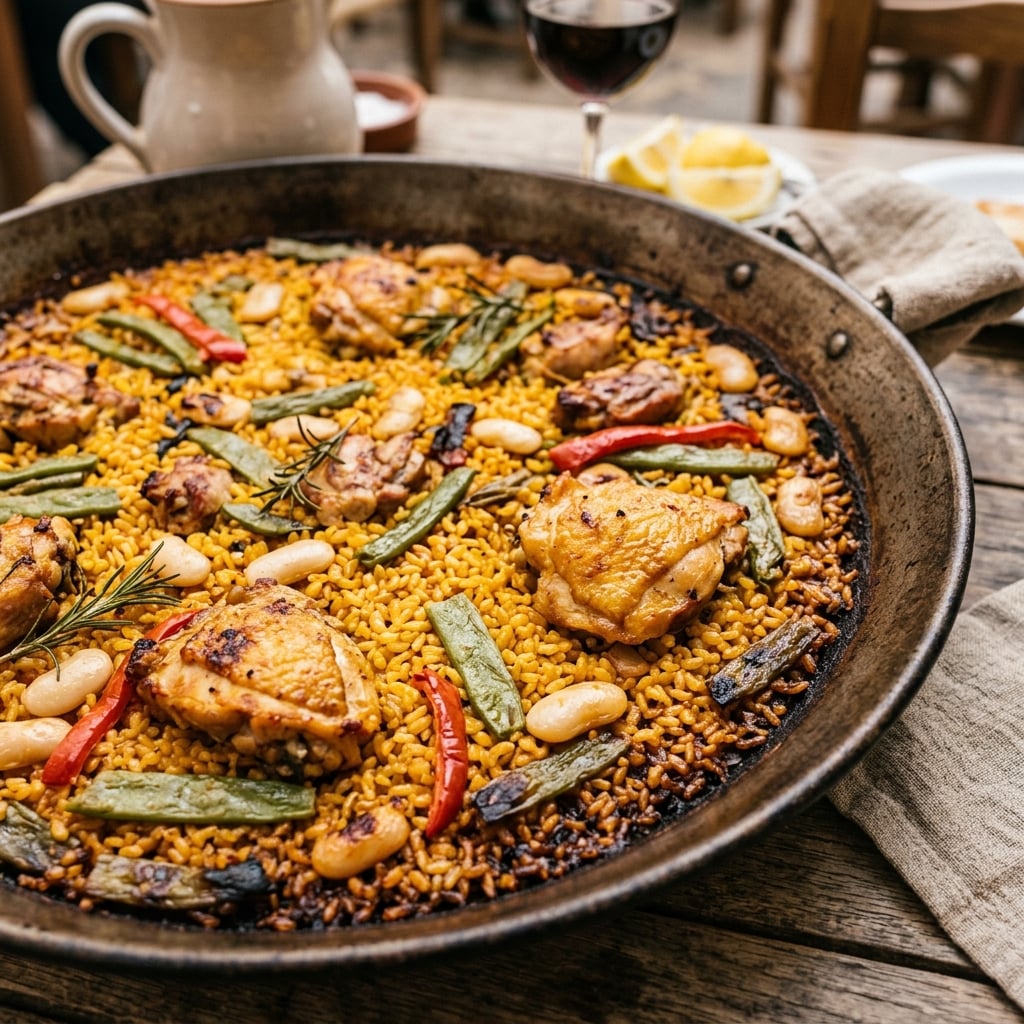
Valencian Paella With Socarrat, Not a Wet Rice Pan
Spanish
Mains
A straightforward Valencian-style paella built around chicken, green beans, saffron, and the caramelized bottom crust that separates a properly cooked pan from a disappointing one. No stirring after the rice goes in.
Ingredients
- 800g bone-in, skin-on chicken thighs
- 300g bomba rice (or calasparra)
- 900ml hot chicken broth, well-seasoned
- 200g fresh green beans, trimmed and halved
- 2 ripe tomatoes, grated (skin discarded)
- 3 garlic cloves, finely sliced
- 1 tsp smoked paprika (pimentón de la Vera)
- a generous pinch saffron threads
- 60ml olive oil
- 1 lemon, cut into wedges for serving
- fine salt to taste
Instructions
- 1Steep the saffron threads in one tablespoon of warm (not boiling) broth. Set aside for at least 10 minutes.
- 2Heat olive oil in a wide paella pan (38 cm minimum) over high heat until shimmering. Season chicken thighs with salt. Sear skin-side down until deep gold, 5 to 6 minutes. Flip, cook 2 more minutes, then remove and set aside. The chicken is not fully cooked yet.
- 3Reduce heat to medium. Add the sliced garlic to the pan and cook 30 seconds. Add the green beans and grated tomato. Cook 6 to 8 minutes, stirring occasionally, until the tomato has concentrated into a thick paste and the beans have softened slightly.
- 4Add smoked paprika and stir for 30 seconds — no longer. Immediately add the hot chicken broth and the saffron with its soaking liquid. Stir to combine and bring to a boil. Taste: the broth should be lightly over-salted. Adjust now if needed.
- 5Scatter the bomba rice evenly across the pan. Spread in one pass with a spoon, then set the spoon down. Return the chicken pieces, pressing them gently into the surface. Do not stir again.
- 6Cook uncovered on high heat for 10 minutes. Reduce to medium-low and cook for a further 12 to 15 minutes. Watch for the liquid to absorb and small steam craters to appear on the surface.
- 7Raise heat to high for 2 minutes to develop the socarrat. Listen for a steady dry crackle from the base of the pan. Smell for toasted grain. The moment you detect the first edge of caramelization, remove from heat.
- 8Cover loosely with foil and rest 5 minutes undisturbed. Bring the pan to the table, scrape up the socarrat when serving, and offer lemon wedges alongside.
Notes
• Pan diameter is not negotiable. Too small and the rice layer is too thick to cook evenly and form a proper socarrat. A 38 cm pan is the minimum for four; 42 cm is better.
• Do not cover the pan during cooking. The open evaporation is factored into the liquid ratio. Covering it traps steam and inflates the moisture level.
• If the top layer looks slightly undercooked when you pull the pan, leave it — the foil rest will finish it. Adding more broth at that stage risks drowning the socarrat.
• Leftovers deteriorate quickly. The socarrat softens within an hour and the rice texture changes. This dish is not built for advance prep or next-day eating.
Nutrition Facts (per serving, estimated)
| 520 kcalCalories | 38gProtein | 52gCarbs | 16gFat |