Most home cooks overcook their protein before the sauce enters the pan. Velveting fixes that. It is not complicated, but it requires understanding what it actually does before you use it.
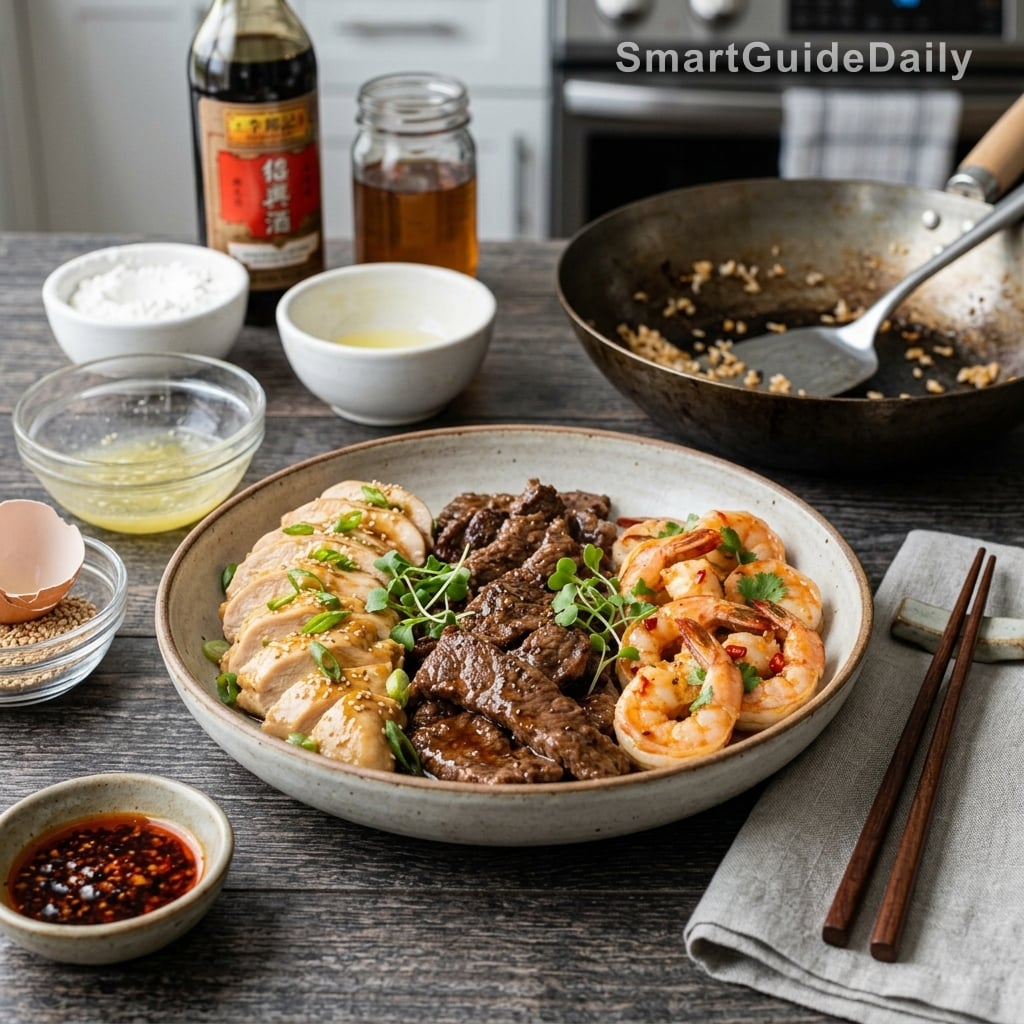
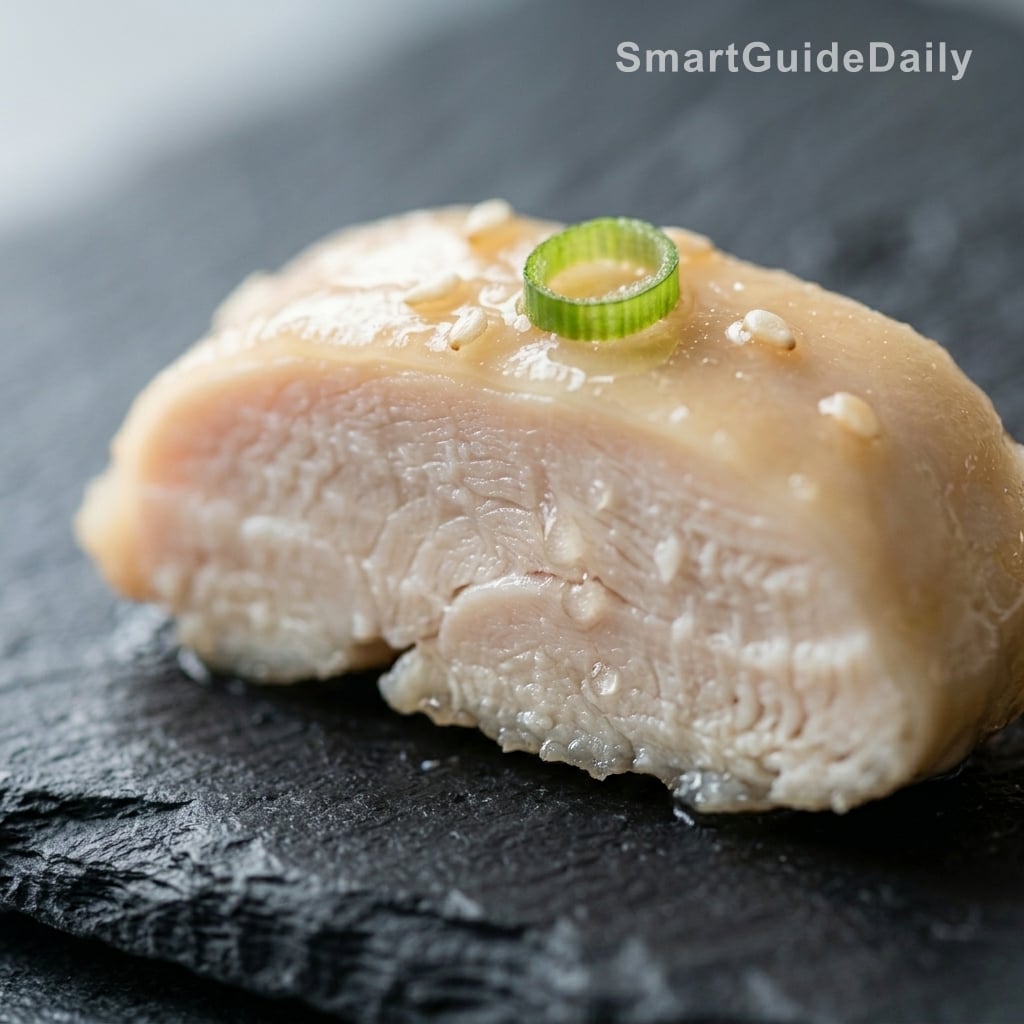
The difference is tactile before it is visual. A properly velveted chicken breast, sliced thin and blanched for thirty seconds, yields to a spoon with almost no resistance — there is a slight pull at the surface, a smoothness that cooked-through chicken never has. The interior stays just barely opaque, not raw but not dried out either. That window is narrow. Velveting is how you hit it consistently.
Why you’ll love this recipe
Ingredient Notes
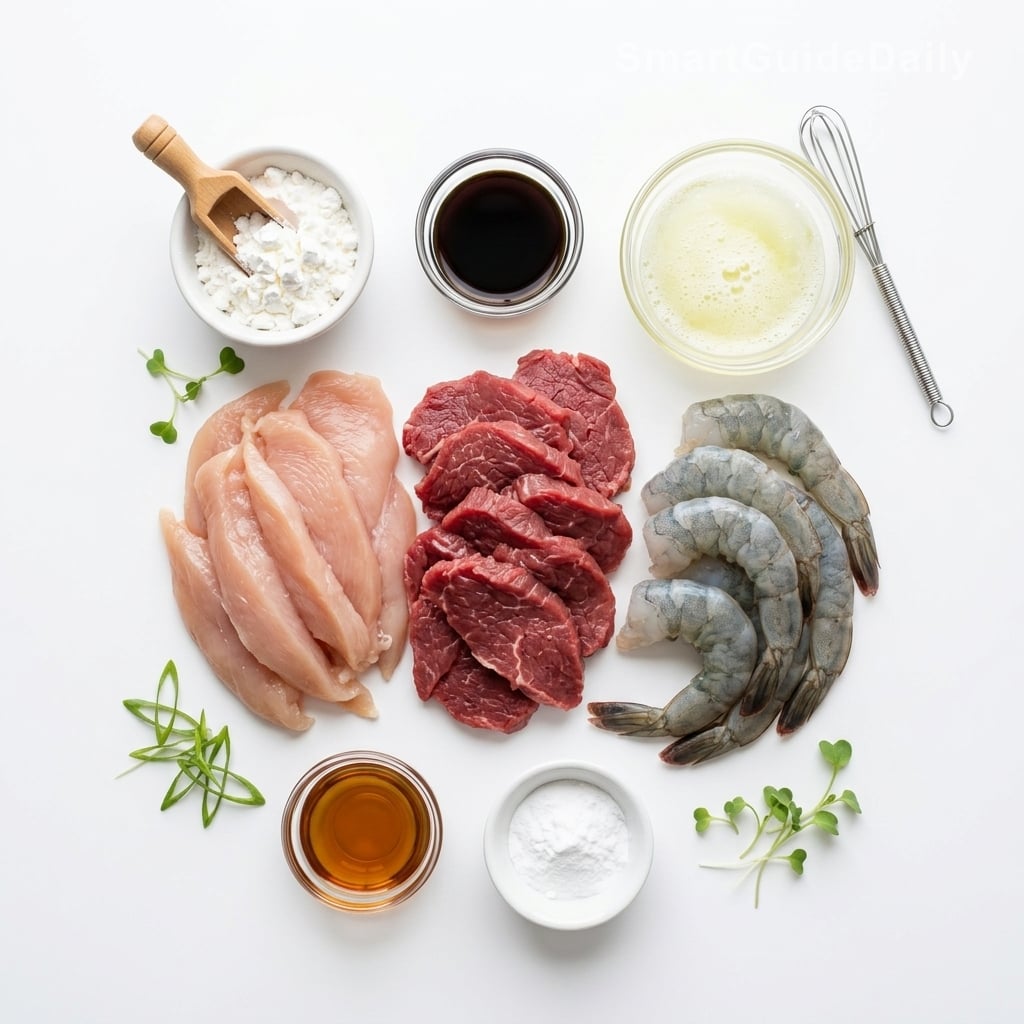
The core kit — proteins, cornstarch, egg whites, baking soda, and a few drops of soy sauce.
- Cornstarch : The structural element. It gelatinizes at roughly 62–65°C, forming a semi-permeable film around the protein that slows moisture loss during the final cook. One tablespoon per 200g is the baseline. More than that and the coating becomes pasty.
- Egg white : Adds slip and helps the cornstarch bind without clumping. One egg white per 400g of protein is enough. For fish, skip it entirely — it makes the surface too dense and the fillet breaks apart.
- Baking soda : Used only for beef, turkey, and lamb. One quarter teaspoon per 200g, no more. The alkalinity raises the surface pH, which weakens muscle proteins and noticeably softens the texture. Exceed the quantity and you get a metallic aftertaste that no sauce fixes.
- Light soy sauce : Optional, but useful for depth. One teaspoon per batch. It does not change the mechanics of velveting — it adjusts the flavor baseline before the sauce even arrives.
- Neutral oil : Peanut, sunflower, or grapeseed. For oil velveting, the bath should sit at around 120°C — warm, not smoking. For water velveting, one teaspoon added to the simmering water prevents the coating from sticking to itself.
The Problem Is Always the Protein
Stir-frying operates at temperatures most home burners struggle to sustain. The moment cold, wet protein hits the pan, the surface temperature drops, steam forms before contact heat can, and the texture turns chalky before the interior reaches a safe temperature. This is not a technique failure. It is a physics problem. Velveting addresses it by pre-cooking the protein to just past raw — enough to set the exterior, not enough to dry it out — before it ever touches the wok with sauce. The result is protein that finishes in seconds rather than minutes, which is the actual reason restaurant stir-fries behave differently from home versions. The gap has nothing to do with a hotter flame.
The Ratio That Actually Works
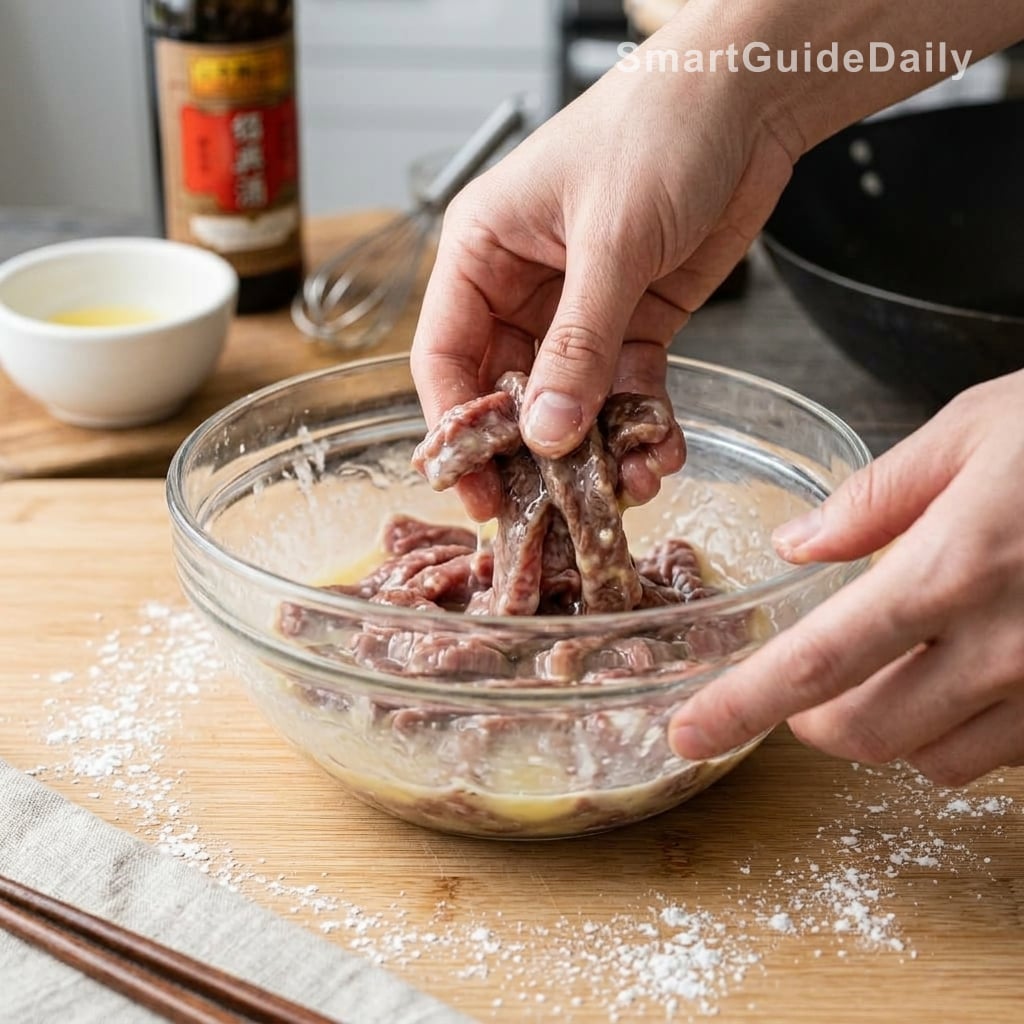
The base formula: one tablespoon cornstarch, one egg white, and half a teaspoon of neutral oil per 200g of protein, with a pinch of salt. Mix the cornstarch with the egg white first until the lumps are gone — it should look like thin, slightly gluey paste, not wallpaper adhesive. Add the protein and toss until every surface is coated. For beef, turkey, and lamb, add the baking soda at this stage and rest the mixture for ten minutes. You will not see anything happen. The alkaline environment is working on the fiber structure regardless. Do not skip this step. For shrimp and fish, no baking soda, no resting — coat and cook immediately or the texture deteriorates.
Eight Proteins, Each One Different
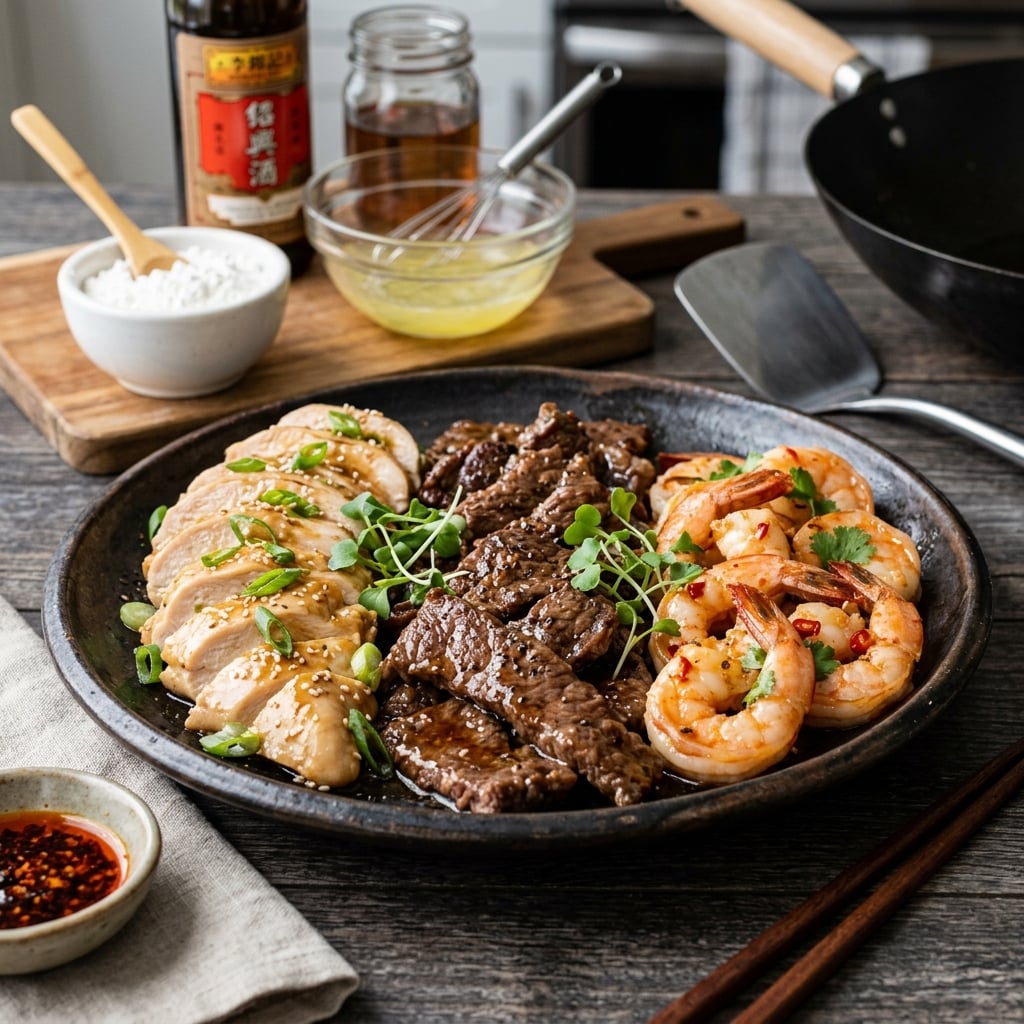
Chicken breast slices thin — two to three millimeters — and blanches in gently simmering water for thirty seconds. Chicken thigh takes forty-five and benefits from a touch more cornstarch given the higher fat content. Beef, specifically flank or sirloin, needs the baking soda rest and only twenty seconds in an oil bath at 120°C; the interior stays pink at the center, which is correct. Shrimp works best in water: fifteen seconds, pulled the moment the flesh loses its raw translucency and turns just faintly pearlescent. Turkey breast behaves like chicken breast but has a tighter grain — slice it thinner and add five extra seconds. Lamb shoulder, sliced against the grain, takes the baking soda treatment well and blanches for thirty-five seconds. White fish fillets — cod, tilapia, pollock — are the most fragile: cornstarch only, no egg white, a very low simmer, twelve to fifteen seconds maximum. Firm tofu does not blanch. Press it thoroughly, dust it in cornstarch, and pan-fry in shallow oil for two minutes per side until the surface feels dry and slightly resistant under a spoon. Duck breast, sliced thin, uses the base formula and handles better in the oil bath than in water, which respects its fat content without washing it out.
Water Bath or Oil Bath
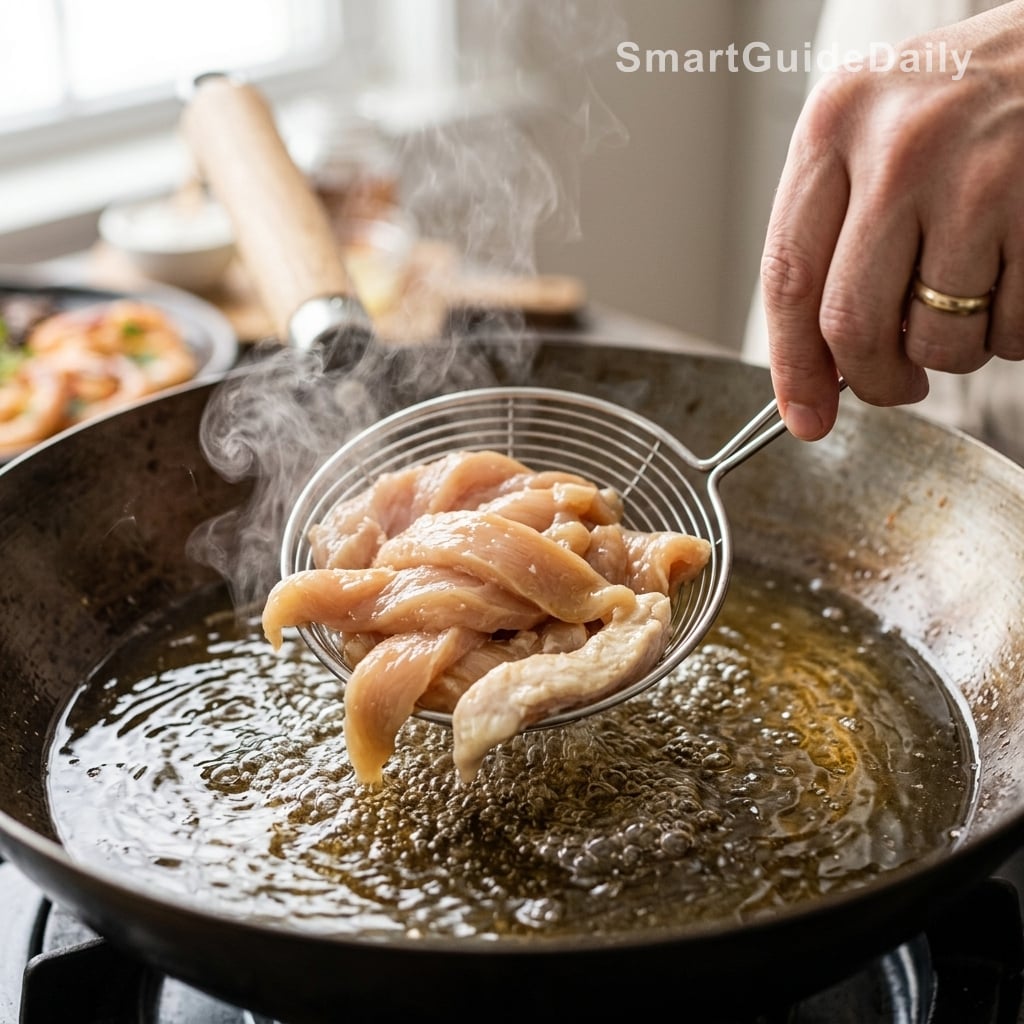
The choice is not aesthetic. Water velveting is cleaner, more forgiving, and easier to clean up. It is the practical default for most proteins and most kitchens. Add oil to the simmering water, keep it below a rolling boil, drain immediately. Oil velveting produces a slightly more glossy surface and works better when you want the protein to take direct color in the final wok — the thin oil layer on the exterior interacts with high heat differently than water does. The temperature of the oil bath matters more than people think. Too hot and you are frying, not velveting, and the cornstarch crust becomes thick and chewy. Too cool and the protein absorbs oil and feels heavy. Warm, not hot, is the instruction. If you do not have a thermometer, drop a small piece of protein into the oil: it should sizzle lightly, not aggressively.
After the Blanch
Drain the protein well. Lay it on a plate in a single layer and rest it for two minutes before it goes into the wok. This is not optional. Freshly blanched protein carries residual surface moisture, and moisture in a hot pan creates steam, which returns you to the problem you started with. The rested protein should feel slightly tacky under your fingers — that is the cornstarch film set correctly. When it contacts a properly hot wok, you will hear a clean, immediate sizzle, not a wet hiss. That sound is the confirmation. From this point, the protein needs ten to twenty seconds of contact heat at most. Add your aromatics, your sauce, toss once or twice, and pull everything off before the protein has time to tighten. The window is short, but after velveting, it is predictable — and that predictability is the whole point.
Tips & Tricks
- Do not rinse velveted protein after blanching. The coating is the functional element. Rinsing removes it.
- Slice everything against the grain before you velvet, not after. Cutting through a set cornstarch coating breaks the seal unevenly and the texture becomes inconsistent across the batch.
- If beef or turkey tastes metallic after cooking, the baking soda quantity was too high. Halve it next time. The effect is noticeable at even a quarter teaspoon excess over the recommended amount.
- Velveted protein does not hold well. Blanch it, rest it, cook it — within thirty minutes. Left longer, the coating absorbs moisture from the air and the surface texture begins to degrade.
Can I prepare the velveting marinade ahead of time and refrigerate the protein?
You can marinate the protein in the cornstarch mixture and refrigerate it for up to two hours before blanching — no problem there. Do not blanch ahead of time. Once velveted protein is blanched, cook it within thirty minutes. The coating absorbs ambient moisture after that, and the surface texture deteriorates in a way that does not recover in the wok.
What is the practical difference between water velveting and oil velveting?
Water velveting is faster to set up, easier to clean, and more forgiving — the margin for error on blanching time is wider. Oil velveting produces a marginally more glossy surface and behaves better when you want the protein to take direct contact color in the final cook. For most home kitchens and most recipes, water velveting is the correct default.
My velveted chicken turned out rubbery anyway. What went wrong?
Three likely causes: the water was at a rolling boil rather than a gentle simmer, which seizes the surface immediately; there was too much cornstarch in the mix, which produces a thick crust instead of a film; or the protein was not rested before hitting the wok, meaning residual surface moisture generated steam instead of contact heat. Check those three before adjusting anything else.
Is baking soda actually necessary, or can I skip it?
For chicken, shrimp, and fish, skip it — the base method works without it. For beef, turkey, and lamb, baking soda is doing meaningful structural work: it raises the surface pH, weakens muscle protein bonds, and produces a noticeably softer result. The quantity is a hard ceiling: a quarter teaspoon per 200g. Go over it and the flavor turns metallic in a way no sauce corrects.
How do you velvet fish without it breaking apart in the water?
Drop the egg white entirely and use cornstarch alone — it binds more tightly without the added slip of albumin. Keep the water at the lowest possible simmer, well below boiling. Twelve to fifteen seconds is the ceiling. Use a wide, flat slotted spoon and lift the fillet in one movement rather than scooping and flipping.
Does the cornstarch coating affect how the protein absorbs sauce afterward?
Yes, slightly. The film acts as a mild barrier, so the protein picks up sauce through surface adhesion rather than direct absorption. This is not a drawback. It is one reason sauce clings evenly to every piece rather than pooling at the base of the wok. Thicker sauces adhere more reliably to velveted protein than to plain seared protein for exactly this reason.
The Base Velveting Method
Chinese technique
Techniques
A core technique from Chinese restaurant kitchens, adapted for eight common proteins. The method runs under fifteen minutes and addresses the main failure point of home stir-frying: protein that overcooks before the sauce enters the pan.
Ingredients
- 400g chicken breast, or protein of choice (see notes for timing adjustments)
- 1 egg white (omit for fish)
- 2 tbsp cornstarch
- 1 tsp neutral oil (peanut, sunflower, or grapeseed), plus more if oil velveting
- ¼ tsp fine salt
- 1 tsp light soy sauce (optional)
- ¼ tsp baking soda (beef, turkey, or lamb only — omit for all other proteins)
Instructions
- 1Slice the protein thin against the grain — 2–3mm for chicken, beef, turkey, lamb, and duck; slightly thicker is acceptable for fish if the fillet is fragile.
- 2Whisk the egg white and cornstarch together in a bowl until smooth with no dry lumps. The texture should look like thin paste.
- 3Add the neutral oil, salt, and soy sauce if using. Stir to combine.
- 4Add the protein and toss until every surface is evenly coated.
- 5For beef, turkey, or lamb only: add the baking soda now, toss once more, and rest uncovered for 10 minutes at room temperature before proceeding. For all other proteins, proceed immediately.
- 6Bring a pot of water to a gentle simmer — not a rolling boil. Add 1 tsp of neutral oil to prevent the coating from sticking.
- 7Add the protein in small batches. Do not crowd. Stir gently once to separate the pieces.
- 8Blanch for the correct duration: chicken breast 30 sec, chicken thigh 45 sec, beef 20 sec, shrimp 15 sec, turkey breast 35 sec, lamb 35 sec, white fish 12–15 sec, duck breast 30 sec.
- 9Remove with a slotted spoon, drain well, and lay out in a single layer on a plate.
- 10Rest for 2 minutes before using. Do not rinse. Cook within 30 minutes of blanching.
Notes
• Oil velveting alternative: heat neutral oil to approximately 120°C (250°F) — it should sizzle lightly when a piece of protein is dropped in, not aggressively. Blanch for the same durations as the water method. The result is slightly more glossy and behaves better in the final wok when direct contact browning is the goal.
• Tofu exception: press firm tofu thoroughly, slice into pieces, dust in cornstarch only (no egg white, no baking soda), and pan-fry in shallow oil for 2 minutes per side until the surface is dry and lightly resistant to pressure. Do not blanch tofu.
• Fish exception: omit the egg white, use cornstarch only, and keep the blanching water at the lowest possible simmer. One wide, flat slotted spoon, one motion — do not scoop and flip.
• The baking soda ceiling is firm: ¼ tsp per 200g of protein. Above that quantity, the flavor becomes metallic. If you notice a metallic aftertaste in the finished dish, reduce the baking soda before adjusting anything else.
Nutrition Facts (per serving, estimated)
| 148 kcalCalories | 23gProtein | 4gCarbs | 3gFat |