Most people encounter mole negro the way they encounter most complicated things: through a simplified version that bears a surface resemblance to the original but not much else. A jar from the supermarket shelf, a concentrate you thin with broth, a powder. The real thing takes a full day, sometimes two, and involves a number of steps that feel almost archaeological — charring, grinding, layering — and it is worth every minute of that.
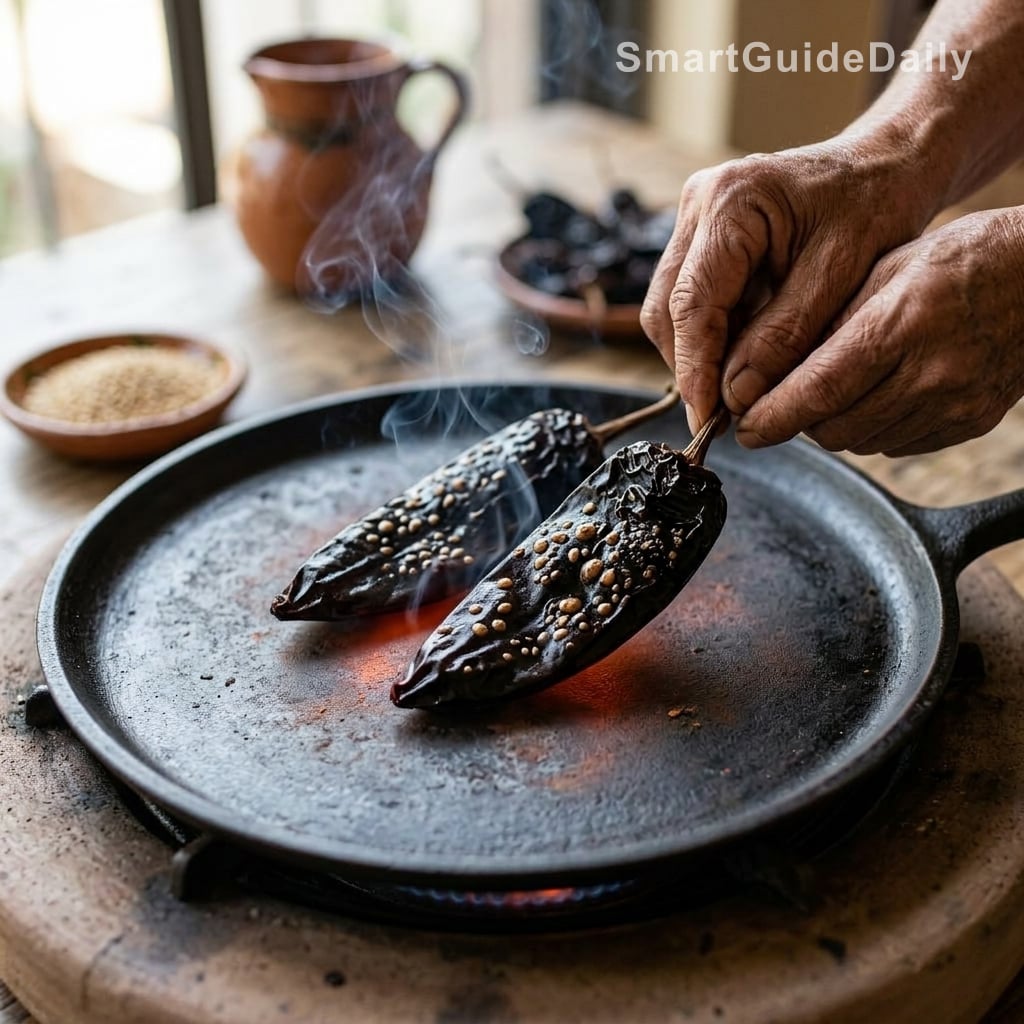
The first sign that something is happening comes early, when the dried chiles hit a dry, hot comal. The smell is resinous and slightly bitter, somewhere between incense and a forest floor after rain. The chiles go deep brown along their ridges before you pull them. This is not burning — or rather, it is exactly burning, in a controlled and deliberate way, and the char is part of the flavor.
Why you’ll love this recipe
Ingredient Notes
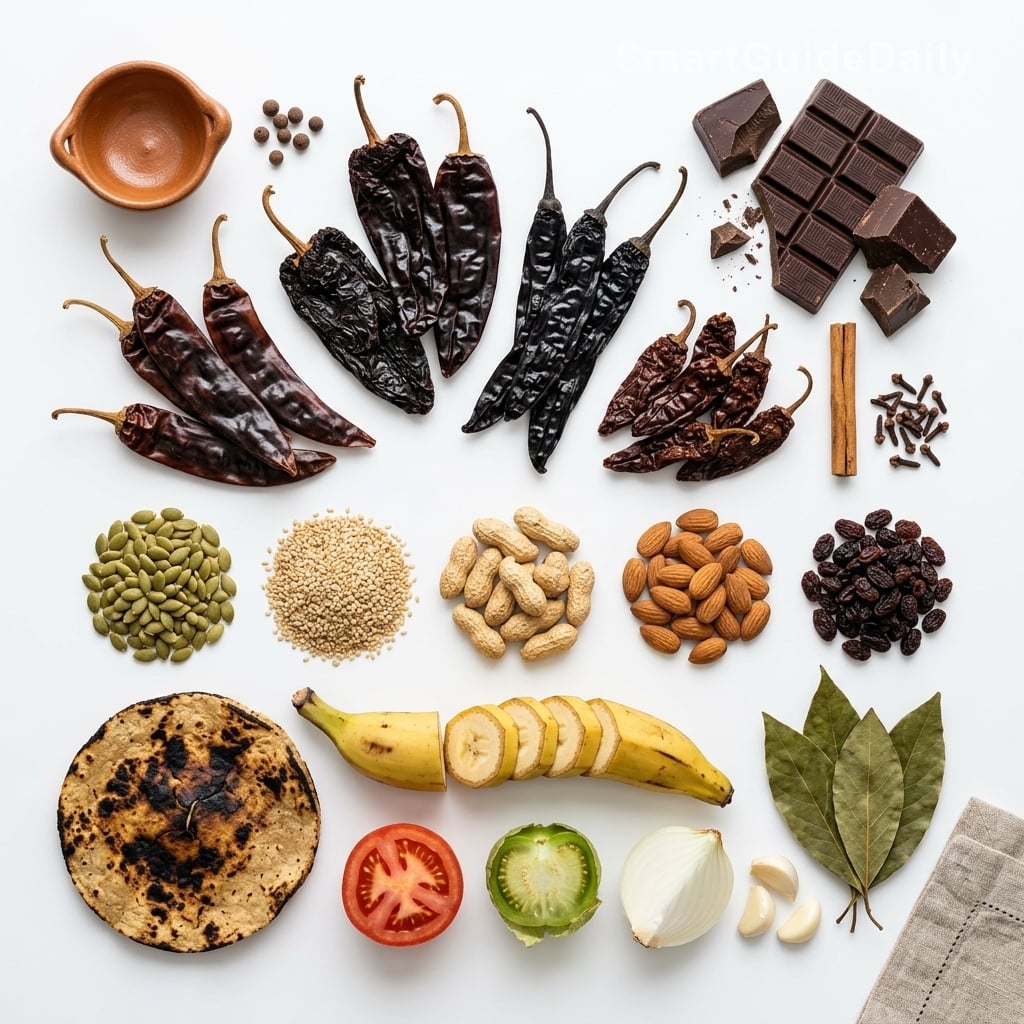
The full cast: twenty-five ingredients, from four varieties of dried chile to dark chocolate and dried avocado leaves.
- Mulato chiles : The largest-volume chile in this mole. Mulatos are dried poblanos with a naturally fruity character — dried cherry, mild cocoa — and they form the backbone of the paste. Toast them lightly, not aggressively: thirty seconds per side on a hot comal, just until fragrant.
- Pasilla negro chiles : Darker and narrower than mulatos, with a drier, almost prune-like quality. They contribute the depth that gives mole negro its name. Do not confuse them with regular pasilla chiles — they are a different variety entirely.
- Chipotle chiles (dried) : Use dried chipotles, not chipotles in adobo. They add smoke and a low, patient heat that lifts the other chiles without dominating them.
- Dried avocado leaves : One of the harder ingredients to source outside of a Mexican grocer, but worth the effort. Their flavor is anise-adjacent and distinctly herbal. Toast them briefly in a dry pan before use. There is no true substitute.
- Mexican chocolate : Coarser and less sweet than European chocolate, with a gritty texture and a cinnamon note already built in. Ibarra or Abuelita are the common brands. If unavailable, use 70% dark chocolate and add a short piece of cinnamon stick to compensate.
- Ripe plantain (fried) : Plantain adds body to the paste and a background sweetness that offsets the bitterness from the charred chiles. Fry slices until deep gold on both sides before blending. The caramelization is the point.
What This Actually Is
Mole negro is the most complex of the seven canonical moles associated with Oaxacan cooking, though the number seven is itself a simplified frame — there are more, and the taxonomy varies by town. The dish’s foundations are pre-Columbian in many of its core elements: chiles, cacao, turkey, pumpkin seeds. But the version we recognize today absorbed a significant number of colonial-era ingredients as well — almonds, raisins, cinnamon, cloves, brought in via routes that food historians still trace and debate. Whether any of this matters to the cook is a fair question. What matters in practice is that the sauce is built in stages, each stage adding a distinct register of flavor, and the whole thing only comes together in the final long simmer when everything collapses into coherence.
It is not a mystery. It is a project.
Start With Fire
The first stage is the one most home cooks underdo. Every major element that can be charred, should be. The dried chiles go onto a dry comal over medium-high heat — not smoking, not scorching, but hot enough that you hear a faint crackle when the skin makes contact. They need only thirty to sixty seconds per side, just long enough for the ridges to go dark and the air around them to turn aromatic and slightly caustic. Then straight into a bowl of hot water to rehydrate for thirty minutes. In the same pan, the tomatoes and tomatillos go until blistered and soft. The onion quarters go until their cut sides are nearly black. The unpeeled garlic cloves go until their skins char and their flesh softens. Each thing separately, each thing set aside. The comal, by the time you’re done, tells the whole story of what this dish is.
The Paste
Once everything is prepped — the seeds and nuts toasted, the spices warmed, the plantain fried, the tortilla and bread charred to thicken the final sauce — it all goes into a blender in batches with some of the soaking liquid from the chiles. That liquid is dark red-brown and smells of something between dried fruit and old leather. Blend each batch until genuinely smooth; mole negro is not a rough-textured sauce. The paste at this stage is dense, almost black, and considerably more bitter than the finished mole will be. Heat a wide, heavy pan with a thin layer of oil until it shimmers, then add the paste. It will spit. Give it space, stir constantly, and let it fry in the hot fat for three to four minutes until the shade deepens another notch and the raw edge comes off the smell — that moment when it stops smelling like blended ingredients and starts smelling like something unified.
Three Hours of Gentle Heat
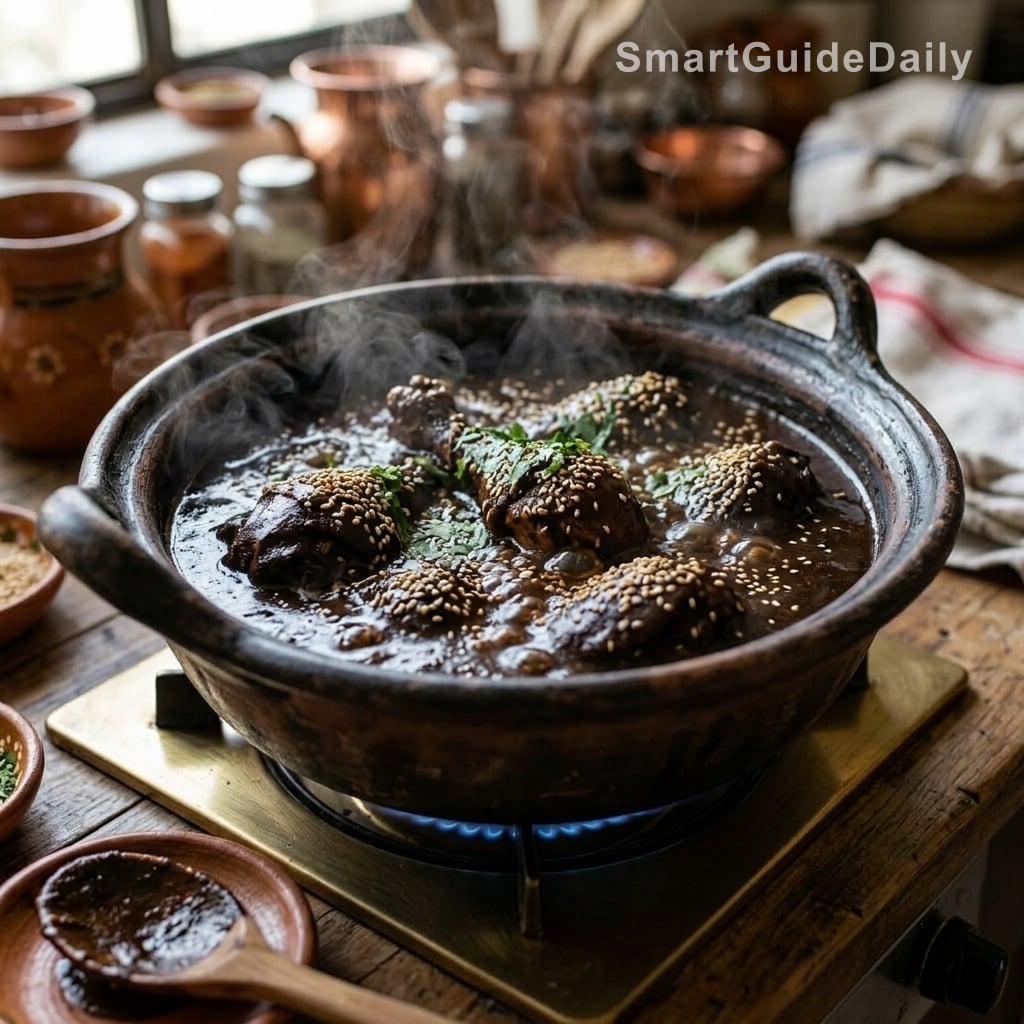
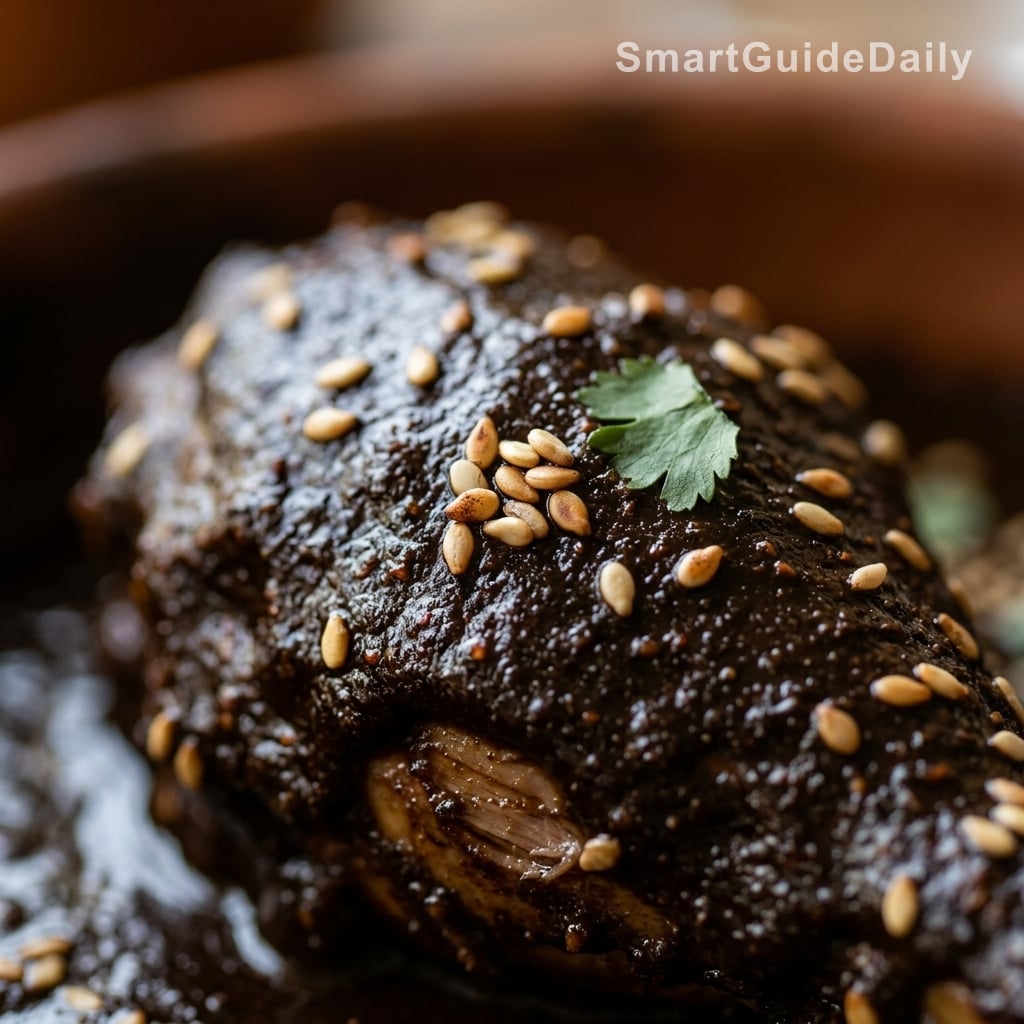
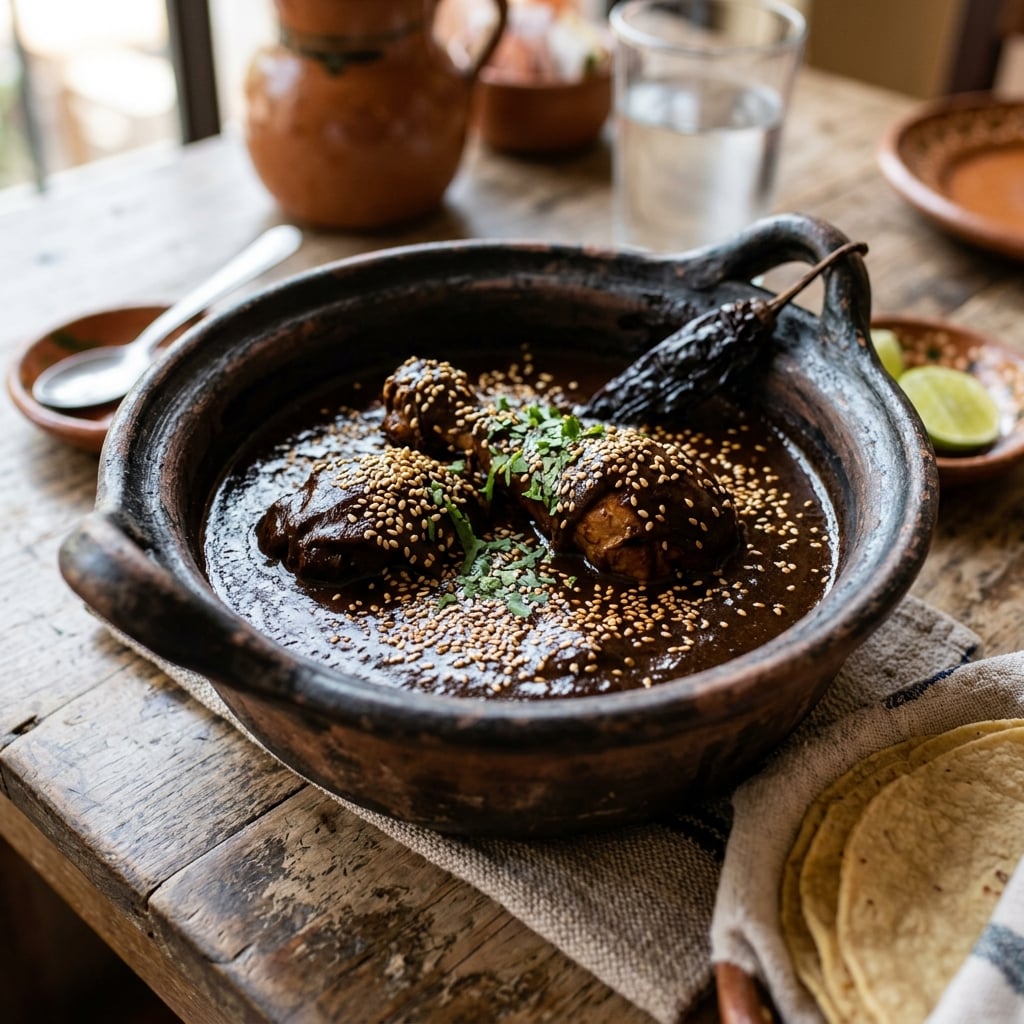
Add the turkey pieces — bone-in thighs, browned separately in the same pot before the paste goes in — along with enough turkey or chicken stock to bring the sauce to a loose, pourable consistency. Then reduce the heat to low, put the lid on at a slight angle, and leave it. Check every thirty minutes. Stir. The sauce thickens steadily as the starch from the tortilla and bread activates. After an hour it begins to look like itself. After two it is glossy and cohesive, and the smell in the kitchen has shifted from sharp to something rounder and darker. After three hours the turkey pulls easily from the bone and the mole coats it with a lacquer-like sheen. Season with salt only in the last twenty minutes — the flavor concentrates as the sauce reduces, and early salt becomes aggressive.
How to Use What You’ve Made
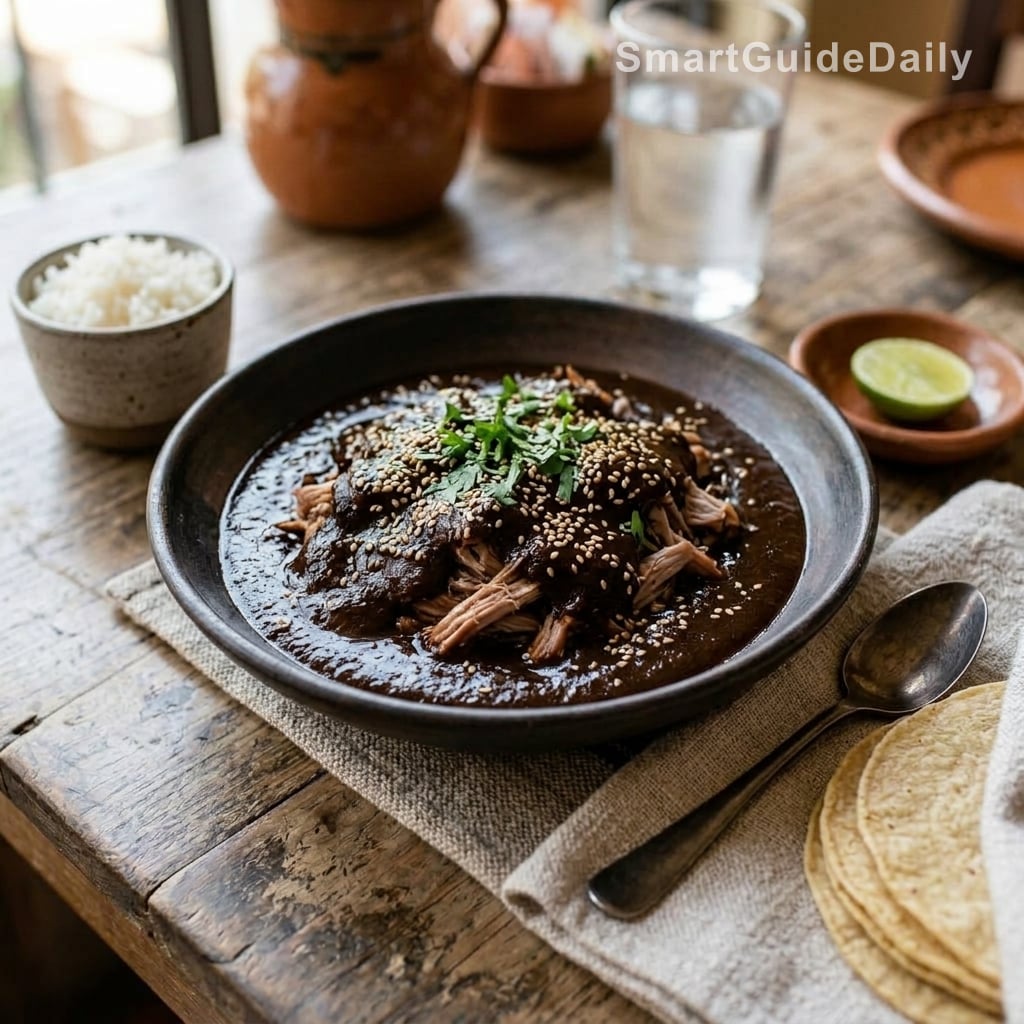
Serve mole negro over turkey or chicken, with white rice and warm corn tortillas alongside. The tortillas are not optional — they are the tool for catching every trace of sauce left on the plate, and the sauce is too labor-intensive to leave behind. If you have leftover sauce without meat, it keeps refrigerated for five days and frozen for three months; reheat gently with a splash of stock to bring it back to consistency. Mole negro also works as an enchilada sauce: dip tortillas briefly in the warmed sauce, fill them with shredded turkey, bake for ten minutes. The second use is, in many ways, more satisfying than the first. The flavors have settled overnight, the edges have smoothed, and there is none of the mild rawness that even a long first cook sometimes leaves.
Tips & Tricks
- Make the mole the day before you plan to serve it. The flavor integrates overnight in a way that no amount of additional simmering on the same day will replicate.
- Do not skip frying the blended paste in hot oil before adding stock. This step removes the raw edge from the ground seeds and spices and fixes the flavor into the fat — skipping it produces a sauce that tastes assembled rather than cooked.
- The soaking liquid from the chiles is part of the sauce, not waste. It carries a significant amount of color and flavor. Use it for blending, but taste it first — if it is aggressively bitter, cut it with plain water.
- If the finished mole tastes too bitter, add piloncillo or dark brown sugar in small increments off the heat, one teaspoon at a time. The goal is balance, not detectable sweetness.
Can I make mole negro with fewer than five varieties of chile?
You can, but the complexity reduces proportionally. Mulato and pasilla negro are non-negotiable — they form the structural base of the paste. Ancho is a solid supporting chile. Chipotle and chilhuacle negro can be reduced or dropped if sourcing is difficult, accepting that you lose some smoke and bitterness in the trade.
Can I use chicken instead of turkey?
Yes. Bone-in, skin-on chicken thighs work well and cook faster — roughly 1.5 to 2 hours rather than 3. The sauce is unchanged; only the protein and the timing adapt. Turkey thighs are the traditional choice and hold up better to the long braise, but chicken is a reasonable alternative.
How far in advance can this be made?
The full dish keeps refrigerated for five days. The sauce alone — without turkey — freezes for up to three months. Make it a day before you plan to serve it if you can: the flavor after 24 hours in the fridge is measurably more cohesive than on the day it’s cooked.
My mole tastes too bitter. What went wrong?
Some bitterness is correct in mole negro — it is part of the dish’s character, not a flaw. Excess bitterness usually comes from over-toasting the chiles past dark brown into actual burning, or from using too much of the soaking liquid. Add piloncillo or dark brown sugar one teaspoon at a time, off the heat, until the balance shifts. The goal is equilibrium, not sweetness.
Can the blended paste be prepared ahead and cooked separately?
Yes. The paste — before frying in oil and before adding stock — keeps refrigerated for up to three days, tightly covered, and freezes well for up to two months. This is a practical way to split the project across two days without sacrificing anything in the final result.
What’s the difference between mole negro and other Oaxacan moles?
Mole negro is the darkest and most labor-intensive of Oaxaca’s moles, distinguished by the deliberate charring of the chiles and the inclusion of avocado leaves and Mexican chocolate. Other Oaxacan moles — coloradito, amarillo, verde — are built from different chile combinations and aromatics, and each has its own range of dishes it pairs with. Mole negro is associated specifically with turkey and with festival occasions, though those associations are not strict rules.
Mole Negro de Oaxaca
Mexican
Main Course
A long-cook Oaxacan sauce built from five dried chiles, charred aromatics, toasted seeds, Mexican chocolate, and avocado leaves, served over braised turkey thighs. A weekend project that improves overnight.
Ingredients
- 6 dried mulato chiles, stems and seeds removed
- 4 dried pasilla negro chiles, stems and seeds removed
- 3 dried ancho chiles, stems and seeds removed
- 2 dried chipotle chiles (whole, not canned)
- 3 dried chilhuacle negro chiles, stems and seeds removed
- 1 large white onion, quartered
- 1 head garlic (about 10 cloves), unpeeled
- 3 medium ripe tomatoes
- 4 tomatillos, husked
- 40g sesame seeds
- 30g pepitas (hulled pumpkin seeds)
- 30g blanched almonds
- 30g unsalted roasted peanuts
- 1 stale corn tortilla
- 1 small white bread roll
- 1 ripe plantain, peeled and sliced into 1cm rounds
- 1 cinnamon stick (about 5cm)
- 1 tsp black peppercorns
- ½ tsp cumin seeds
- 3 whole cloves
- ½ tsp dried thyme
- ½ tsp dried marjoram
- 3 dried avocado leaves
- 60g Mexican chocolate (Ibarra or Abuelita), roughly chopped
- 40g raisins
- 1.5 kg bone-in, skin-on turkey thighs (about 4 thighs)
- 1.5 liters turkey or chicken stock, unsalted
- 4 tbsp neutral oil (such as sunflower or grapeseed)
- Salt, to taste
Instructions
- 1Char the dried chiles in batches on a dry comal over medium-high heat, 30–60 seconds per side, until the ridges darken and the aroma turns resinous. Transfer immediately to a large bowl, cover with very hot water, and soak for 30 minutes. Reserve the soaking liquid.
- 2On the same comal, char the tomatoes and tomatillos until blistered and soft. Char the onion quarters cut-side down until nearly black. Char the unpeeled garlic cloves until the skins darken and the flesh softens. Set aside in a bowl.
- 3Toast the sesame seeds and pepitas in a dry pan over medium heat until pale gold. Add the almonds and peanuts and toast until lightly colored. Set aside. In the same pan, toast the cinnamon stick, peppercorns, cumin, and cloves for 30 seconds, then add the thyme and marjoram for a final 10 seconds. Set aside separately.
- 4Toast the avocado leaves for 20 seconds per side in the dry pan. In a skillet, heat 1 tbsp oil and fry the plantain slices until deep gold on both sides. In the same oil, fry the tortilla and bread roll until charred on both sides. Set aside.
- 5Blend the drained, rehydrated chiles with the charred aromatics, toasted seeds, nuts, spices, plantain, tortilla, bread, chocolate, and raisins in batches, adding enough strained chile soaking liquid to get the blender moving. Process until very smooth. Strain through a medium sieve, pressing the solids. Discard the solids.
- 6Season the turkey thighs generously with salt. Heat 2 tbsp oil in a large, heavy pot (Dutch oven or enameled cast iron) over high heat. Brown the turkey on all sides, 4–5 minutes per side, until deep golden. Transfer to a plate.
- 7In the same pot, heat the remaining 1 tbsp oil over medium-high. Add the blended mole paste — it will spit. Stir constantly and fry for 4–5 minutes, until the paste darkens by another shade and smells unified rather than raw.
- 8Return the turkey to the pot. Add enough stock to bring the sauce to a loose, pourable consistency. Bring to a gentle simmer, then reduce heat to low. Cook, partially covered, for 2½ to 3 hours, stirring every 30 minutes, until the turkey is very tender and the sauce coats the back of a spoon.
- 9Season with salt in the final 20 minutes of cooking only — the sauce concentrates as it reduces and early seasoning becomes aggressive. Rest for 10 minutes before serving.
- 10Serve over white rice with warm corn tortillas alongside.
Notes
• Make the mole the day before serving. The flavor integrates overnight and the bitterness rounds out considerably — a same-day mole and a next-day mole are noticeably different.
• If Mexican chocolate is unavailable, substitute 60g of 70% dark chocolate plus an extra 5cm cinnamon stick and 1 tsp of dark brown sugar.
• The mole sauce freezes well for up to 3 months. Reheat gently with a splash of stock to restore consistency.
• Chile soaking liquid is part of the sauce — use it for blending. If it tastes aggressively bitter, dilute with plain water before adding.
Nutrition Facts (per serving, estimated)
| 545 kcalCalories | 38gProtein | 27gCarbs | 29gFat |